
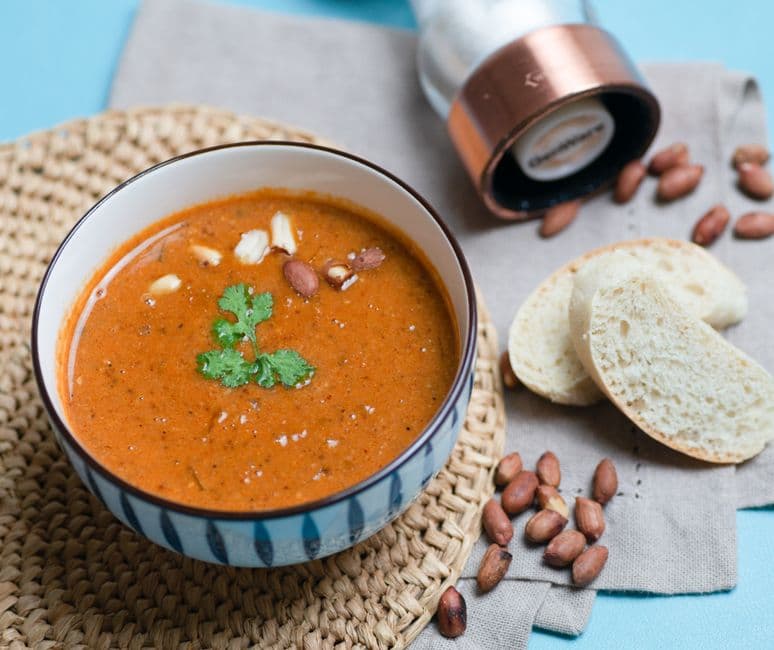
Mafé (Senegalese Peanut Stew)
West Africa's great peanut stew — lamb or beef slow-braised in a rich, earthy groundnut sauce with tomatoes and vegetables. Deeply satisfying, warmly spiced and velvety smooth.
About This Recipe
Mafé (also mafe, tigadèguena or groundnut stew) is one of the most important and ancient dishes of West Africa, eaten from Senegal to Mali to Guinea in countless regional variations. The defining element is groundnut (peanut) paste — whole roasted peanuts ground into a thick, oily paste — which is cooked with tomato, onion and spices into a sauce of extraordinary richness and depth. The peanut sauce is not sweet but savoury and slightly bitter, with a complexity that deepens with the long cooking. Lamb is the most traditional protein in Senegal, but beef, chicken and goat are all used. Mafé is served over rice or couscous and is the dish Senegalese families make when there is something to celebrate.
Ingredients
Serves 6
- 800 gbone-in lamb shoulder(cut into pieces)
- 200 gsmooth peanut butter(natural, unsweetened)
- 400 gtinned chopped tomatoes
- 2 tbsptomato paste
- 2onions(diced)
- 3garlic cloves(minced)
- 1scotch bonnet(left whole)
- 2carrots(diced)
- 1sweet potato(diced 3cm)
- 150 ggreen beans(trimmed and halved)
- 3 tbspvegetable oil
- 700 mlwater or stock
- 2 tspsalt
- 1 tspblack pepper
Instructions
- 1
Brown meat
Heat oil in a large pot. Brown lamb pieces in batches over high heat 4 min per side. Remove and set aside.
- 2
Soften onions
In the same pot, fry onions 8 min until golden. Add garlic and cook 1 min.
- 3
Add tomatoes and paste
Add chopped tomatoes and tomato paste. Cook 10 min until reduced and darkened.
- 4
Add peanut butter
Stir in peanut butter with 200ml hot water to thin it into the sauce. Add remaining water, whole scotch bonnet, salt and pepper. Return meat to the pot.
Thin the peanut butter with hot water first — adding it straight to the pot can cause it to seize and clump.
- 5
Braise slowly
Bring to a gentle simmer. Cover and cook 45 min on low heat, stirring occasionally.
- 6
Add vegetables
Add carrots and sweet potato. Simmer 20 min. Add green beans in the last 8 min. Taste and adjust seasoning.
- 7
Serve
Serve over steamed white rice. The sauce should be thick, velvety and deeply flavoured.
Did you make this?
Rate it and help other cooks find the recipes that actually work.
One tap to sign in, and we'll save the rating you just picked.
Everything you need to plan your week — free
- Meal calendar
- Grocery list
- AI recipe ideas
Track what you eat
Snap your meal to log calories and macros, run fasting timers and track water in the free SnapCal app.
Pro Tips
- →
Natural unsweetened peanut butter is essential — commercial sweetened peanut butter produces a cloyingly sweet sauce.
- →
The scotch bonnet whole gives heat gradually — more punctures = more heat.
- →
Taste and adjust salt at the very end — flavors concentrate as liquids reduce, and a final pinch of flaky salt sharpens the whole dish.
- →
Mise en place pays for itself: chop, measure and pre-mix everything before the heat goes on, especially for any step that moves fast.
Variations
- •
Chicken mafé: use bone-in chicken thighs — reduce braise to 40 min total
- •
Vegetarian mafé: omit meat, double the sweet potato and add chickpeas
- •
Add dried shrimp or fish sauce for a deeper umami base
- •
Spicier: add a finely chopped fresh chile or a teaspoon of crushed Aleppo/Urfa pepper to the aromatics for warm, layered heat instead of a single sharp hit.
Storage
Improves on day 2. Keeps 4 days refrigerated. Freezes very well for 3 months.
History & Origin
Mafé is one of the oldest documented West African dishes — groundnut stews appear in written sources from the 17th century. The dish travelled with the slave trade to the American South, where it evolved into the groundnut stews of Southern cooking. The Senegalese version remains the most complex and celebrated of all West African peanut stews.
Frequently Asked Questions
Can I use peanut flour instead of peanut butter?
Yes — peanut flour (defatted ground peanuts) produces a slightly less rich but equally flavoured sauce. Mix 150g peanut flour with 200ml water to form a paste, then add to the pot as you would the peanut butter. Traditional West African mafé actually uses freshly roasted and ground peanuts — peanut flour is closer to this original form than commercial peanut butter.
Can I make this ahead of time?
Yes — most of the components can be prepared up to a day in advance and refrigerated separately. Reheat gently and assemble just before serving so textures stay distinct.
What can I substitute if I don't have all the ingredients?
Stay close to the role each ingredient plays: swap aromatics for similar ones (shallot for onion, lime for lemon), and keep the fat-acid-salt balance intact. Spice blends can usually be approximated with what's in the cupboard.
How do I know it's authentic?
Authenticity sits on a spectrum — what matters more is honoring the technique and balance of flavors. If the dish tastes harmonious and respects how cooks in its home region would build it, you're on solid ground.
Nutrition Facts
Per serving · 6 servings total
Time Summary
Have Questions?
Ask our AI cooking assistant anything about this recipe — substitutions, techniques, scaling.
Chat with AI Chef →Featured in Guides
This recipe is featured in the following curated guides:
More Senegalese Recipes
You Might Also Like
Similar dishes from other cuisines around the world.
Browse by Ingredient
More recipes built around the same core ingredients.
Free Kitchen Tools
Calculators and converters that pair with this page — no signup needed.
Put This Into a Plan
Schedule it, shop for it, and track what you already have.
Read Next
Longer reads that go deeper on the ideas behind this dish.
Community
Join the conversation
Sign in to leave a comment and save your favourite recipes