
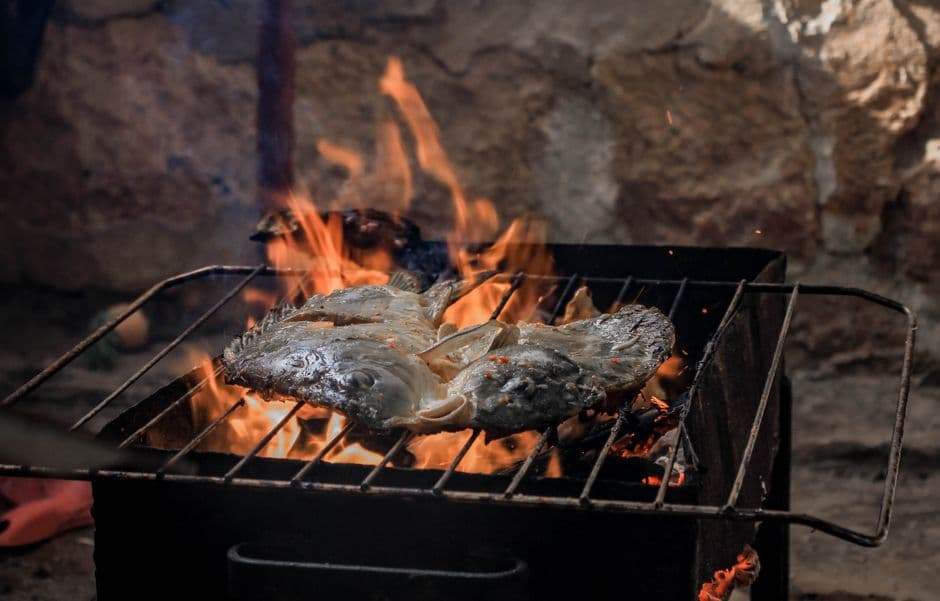
Masgouf (Iraqi Open-Fire Grilled Carp)
Iraq's national dish — whole butterflied carp slow-roasted vertically beside an open wood fire, finished over the embers, and served with tomato, onion and lime.
About This Recipe
Masgouf is the national dish of Iraq and one of the oldest continuously prepared meals on Earth — Sumerian clay tablets describe Tigris-river fish being cooked over open fires more than four thousand years ago. The technique is unchanged in spirit: a whole freshwater carp (traditionally shabbout or the larger bunni) is split down the back like a butterfly, salted, propped vertically on metal stakes around a tall wood fire so it cooks slowly from the radiant heat, then laid directly over the dying embers for the final minutes to crisp the skin and infuse the flesh with smoke. The result is a fish that is silky-flaky inside, mahogany and lacquered outside, and perfumed with the smoke of date-palm or tamarisk wood. It is served on a wide tray with raw chopped onion, sliced tomato, pickled mango (amba) or lime, fresh chopped parsley and Iraqi flatbread — diners tear bread, pile fish, add a splash of amba and a squeeze of lime, and eat with their hands. Masgouf is the food of the Tigris and Euphrates, of riverside fish markets in Baghdad's Abu Nuwas street, and of family weddings; it crosses every religious and ethnic line in Iraq and is one of the very few dishes that genuinely unites the country. The home version cannot fully replicate the open-fire vertical roast, but a hot grill or wood-fired oven gets remarkably close.
Ingredients
Serves 4
- 1 whole (2 kg)carp, sea bass, or large trout — scaled, gutted, and butterflied (split down the back, head and tail on)
- 3 tbspolive oil
- 2 tbsptamarind paste (or 1 tbsp lemon juice + 1 tbsp pomegranate molasses)
- 2 tbsptomato paste
- 1 tspground turmeric
- 1 tspground cumin
- 1 tspfreshly ground black pepper
- 2 tbspcoarse sea salt
- 4 clovesgarlic, mashed to a paste
- 2 largetomatoes, sliced
- 1 largeyellow onion, finely sliced
- 1 small bunchparsley, chopped
- 2limes, cut into wedges
- amba (Iraqi pickled mango sauce), to serve
- fresh Iraqi or Levantine flatbread, to serve
Instructions
- 1
Butterfly the fish
If your fishmonger hasn't already, split the fish along the back from head to tail, keeping the belly skin intact so it opens like a book. Scale thoroughly, remove gills, and pat dry. Score the flesh with shallow diagonal cuts to help the marinade penetrate and the smoke flavor the inside.
- 2
Make the marinade
Whisk olive oil, tamarind paste, tomato paste, turmeric, cumin, pepper, salt and the garlic paste in a small bowl until smooth — it should be the consistency of a thin paste. Brush generously over the cut side of the fish, working into the scored flesh. Let marinate 30 minutes at room temperature.
- 3
Prepare a hot fire or grill
If you have a wood-burning oven or a grill that can handle a whole fish, light a hot fire with hardwood (oak, fruit wood). Let it burn down to glowing embers with low flames. If using a gas grill, heat one side to high (260°C+) and leave the other side off for indirect cooking. The classic Iraqi method uses vertical stakes beside the fire; we'll approximate with a grill.
- 4
Slow-roast indirectly first
Place the butterflied fish skin-side down on the cooler side of the grill (indirect heat). Close the lid and cook 30 minutes — the flesh will turn opaque, the marinade will set into a lacquered crust, and the fish will absorb wood smoke. The temperature should be steady at 175–200°C.
- 5
Finish over direct heat for crisp skin
Carefully transfer the fish to the hot direct side of the grill, skin-side down. Cook another 6–8 minutes, lid open, until the skin is deeply crisped and slightly charred at the edges. The flesh should flake easily with a fork and read 65°C internal at the thickest point.
If a flame flares from dripping fat, briefly move the fish away — don't let it scorch.
- 6
Slide onto a serving tray
Use two wide spatulas to lift the fish carefully onto a large wooden board or platter — it will be fragile. Brush with any remaining marinade for sheen. Let rest 5 minutes; carryover cooking finishes the center.
- 7
Garnish and present
Surround the fish with the sliced tomato, sliced onion and parsley. Tuck lime wedges around the edges. Place small bowls of amba (if you have it) and extra olive oil alongside. The tray itself is the table centerpiece.
- 8
Eat in the traditional way
Provide warm Iraqi flatbread or pita. Diners tear bread, pinch off chunks of fish, add slices of tomato and onion, drizzle a little amba, squeeze lime, and eat with their hands. The bread is essential — it carries the fish and balances the smokiness. Don't forget to enjoy the lacquered crispy skin.
Did you make this?
Rate it and help other cooks find the recipes that actually work.
One tap to sign in, and we'll save the rating you just picked.
Everything you need to plan your week — free
- Meal calendar
- Grocery list
- AI recipe ideas
Track what you eat
Snap your meal to log calories and macros, run fasting timers and track water in the free SnapCal app.
Pro Tips
- →
Carp is traditional but can be muddy if not from clean water. Sea bass, trout, snapper or branzino all work beautifully and are easier to source in most countries.
- →
The butterfly cut is critical — the fish must lie flat so heat penetrates evenly. If your fishmonger won't do it, ask for it kite-cut (split from the back, belly intact).
- →
Amba (Iraqi pickled mango sauce) is the defining condiment. Available at Middle Eastern groceries; in a pinch, mix mango chutney with extra lemon juice and ½ tsp turmeric.
- →
Wood-smoke is what defines masgouf — if grilling indoors, use a stovetop smoker or add a handful of soaked wood chips to a gas grill in a foil packet. Without smoke, you have grilled fish, not masgouf.
Variations
- •
Modern Baghdad oven version: roast at 220°C in a hot oven on a wire rack for 40 minutes, then finish 3 minutes under a high broiler for the crisp skin.
- •
Spicier southern version: add 1 tsp Aleppo pepper and a few sliced fresh chilies to the marinade.
- •
Sumac masgouf: substitute 2 tbsp sumac for half the tamarind for a brighter, more lemony version.
- •
Salmon masgouf: a Western adaptation — use a side of salmon, scored, with the same marinade; cook hot and fast (200°C, 18 minutes).
Storage
Best eaten immediately. Refrigerated leftovers keep 2 days — flake the cold fish over salad for an excellent next-day lunch. Do not reheat in the microwave (rubberizes and stinks); warm gently in a 150°C oven for 8 minutes if needed. Do not freeze cooked fish.
History & Origin
Masgouf is among the oldest documented cooked dishes on the planet — Sumerian and Akkadian clay tablets from around 1750 BCE describe near-identical Tigris-river fish preparations using salt, oil and open fire. The dish has been continuously made along the Tigris for over four thousand years and is now the official national dish of Iraq, celebrated annually in Baghdad's Abu Nuwas riverside restaurant district.
Frequently Asked Questions
Can I make this indoors?
Yes — roast at 220°C on a wire rack 35–40 minutes, then 3 minutes under a high broiler for the crisp skin. Add wood chips in a foil packet over a stovetop burner to introduce some smoke. Not identical to the open-fire version but very good.
What kind of fish should I use if I can't get carp?
Whole sea bass, branzino, trout, snapper or even tilapia all work. The key is whole, scaled, butterflied — fillets don't capture the smoke and crispy skin contrast that defines masgouf.
What is amba?
Amba is an Iraqi-Jewish condiment of pickled green mango with mustard seed, fenugreek and turmeric — tangy, spicy and slightly funky. It is essential to masgouf and to many Iraqi sandwiches. Sold at Middle Eastern groceries; once opened, lasts 6 months in the fridge.
Is the carp really safe to eat?
Wild Tigris carp can have a muddy flavor and concerns about water pollution. Farmed carp from clean sources, or substitutes like sea bass, branzino or trout, are entirely safe and often taste better.
Nutrition Facts
Per serving (320g / 11.3 oz) · 4 servings total
Time Summary
Have Questions?
Ask our AI cooking assistant anything about this recipe — substitutions, techniques, scaling.
Chat with AI Chef →Featured in Guides
This recipe is featured in the following curated guides:
More Iraqi Recipes
You Might Also Like
Similar dishes from other cuisines around the world.
Free Kitchen Tools
Calculators and converters that pair with this page — no signup needed.
Put This Into a Plan
Schedule it, shop for it, and track what you already have.
Read Next
Longer reads that go deeper on the ideas behind this dish.
Community
Join the conversation
Sign in to leave a comment and save your favourite recipes