
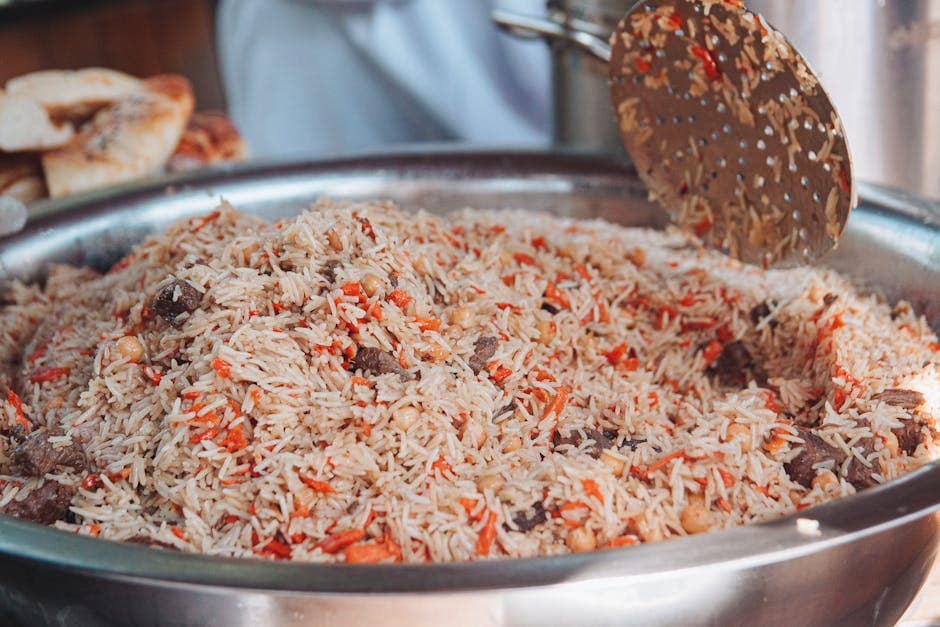
Uzbek Plov (Osh) — Lamb and Carrot Pilaf
Uzbekistan's national dish — lamb, carrots, cumin and rice cooked in a single deep cauldron until every grain glistens with spiced fat and the meat falls apart.
About This Recipe
Plov (osh) is the dish of Uzbek hospitality — cooked in massive cast-iron kazans over wood fires at weddings, funerals, and Sunday lunches, served from communal platters that strangers and family alike gather around. Each region has its own variation (Bukharian, Fergana, Samarkand, Tashkent), but the architecture is constant: lamb on the bone is browned in cottonseed or sunflower oil until the fat renders out and turns mahogany; thick batons of yellow and orange carrot are layered over the meat with sliced onion and whole cumin seeds, slowly stewing into the fat to create the 'zirvak' base. Rice is then washed thoroughly, layered over the top without stirring, and water added so it just covers everything. The kazan is closed and the rice steams in the spiced fat below, finishing with whole heads of garlic buried in the top and sometimes whole quinces, chickpeas, or barberries for a wedding-day plov. When done correctly, every grain is separate, slick with lamb fat, faintly orange from the carrots, and seasoned only by salt, cumin, and the slow chemistry of the zirvak. The dish carries enormous cultural weight: UNESCO inscribed plov on its list of Intangible Cultural Heritage in 2016. Cooking it well is a form of masculine pride in Central Asia — Uzbek men routinely cook plov for 200 wedding guests in a single afternoon over open flame, and the title 'oshpaz' (plov master) is one of the most respected in the culture.
Ingredients
Serves 6
- 800 gbone-in lamb shoulder or neck, cut into 4 cm pieces (some bone is essential)
- 200 glamb tail fat or beef suet, diced small (or 150 ml sunflower oil)
- 3 largeyellow onions, sliced into thin half-moons
- 1.2 kgcarrots, peeled and cut into long, thick matchsticks (do not grate)
- 600 glong-grain rice (devzira if possible, or basmati), washed until water runs clear and soaked 30 min
- 2 wholeheads of garlic, outer paper removed but kept whole
- 1 tbspwhole cumin seeds (zira), plus 1 tsp salt
- 1 tspground coriander, plus 1 tsp paprika for color
- 1 small handfuldried barberries or 50 g chickpeas (optional traditional addition)
Instructions
- 1
Render the fat
Place a heavy cast-iron pot or Dutch oven over medium-high heat. Add the diced lamb fat (or oil) and cook 6–8 minutes until the fat has rendered out and the cracklings are golden. Remove the cracklings with a slotted spoon and reserve as a snack — they're called 'jizza' and are the cook's reward.
- 2
Brown the meat
Add the lamb pieces in a single layer (work in batches if needed). Sear over high heat 8–10 minutes total, turning to color all sides deeply. The Maillard crust here is what makes the entire pot taste of lamb — do not skip or rush it.
Don't move the meat for the first 3 minutes per side — let a real crust form. Stirring too soon strips off the brown fond.
- 3
Add onions
Add the sliced onions to the seared meat and cook 8–10 minutes over medium heat, stirring occasionally, until deeply golden and softened. They will release water, then collapse and caramelize. This is the second layer of the zirvak.
- 4
Layer the carrots and spices
Add the carrot matchsticks in an even layer over the meat and onions. Sprinkle with cumin seeds, ground coriander, paprika, and salt. Do not stir. Reduce heat to medium-low, cover, and let the carrots steam-soften 12–15 minutes — they should turn limp and bright orange and release their sweetness.
- 5
Add water and build the zirvak
Pour in 250 ml of boiling water (just enough to come halfway up the carrots), add the garlic heads pushed into the carrot layer, and any barberries or chickpeas. Cover and simmer 20 minutes — the layered sauce at the bottom is now the zirvak, the soul of plov. Taste and salt aggressively; the rice will absorb a lot.
- 6
Add the rice
Drain the soaked rice. Spread it evenly over the carrot layer in a flat blanket — do not stir into the zirvak below. Pour boiling water gently over the back of a spoon onto the rice until the water just covers it by 1 cm. This is critical: too much water makes mushy plov, too little leaves it chalky.
- 7
Cook the rice and rest
Bring back to a strong simmer over medium-high heat, uncovered, for 8–10 minutes until the surface water is absorbed and the rice has small steam holes. Cover tightly, reduce to the lowest possible heat (use a heat diffuser if you have one), and cook 25 minutes. Turn off heat and let stand covered another 15 minutes. To serve, scoop the rice off the top onto a large platter, pull out the meat and garlic, and pile in a mound with the lamb and carrots on top.
Did you make this?
Rate it and help other cooks find the recipes that actually work.
One tap to sign in, and we'll save the rating you just picked.
Everything you need to plan your week — free
- Meal calendar
- Grocery list
- AI recipe ideas
Track what you eat
Snap your meal to log calories and macros, run fasting timers and track water in the free SnapCal app.
Pro Tips
- →
Bone-in lamb is essential — the marrow and connective tissue are what season the zirvak. Boneless gives a flatter, less rich plov.
- →
Devzira rice from Uzbekistan is the gold standard — pinkish, pearled grains that absorb flavor like a sponge. Basmati is the best widely available substitute; do not use jasmine or short-grain.
- →
Never stir plov after the rice goes in. The layered architecture (meat/onion at bottom, carrots in middle, rice on top) is what makes it cook properly.
- →
If using a regular pot rather than a true kazan, a heat diffuser or flame tamer is critical to prevent the bottom from scorching. The bottom layer should crisp slightly, not burn.
Variations
- •
Samarkand-style — keep meat, carrots and rice in distinct stripes when serving rather than mounded together.
- •
Fergana-style — use beef instead of lamb and add a handful of raisins for sweetness.
- •
Wedding plov (toy oshi) — add whole quinces, dried apricots, and barberries; serves 20+ from one kazan.
- •
Vegetarian plov — omit meat and fat, use a generous amount of butter or ghee for the zirvak with cumin and chickpeas only.
Storage
Keeps 3 days refrigerated in an airtight container. Reheat in a covered pan with a splash of water over very low heat, or steam — never microwave (the rice texture suffers). Freezes acceptably for 1 month but the carrots soften further.
History & Origin
Plov is documented in Central Asian cuisine for at least a thousand years; the 11th-century 'Compendium of the Turkic Dialects' by Mahmud al-Kashgari describes a recognizable proto-plov. Today there are over 100 documented regional Uzbek variations, and in 2016 UNESCO added Uzbek osh to its list of Intangible Cultural Heritage of Humanity.
Frequently Asked Questions
Why does my rice come out mushy?
Most likely too much water at the rice stage, or you stirred. Use just enough boiling water to barely cover the rice, and leave the layers strictly intact until the end.
Can I make it in a rice cooker?
You can build the zirvak in a heavy pan, then transfer everything (zirvak at the bottom, rice on top) to a rice cooker with the correct water level and let it run a standard cycle. Texture is acceptable, not ideal.
Do I really need to cut the carrots into matchsticks?
Yes — grated carrots dissolve into the zirvak and disappear; round slices are uneven. Long matchsticks (about 5 mm thick) hold their shape and provide visual and textural contrast.
Why whole heads of garlic?
Buried in the top of the rice, they steam into a confit so soft you can squeeze the cloves directly into your mouth. It's a traditional showpiece and a treat for the guest of honor.
Nutrition Facts
Per serving (450g / 15.9 oz) · 6 servings total
Time Summary
Have Questions?
Ask our AI cooking assistant anything about this recipe — substitutions, techniques, scaling.
Chat with AI Chef →Featured in Guides
This recipe is featured in the following curated guides:
More Uzbek Recipes
You Might Also Like
Similar dishes from other cuisines around the world.
Browse by Ingredient
More recipes built around the same core ingredients.
Free Kitchen Tools
Calculators and converters that pair with this page — no signup needed.
Put This Into a Plan
Schedule it, shop for it, and track what you already have.
Read Next
Longer reads that go deeper on the ideas behind this dish.
Community
Join the conversation
Sign in to leave a comment and save your favourite recipes