
In This Article
Track what you eat
Snap your meal to log calories and macros, run fasting timers and track water in the free SnapCal app.
Related Recipes
Related Guides
Medical disclaimer: The information in this article is for educational purposes only. Always consult a qualified healthcare professional before making significant dietary or lifestyle changes, especially if you have a medical condition.
The Mayo Clinic Diet is a weight-management program from the Mayo Clinic that has been published as a book and, later, as a paid online program. It is not a fad built on a forbidden food or a magic ratio. Its core idea is that weight comes down to daily habits, so the plan spends a short first phase installing a set of habits and a long second phase keeping them going. The visual centerpiece is the Mayo Clinic Healthy Weight Pyramid, which puts vegetables and fruit at the wide base and sweets at the narrow tip. This guide explains the two phases, what a day of eating looks like, who tends to do well with it, what critics say, and what to ask a doctor before starting.
Key Takeaways
The Mayo Clinic Diet in brief.
• It has two phases: “Lose It!”, a short quick-start, and “Live It!”, the long-term maintenance pattern. • The Healthy Weight Pyramid puts vegetables and fruit at the base, then whole grains, protein and dairy, fats, and sweets at the top. • Rather than banning foods, it emphasizes food volume and quality, and builds eating habits you add or break one at a time. • It suits people who want structure and a gradual approach; it is less suited to anyone who needs a medically supervised diet. • It is not a treatment for any condition. Talk to your doctor before starting, especially if you take medication or have a chronic illness.
Where the plan comes from
The Mayo Clinic is a nonprofit academic medical center, and the diet is its attempt to turn general nutrition guidance into a program a person can actually follow. It is based on mainstream recommendations: plenty of vegetables and fruit, whole grains, lean protein, and modest amounts of healthy fats. What makes it a named diet is the structure laid on top: the two phases, the pyramid and the habit lists.
It is worth being clear about what the plan is not. It is not a specific named clinical therapy, and it does not claim to cure anything. It is a general weight-management framework, and the strength of the evidence behind any such plan depends mostly on whether people stick with it.
Phase one: “Lose It!”
The first phase is a short, structured start intended to build momentum and break the habits that tend to cause weight gain. The program describes it as lasting two weeks. During it you work through a list of habits: you are asked to add several healthy ones, such as eating breakfast, eating plenty of vegetables and fruit, eating whole grains, and moving more each day, and to break several unhealthy ones, such as eating while watching television or snacking on sugar.
Food amounts in this phase are guided by the pyramid rather than by strict calorie counting, although the program does give a daily calorie target based on your starting weight. Vegetables and fruit are the foods you can eat in generous amounts. Fats and sweets are tightly limited. The aim is not a dramatic drop on the scale; it is practice at a new way of eating.
Treat the two weeks as a trial of routines, not a race. People who get the habits to feel automatic in phase one tend to find phase two much easier.
Phase two: “Live It!”
Once the quick-start ends, you move to the long-term phase. Here the focus is on a pace of weight change that is slow and steady, and on keeping the habits you built. The pyramid is still the guide, but you have more flexibility: you choose servings from each pyramid level to fit a calorie range that matches your goal, whether that is losing more weight or maintaining the loss.
This is the part that most diets neglect, and it is the plan's best idea. Rapid weight loss tends to be regained, which is why the risks of rapid weight loss are worth reading before choosing a more aggressive plan. A program that treats maintenance as the real goal, rather than an afterthought, is working with that reality instead of against it.
Everything you need to plan your week — free
- Meal calendar
- Grocery list
- AI recipe ideas
The Healthy Weight Pyramid, level by level
The pyramid sorts foods by how much energy they pack per bite, not by whether they are 'good' or 'bad'. From the base up:
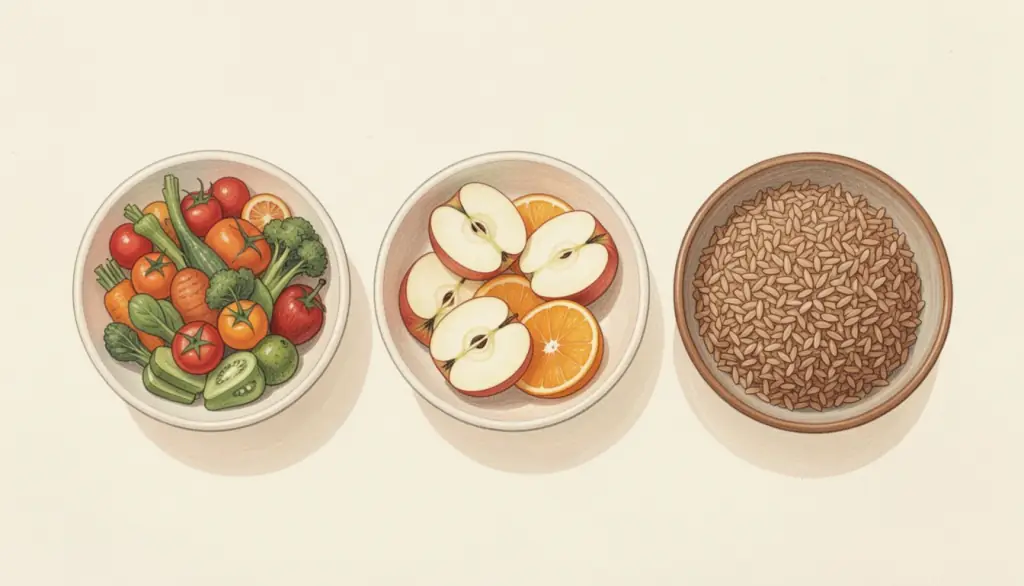
• Vegetables and fruits: the widest level, and the foods you can eat the most of because they are bulky and low in calories. • Carbohydrates: mostly whole grains, such as oats, brown rice and whole-wheat bread, rather than refined grains. • Protein and dairy: beans, fish, poultry, eggs, lean meat, and low-fat dairy. • Fats: small amounts of unsaturated fats, such as olive oil, nuts and avocado. • Sweets: a small allowance, with the program favoring fruit-based and lower-sugar options over candy and baked goods.
The logic is the same one behind the volumetrics approach to weight loss: filling the plate with water- and fiber-rich foods makes it easier to feel full on fewer calories.
A sample day of eating
A day on the plan is built from whole foods, with vegetables or fruit at every meal. A realistic example:
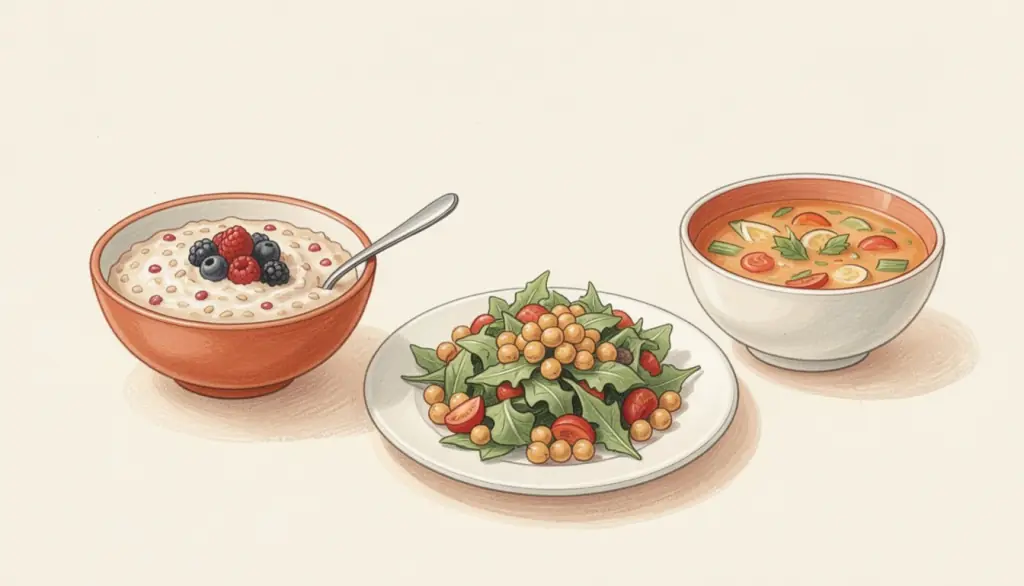
• Breakfast: oats cooked with milk or a fortified alternative, topped with berries and a few chopped nuts. A good template is creamy overnight oats, which you can make the night before. • Lunch: a large salad with chickpeas or grilled chicken, olive oil and lemon. A Greek village salad fits the pattern if you keep the cheese portion small. • Snack: an apple or a handful of carrots with a spoonful of hummus. • Dinner: a broth-based soup loaded with vegetables, such as a simple vegetable soup, with a slice of whole-grain bread and a piece of fish or a serving of beans. • Dessert: fruit, or a small portion of something sweet inside your daily allowance.
If you would rather not decide each morning, planning the week ahead helps. The meal planner calendar lets you lay out meals across seven days and see the nutrition totals add up as you go.
Who it tends to suit
The plan tends to work for people who like structure and a clear sequence, and who prefer to change habits one at a time rather than overhaul everything at once. It is also a reasonable fit for people who would rather eat more food of the right kind than eat less food of every kind, since the pyramid leans on volume. Because it is built on ordinary foods, it adapts to most family meals without special products.
It may suit you less if you want rapid results, if you dislike the idea of working through a list of habits, or if you find any kind of numeric target triggering. In that last case, speak to a clinician before starting any weight-loss program.
A few practical details make the plan easier to live with. First, the habit lists work best when you tackle them in small groups rather than all at once: pick two or three, practice them for several days, and only then add more. Second, track something. The program encourages recording food and activity, and even a rough log of servings from each pyramid level shows you where the day is drifting, such as a lunch with no vegetables or an evening with three servings of sweets. Third, plan for eating out and social meals in advance by looking at the menu, choosing a vegetable-heavy dish, and deciding ahead of time whether a dessert fits your allowance. Fourth, keep cut-up vegetables and fruit visible and easy to grab, since the plan depends on them being the default snack.
Families can follow the same pattern without cooking separate meals, because it is built on ordinary foods. The adults eat the pyramid portions, children eat more of the carbohydrate and dairy levels they need to grow, and everyone shares the vegetable-heavy base. If anyone in the household is under 18 or has special dietary needs, ask a pediatrician or dietitian before putting them on any weight-loss plan.
Criticisms, costs and limits
No diet is perfect, and this one has fair criticisms. The first is that the habit lists and calorie targets can feel generic: they are not personalized to your medical history, your culture or your food budget. The second is that evidence for the specific program is thinner than evidence for the general principles it rests on. Eating more vegetables and whole grains is well supported; whether this particular two-phase structure beats other sensible plans is less clear. The third is cost: the book is inexpensive, but the full online program is a paid subscription, so check current pricing on the official site rather than relying on a figure from a third-party page.
Finally, any plan that sets a calorie target can drift into restriction. If you notice yourself becoming anxious around food, treating foods as forbidden, or skipping meals, stop and talk to a professional. A plateau is not a reason to cut harder; this explainer on weight-loss plateaus covers what usually helps instead.
Who should talk to a doctor first
Check with your doctor or a registered dietitian before starting if you are pregnant or breastfeeding, are under 18, have diabetes or take insulin or other glucose-lowering medication, have kidney, heart or liver disease, have a history of an eating disorder, or take medication whose effects change with diet. Weight-loss plans can change how much of a medication you need, and some people should not lose weight without supervision at all. Nothing here is medical advice, and this diet is not intended to treat or cure any disease.
If you eat mainly Mediterranean-style foods already, the pyramid will feel familiar. A refresher on that pattern is in our complete Mediterranean diet guide.
Key Takeaways
The Mayo Clinic Diet is a sensible, mainstream framework: a short habit-building start, a long maintenance phase, and a pyramid that rewards filling your plate with vegetables and fruit. Its strengths are structure and a realistic view of weight as a long game; its weaknesses are generic targets and limited evidence for the program as a whole. If the pyramid style appeals to you, start by adopting a few habits from phase one at your own pace, check in with a doctor or dietitian if you have any health conditions, and judge the plan by whether you can still follow it six months from now.
Frequently Asked Questions
How long does the “Lose It!” phase last?▼
Can I eat carbs on the Mayo Clinic Diet?▼
Do I have to count calories?▼
Is the Mayo Clinic Diet healthy?▼
References
- [1]Hensrud D, Mayo Clinic (2017). “The Mayo Clinic Diet, 2nd edition.” Mayo Clinic Press.
- [2]U.S. Department of Agriculture and U.S. Department of Health and Human Services (2020). “Dietary Guidelines for Americans, 2020-2025.” USDA / HHS. Link
More in Diet Guides
View all
Free Kitchen Tools
Calculators and converters that pair with this page — no signup needed.
About This Article
Written by Sarah Mitchell, Food & Nutrition Writer. Published November 12, 2026. Updated November 12, 2026.
This article cites 2 peer-reviewed sources. See the full reference list below.
Editorial policy: Articles are drafted with the help of AI tools, link to the sources they rely on, and are updated when we find an error or newer evidence. Health articles are general information, not medical advice.
About the Author
Writes about everyday nutrition, balanced eating and turning dietary guidelines into practical, cook-at-home advice.