
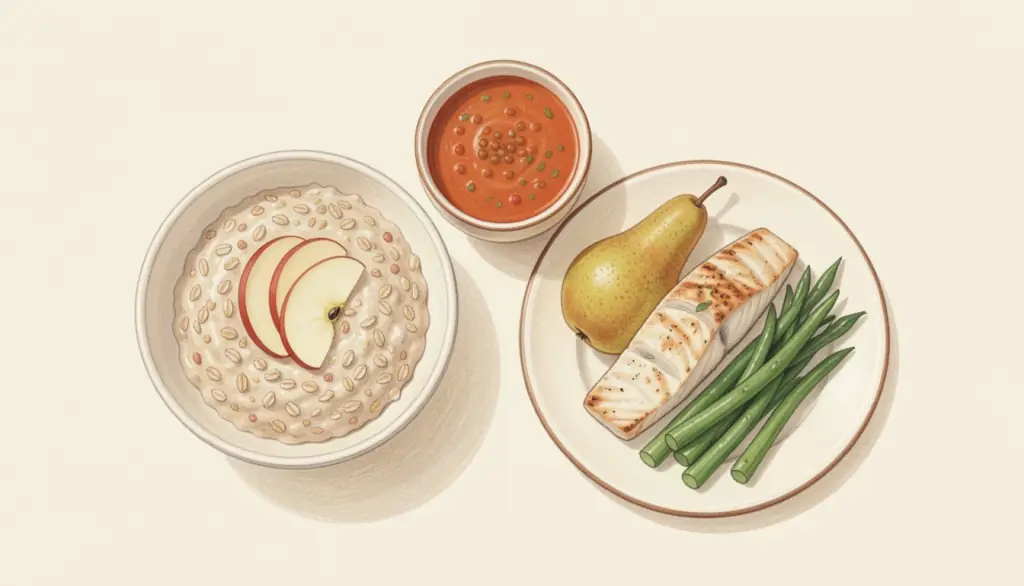
In This Article
Track what you eat
Snap your meal to log calories and macros, run fasting timers and track water in the free SnapCal app.
Related Recipes
Related Guides
Medical disclaimer: The information in this article is for educational purposes only. Always consult a qualified healthcare professional before making significant dietary or lifestyle changes, especially if you have a medical condition.
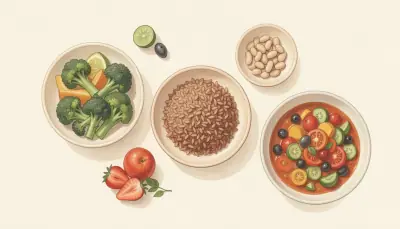
TLC stands for Therapeutic Lifestyle Changes, and it is the name the US National Heart, Lung, and Blood Institute (NHLBI) gives to its cholesterol-lowering program. It came out of the National Cholesterol Education Program's guidelines and has been the template for many later heart-healthy diets. Unlike a branded weight-loss plan, TLC is a set of specific numeric targets for saturated fat, dietary cholesterol, soluble fiber and plant stanols, combined with weight control and physical activity. This guide explains each target in plain language, shows what the foods look like on a plate, and covers who should involve a doctor before making changes. It is written for general information and does not replace medical advice.
Key Takeaways
The TLC diet in brief.
• It limits saturated fat to under 7% of daily calories and dietary cholesterol to under 200 mg a day. • It aims for 25–35% of calories from total fat, mostly unsaturated, plus a healthy weight and regular physical activity. • It adds 10–25 grams a day of soluble fiber from foods like oats, beans, lentils and fruit. • It includes about 2 grams a day of plant stanols or sterols, from fortified foods or supplements. • It is a medical-style eating plan: talk to your doctor if you have high cholesterol, take a statin or have heart disease.
What TLC is and where it comes from
TLC was introduced in the National Cholesterol Education Program's Adult Treatment Panel III guidelines in 2001 and 2002 as the first-line approach for people with raised LDL cholesterol. The idea was to try diet and lifestyle first, alongside medication where a clinician judged it necessary. Newer cardiology guidelines have since changed the emphasis in several ways, and many clinicians now talk about overall dietary patterns rather than the exact percentages. Even so, the TLC numbers remain a useful, concrete starting point and are still cited by NHLBI materials.
The plan has four moving parts: a diet low in saturated fat and dietary cholesterol, extra soluble fiber, plant stanols or sterols, and the combination of weight control and physical activity. It is not a short diet; the whole thing is designed to be lived with.
The numbers, explained in plain language
Here are the main TLC targets and what they mean in practice.
• Saturated fat under 7% of calories. Saturated fat comes mostly from fatty meat, butter, full-fat dairy, cheese, and tropical oils like coconut and palm. On a 2,000-calorie day, 7% is roughly 15 grams, which a single buttery pastry plus a cheeseburger could exceed. • Cholesterol under 200 mg a day. Dietary cholesterol is found in animal foods, concentrated in egg yolks and organ meats. • 25–35% of calories from fat. The plan is not extremely low in fat; it asks you to swap saturated for unsaturated fat from olive oil, nuts, avocado and fish. • Calories to reach or maintain a healthy weight.
If you want a broader look at which foods tend to move LDL numbers, our guide to cholesterol-lowering foods goes through them by category.
Soluble fiber: the second lever
TLC asks for 10 to 25 grams of soluble fiber a day. Soluble fiber dissolves in water and forms a gel in the gut, and in trials it has generally been associated with modest reductions in LDL cholesterol. The best sources are oats and oat bran, barley, beans, lentils, peas, apples, citrus fruit and psyllium.
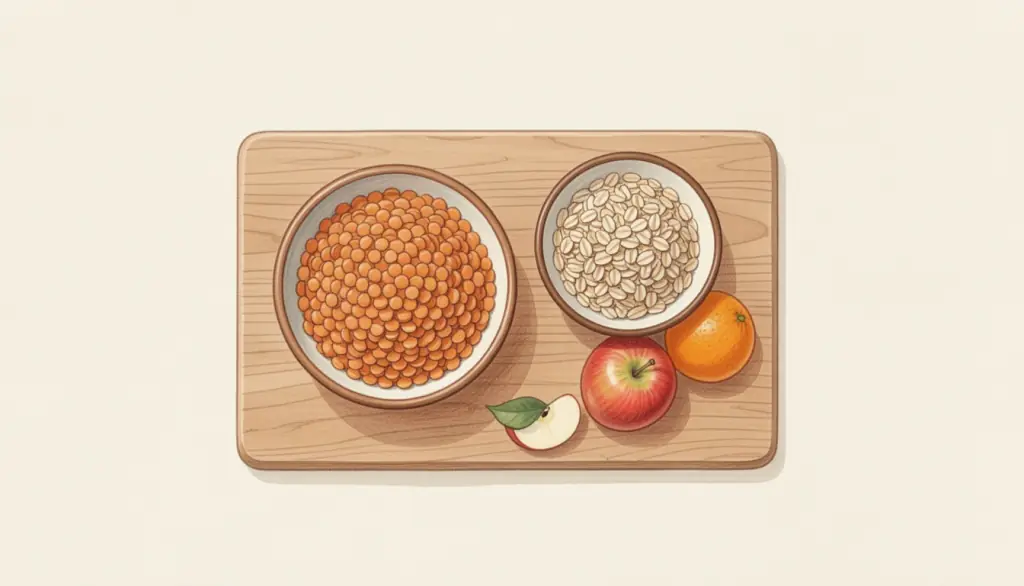
A practical way to reach it is to add one or two servings of legumes a day and make oats your regular breakfast. Overnight oats is the lazy version. A lentil dish such as Turkish red lentil soup does a lot of the work for lunch.
Increase fiber gradually and drink more water. Jumping from a low-fiber diet to a high-fiber one overnight is the quickest route to bloating.
Everything you need to plan your week — free
- Meal calendar
- Grocery list
- AI recipe ideas
Plant stanols and sterols
Plant stanols and sterols are compounds that resemble cholesterol and compete with it for absorption in the gut. TLC recommends about 2 grams a day. You can get small amounts from nuts, seeds and whole grains, but reaching 2 grams in practice usually means products fortified with them, such as certain margarine spreads, juices or yogurt drinks, or a supplement.
These are an add-on rather than a replacement for the rest of the diet, and they are not suitable for everyone. Because they can interfere with the absorption of some nutrients, and because a few medical conditions rule them out, check with a doctor or dietitian before relying on them, especially if you are pregnant, breastfeeding, or give them to a child.
A sample day on TLC
A day built around the targets looks like this:
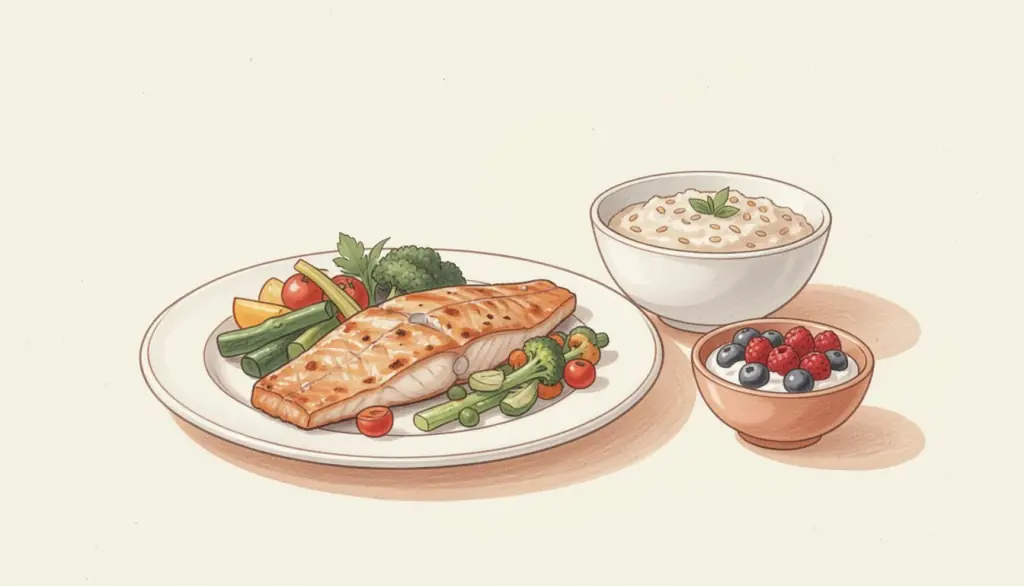
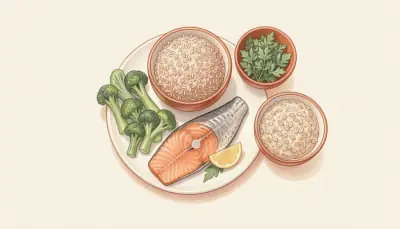
• Breakfast: oatmeal with sliced apple and cinnamon, a small spoonful of ground flax, and low-fat or fortified plant milk. • Lunch: a lentil or bean soup with whole-grain bread and a side salad dressed with olive oil and lemon. • Snack: a pear and a small handful of unsalted nuts. • Dinner: baked fish with a vegetable side. Baked cod with lentils combines lean fish and soluble fiber in one dish. • Evening: berries with plain low-fat yogurt.
The pattern is simple: lean protein, plenty of legumes and vegetables, whole grains, and unsaturated fats in modest amounts. Reading labels helps you spot saturated fat in packaged foods, which is where our nutrition label guide is useful.
Swaps that make the targets easier
The easiest way to hit the saturated-fat limit is by swapping, not by eating less. A few swaps that tend to matter:
• Olive or canola oil instead of butter for cooking. • Skinless poultry, fish and beans instead of fatty cuts and processed meats. • Skim or low-fat dairy, or fortified plant milk, instead of whole milk and cream. • Whole fruit and nuts instead of pastries and cookies. • Egg whites for some of your eggs if you are watching dietary cholesterol closely.
For a longer walk through the whole-diet picture, our heart health diet guide places TLC next to other patterns such as Mediterranean and DASH eating. If you want a second opinion on how a particular day of meals adds up, you can describe it to the AI Nutritionist, though it is a general tool and not a substitute for a clinician.
It can also help to think in terms of a weekly rhythm rather than a perfect day. Most people do not eat identically every day, and TLC's saturated-fat and cholesterol targets are meant as daily averages you aim for over time. A rich dinner out on Saturday is not a failure if the rest of the week is built around legumes, vegetables, whole grains and fish. What matters is the overall pattern and whether you can keep it going. If you notice that a particular food is repeatedly pushing you over, such as cheese on everything or a daily pastry, that is the swap to focus on first.
Batch cooking makes the pattern easier. A big pot of bean soup, a tray of roasted vegetables and a pan of baked fish can cover several meals, and keeping a stock of oats, canned no-salt beans and frozen vegetables means a TLC-friendly meal is always within reach.
Eating out and shopping on TLC
Most people find that the hardest TLC targets to hit are the ones that depend on foods they did not prepare. Restaurant dishes tend to be cooked with generous butter, cream and cheese, and portions are often large. A few habits help. Look for grilled, baked, steamed or broiled dishes rather than fried or creamy ones, ask for sauces and dressings on the side, choose a vegetable or a salad as a side instead of fries, and share a dessert or choose fruit. If a dish comes with cheese or a cream sauce, ask whether it can be left off or reduced.
At the supermarket, the nutrition label is your main tool. Compare saturated fat per serving across similar products, check the serving size, and look for foods with oats, beans, barley and other fiber-rich ingredients near the top of the list. Skip products that list partially hydrogenated oils, which contain trans fat; this type of fat raises LDL and lowers HDL, and it is something TLC advises minimizing. Choose lean cuts and trim visible fat from meat, and keep processed meats like sausage, bacon and salami to occasional use.
Weight and activity are the last two pieces of the plan. TLC asks for enough calories to reach or hold a healthy weight, and for regular moderate physical activity, such as brisk walking on most days. Both help cholesterol numbers independently of food, and they are worth treating as part of the program rather than an optional extra.
Limits of the plan and who needs medical guidance
Diet can influence cholesterol, but it is only one factor. Genetics play a large role, and some people with very high LDL, including those with familial hypercholesterolemia, need medication regardless of how well they eat. Likewise, TLC is not meant to replace a statin or other prescription: never stop or reduce medication because you have changed your diet unless your prescriber says so.
Talk to a doctor or registered dietitian before starting if you have heart disease, diabetes, kidney disease, a history of pancreatitis, or are pregnant. This guide is educational and does not diagnose, treat or cure any condition.
Key Takeaways
TLC remains one of the clearest cholesterol-lowering eating plans because its targets are specific: saturated fat under 7% of calories, cholesterol under 200 mg, soluble fiber from foods like oats and legumes, and plant stanols if recommended. You do not have to adopt every part at once. Start with the swap that is easiest, such as oats for breakfast and olive oil for butter, and build from there. Have your cholesterol rechecked as your doctor advises, so you know what is really working.
Frequently Asked Questions
Is the TLC diet still recommended?▼
Can I eat eggs on the TLC diet?▼
Do I need plant stanols to follow TLC?▼
How long until cholesterol improves?▼
References
- [1]National Cholesterol Education Program Expert Panel on Detection, Evaluation, and Treatment of High Blood Cholesterol in Adults (2002). “Third Report of the National Cholesterol Education Program (NCEP) Expert Panel (Adult Treatment Panel III).” Circulation.
- [2]National Heart, Lung, and Blood Institute (2005). “Your Guide to Lowering Your Cholesterol with TLC.” U.S. Department of Health and Human Services, NIH.
More in Diet Guides
View all

Free Kitchen Tools
Calculators and converters that pair with this page — no signup needed.
About This Article
Written by Elena Vasquez, Health & Nutrition Writer. Published November 12, 2026. Updated November 12, 2026.
This article cites 2 peer-reviewed sources. See the full reference list below.
Editorial policy: Articles are drafted with the help of AI tools, link to the sources they rely on, and are updated when we find an error or newer evidence. Health articles are general information, not medical advice.
About the Author
Covers metabolic health, intermittent fasting and the gut microbiome, focused on summarising evidence in plain language.