
In This Article
Track what you eat
Snap your meal to log calories and macros, run fasting timers and track water in the free SnapCal app.
Related Recipes
Related Guides
Medical disclaimer: The information in this article is for educational purposes only. Always consult a qualified healthcare professional before making significant dietary or lifestyle changes, especially if you have a medical condition.
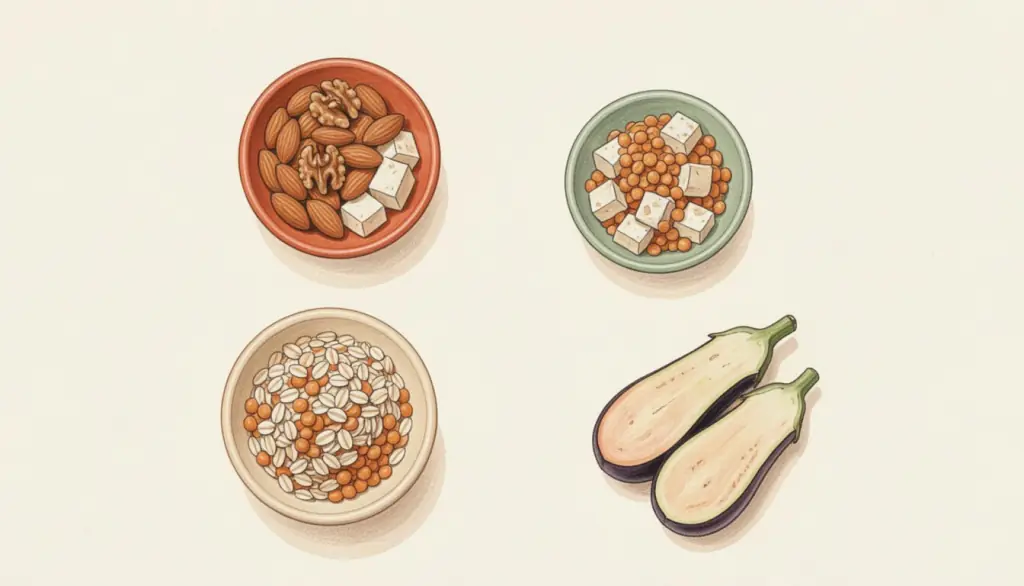
The Portfolio diet takes its name from an investing idea: instead of relying on one food to lower cholesterol, you hold a portfolio of several that work in different ways. It was developed by David Jenkins and colleagues at the University of Toronto, and it is a mainly plant-based eating pattern built around four groups of foods: nuts, plant protein such as soy and legumes, viscous soluble fiber, and plant sterols. Early studies tested the full combination, and later work has looked at how much each part contributes. This guide explains the four groups, shows how to put them together in a normal day, and is honest about what the evidence can and cannot tell you. It is general information and is not a replacement for medical care.
Key Takeaways
The Portfolio diet in brief.
• It stacks four cholesterol-lowering food groups: nuts, plant protein (soy, beans, lentils), viscous fiber (oats, barley, okra, eggplant, psyllium) and plant sterols. • It is built on top of a low-saturated-fat, mostly plant-based diet. • Trials have generally found meaningful LDL cholesterol reductions in people who follow it closely, but results vary and strict adherence is hard. • Most of the foods are everyday ingredients; only the sterol component usually needs fortified foods or a supplement. • It is not a substitute for prescribed medication. Talk to your doctor before changing a cholesterol treatment plan.
Where the Portfolio diet came from
Jenkins and colleagues were interested in whether the cholesterol-lowering effect of several foods would add together. Individual foods, like oats or soy, give modest effects on their own. In early studies, participants followed a diet that combined all four components, and the researchers compared the result with a very-low-saturated-fat diet and with a statin medication. The findings suggested that a tightly controlled portfolio diet could lower LDL cholesterol by an amount that was meaningful and, in the best-adhering participants, comparable with a low-dose statin in that setting.
Two cautions apply. Those were controlled studies with highly motivated participants who were given food and close support. Real-world results are generally smaller, because people follow the plan less exactly. And the diet was studied as a way to reduce LDL; it is not proof that anyone can avoid or stop medication.
Group one: nuts
Nuts, including almonds, walnuts, pecans, pistachios and peanuts, are the first group. They supply unsaturated fats, fiber, plant sterols and other compounds, and they have a long record in studies of LDL cholesterol. A small handful a day is the typical advice. Nuts are calorie-dense, so portion size matters if you are also watching your weight; weigh them for a week to learn what your handful really is.
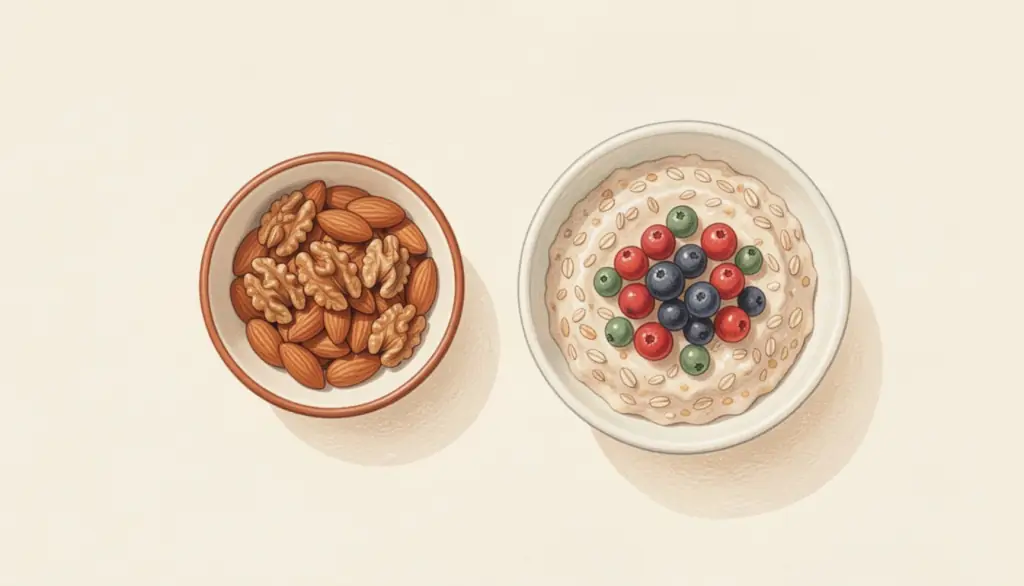
Add them to oatmeal, salads and stir-fries rather than eating them on top of everything else. Choose unsalted nuts, since salted ones can undermine a heart-healthy diet, as our guide to low-sodium eating explains.
Group two: plant protein
The second group replaces animal protein, which tends to come with saturated fat, with soy foods, beans, peas and lentils. Tofu, tempeh, edamame, soy milk, chickpeas, black beans and lentils all count. These foods also bring fiber, so they overlap with group three.
Soy protein has been studied in particular, though the cholesterol effect of soy on its own has generally been described as modest. The bigger gain comes from what plant protein displaces. For ideas beyond tofu, our complete guide to plant-based protein sources lists many options, and a simple dish like a tofu scramble is an easy breakfast swap for eggs.
If you are new to soy foods, start with the ones that look familiar. Soy milk on cereal or in coffee, edamame as a snack, and firm tofu cubed into a stir-fry or soup are all easy entry points. Tempeh has a firmer, nuttier texture and works well sliced and pan-seared. Beans and lentils need no introduction: add them to salads, grain bowls, tacos and pasta sauces. Variety matters, since each legume has a slightly different mix of fiber and nutrients, and rotating them keeps meals interesting. People with soy allergies can leave soy out and rely on other legumes, and anyone with a thyroid condition should ask their clinician about the timing of soy foods relative to medication.
Everything you need to plan your week — free
- Meal calendar
- Grocery list
- AI recipe ideas
Group three: viscous fiber
Viscous, or soluble, fiber forms a gel in the gut and binds bile acids, which pushes the body to pull more cholesterol out of the blood to make new ones. The foods richest in it are oats and oat bran, barley, psyllium, beans, lentils, okra, eggplant, apples, oranges and berries.
This group is the easiest to fit into normal eating. Oatmeal in the morning, barley in a soup, lentils at lunch and okra or eggplant in dinner covers it without any special products. Red lentil soup is one dish that delivers fiber and plant protein together. Increase fiber slowly and drink enough water to avoid discomfort.
Barley deserves more attention than it gets. Pearl barley cooks in about the time of brown rice, holds its texture in soups and stews, and works as a side or a base for a grain bowl. Oat bran can be stirred into porridge or yogurt, and psyllium husk, if your clinician suggests it, is usually mixed into water or food with plenty of fluid. Eggplant and okra are easy additions to roasted vegetable trays, curries and stews, and berries, apples and oranges bring soluble fiber into snacks and dessert.
If you are building a weekly shopping list around these groups, the grocery list app can turn your planned meals into a single list so oats, lentils and nuts are never missing.
Group four: plant sterols
Plant sterols and stanols block some cholesterol absorption in the intestine. The amount used in the Portfolio studies is higher than you could comfortably get from food alone, so the diet normally uses sterol-enriched margarines or other fortified foods, or supplements. Nuts, seeds and whole grains do add small amounts.
The sterol group is the one most worth checking with a clinician. Fortified products cost more, they are not suitable for everyone, and they are generally intended for adults with raised cholesterol rather than for children or most people with normal levels. If you skip this group, you still get a heart-friendly diet; you just lose the part of the portfolio that most strongly differs from ordinary healthy eating.
Building a Portfolio day
A day that touches all four groups, without being extreme, might look like this:
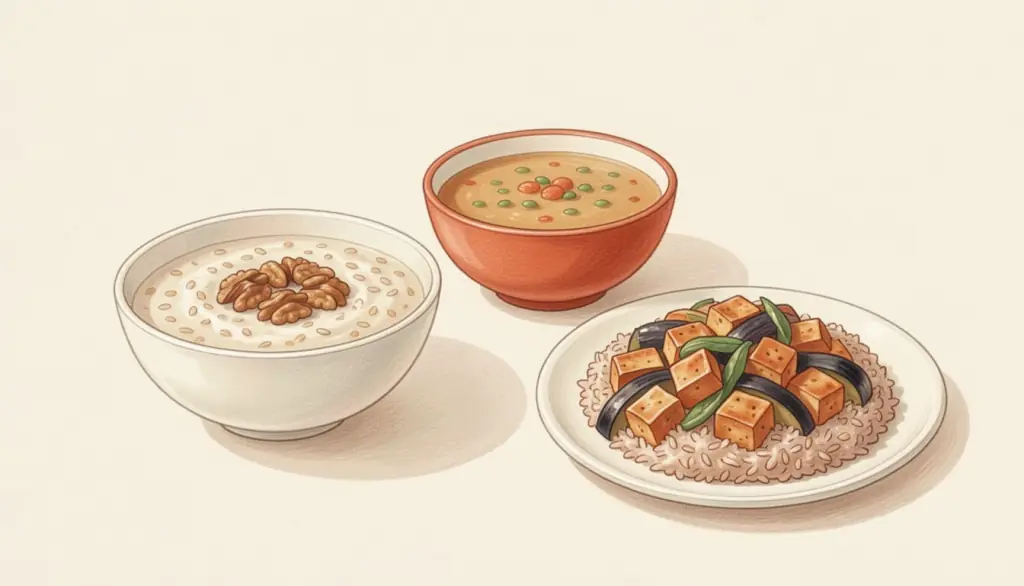
• Breakfast: oats with soy milk, berries and chopped walnuts. Creamy overnight oats are a good base. • Lunch: a lentil or bean soup with barley or whole-grain bread and a leafy salad. • Snack: an apple and a small handful of almonds. • Dinner: stir-fried tofu or tempeh with eggplant, okra or other vegetables, over brown rice. • With meals: a sterol-fortified spread or drink, if your doctor or dietitian recommends one.
Notice that nothing here is exotic. The pattern is a plant-forward version of the approach described in our guide to lowering LDL with food.
What the evidence does and does not show
In controlled trials, the Portfolio diet has generally lowered LDL cholesterol more than a standard healthy diet, and some analyses have also reported modest improvements in other heart-related markers. That is encouraging. But the research is mostly on cholesterol levels rather than on heart attacks or strokes, studies vary in how strictly people followed the plan, and the best results came from participants with close support.
The honest summary: the Portfolio diet is a well-reasoned way to combine foods that individually help cholesterol, and it is probably more effective than eating the foods one at a time. It is not a guaranteed result, and a person's response depends on genetics, starting cholesterol and how closely they follow it.
It also helps to be realistic about food costs and time. Nuts, soy foods and fortified spreads can add up at the register, while dried beans, lentils, oats and barley are some of the cheapest foods in the store. If budget is a concern, put your effort into the cheap fiber and legume groups first, buy nuts in bulk, and treat sterol-fortified products as optional until you have talked to your clinician. Cooking a large pot of beans or lentils at the weekend and freezing portions makes weekday meals much faster.
Another practical point is taste. People who are used to meat-centered meals often find the transition easier if they start by replacing one meal a day, such as breakfast or lunch, and keep dinner familiar for a few weeks. Spices, citrus, garlic, herbs and toasted nuts give plant meals depth without relying on saturated fat. Over a month or two, many people find they no longer miss the old pattern, and they can then move the same approach into the other meals of the day.
Who should not go it alone
Talk to a doctor or registered dietitian before starting if you take a statin or other cholesterol medication, have heart disease, diabetes or kidney disease, take blood thinners such as warfarin (some foods and supplements can interact), have a nut or soy allergy, or are pregnant or breastfeeding. A high-fiber, plant-forward diet can also interfere with the timing of some medications. Do not stop prescribed medication because you have started a diet. This guide is educational and does not diagnose, treat or cure any condition.
Key Takeaways
The Portfolio diet works on a simple principle: stack several foods that help cholesterol in different ways. Nuts, plant protein, viscous fiber and plant sterols are each a small lever; pulled together, they can move LDL more than any of them alone. You do not need to follow it perfectly to benefit from its parts, so start with the easy ones, oats and legumes, then add nuts and soy, and discuss the sterol component with a clinician. Recheck your cholesterol as your doctor advises, and keep your treatment plan in their hands.
Frequently Asked Questions
Is the Portfolio diet vegan?▼
Do I need sterol-fortified foods to follow it?▼
Can the Portfolio diet replace a statin?▼
Are nuts too fattening on this diet?▼
References
- [1]Jenkins DJA, Kendall CWC, Marchie A, et al. (2003). “Effects of a dietary portfolio of cholesterol-lowering foods vs lovastatin on serum lipids and C-reactive protein.” JAMA.
- [2]Jenkins DJA, Kendall CWC, Faulkner D, et al. (2002). “A dietary portfolio approach to cholesterol reduction: combined effects of plant sterols, vegetable proteins, and viscous fibers in hypercholesterolemia.” Metabolism.
More in Diet Guides
View all
Free Kitchen Tools
Calculators and converters that pair with this page — no signup needed.
About This Article
Written by Elena Vasquez, Health & Nutrition Writer. Published November 12, 2026. Updated November 12, 2026.
This article cites 2 peer-reviewed sources. See the full reference list below.
Editorial policy: Articles are drafted with the help of AI tools, link to the sources they rely on, and are updated when we find an error or newer evidence. Health articles are general information, not medical advice.
About the Author
Covers metabolic health, intermittent fasting and the gut microbiome, focused on summarising evidence in plain language.