
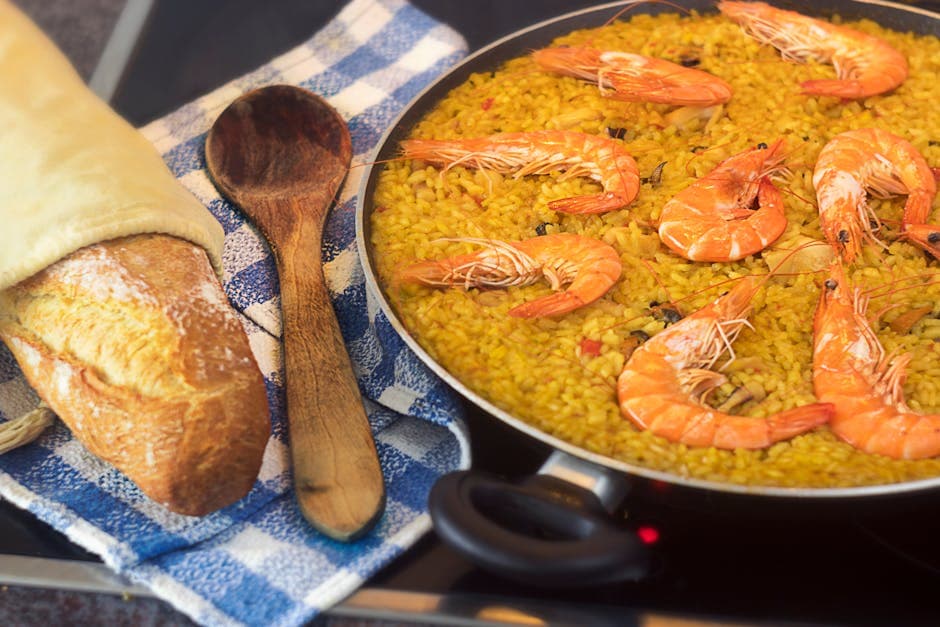
Fideuà (Spanish Seafood Noodle Paella)
Valencia's noodle-paella cousin — short toasted vermicelli cooked paella-style with squid, prawns and saffron broth, served with garlicky alioli.
About This Recipe
Fideuà is the noodle sibling of paella, born on the Mediterranean coast of Valencia in the 1930s when (legend has it) a fisherman's cook on the boat 'Santa Isabel' substituted noodles for rice to keep the greedy captain from eating the entire pan. The dish is now a Valencian and Catalan icon, made in the same wide flat paella pan, with the same saffron-tomato-seafood broth, but using short tubular noodles called fideos (similar to broken bucatini) that are first toasted in olive oil until deep nutty brown — this toasting is what gives fideuà its signature smoky, almost-coffee aroma. The noodles are then cooked entirely in the seafood broth, sucking up the flavor as they soften, with squid, prawns, mussels and white fish added at the right moments. Like its rice cousin, fideuà rewards the cook who builds a proper socarrat — the prized crispy bottom layer where the noodles caramelize against the pan — and is always served with a side of alioli, the pungent garlic-olive-oil emulsion that diners dollop on each forkful. The pan goes straight to the center of the table, and everyone eats with a spoon from their own wedge of the pan. A glass of cold albariño or cava, a hunk of bread to soak up any broth, and you have one of the best meals the Mediterranean coast has to offer.
Ingredients
Serves 4
- 300 gfideos (short hollow noodles), or 1 cm pieces of broken bucatini
- 1.2 Lrich fish or seafood stock (homemade if possible), kept hot
- 300 gfresh squid, cleaned and cut into rings
- 12raw shell-on prawns
- 300 gmussels, debearded and scrubbed
- 200 gfirm white fish (monkfish or hake), cut into 3 cm chunks
- 1 largeripe tomato, grated (skin discarded)
- 1 smallonion, finely chopped
- 4 clovesgarlic, minced
- 1 tspsweet smoked paprika (pimentón dulce)
- 1 pinchsaffron threads, lightly toasted and crumbled
- 5 tbspextra virgin olive oil
- 1 small bowlalioli (garlic mayonnaise), for serving
- 1lemon, cut into wedges
Instructions
- 1
Toast the noodles
Heat 2 tbsp olive oil in a wide paella pan over medium heat. Add the fideos and toast, stirring constantly with a wooden spoon, for 4–5 minutes until they turn a deep golden-brown — almost the color of milk chocolate. This step is critical: untoasted noodles produce a flavorless fideuà. Tip into a bowl and set aside.
- 2
Sear the prawns and squid
Add another 2 tbsp oil to the pan. Sear the prawns 60 seconds per side until just pink — they'll finish cooking later. Remove to a plate. Add the squid and sear 90 seconds until just opaque; remove and set aside. The pan should now be coated with seafood-tinted oil.
- 3
Build the sofrito
Add the remaining 1 tbsp oil. Add the onion and cook 5 minutes until translucent and just starting to color. Add the garlic and cook 60 seconds. Add the grated tomato and smoked paprika, and cook 6–8 minutes, stirring, until the tomato darkens and the oil starts to separate around the edges — a proper Spanish sofrito.
- 4
Add saffron and white fish
Stir in the crumbled saffron and let it bloom in the sofrito for 30 seconds. Add the chunks of white fish and stir gently to coat. They'll begin to firm up but stay raw inside.
- 5
Add noodles and hot broth
Return the toasted noodles to the pan and stir to combine with the sofrito. Pour in 1 L of the hot stock — it should just cover the noodles. Distribute evenly across the pan (don't stir again from this point — fideuà is built like paella, undisturbed).
- 6
Cook the noodles
Bring to a strong simmer. Cook over medium-high heat for 8 minutes, then arrange the squid, prawns and mussels on top, pressing them slightly into the noodles. Cook another 6–8 minutes until the broth is almost absorbed and the noodles stand upright. Add more hot stock 100 ml at a time only if needed.
- 7
Build the socarrat and rest
Increase heat to high for the last 90 seconds — listen for the noodles to crackle against the pan. This forms the socarrat, the prized crispy bottom layer. Remove from heat, cover loosely with foil, and rest 5 minutes. Serve immediately straight from the pan with lemon wedges and a generous bowl of alioli on the side.
Did you make this?
Rate it and help other cooks find the recipes that actually work.
One tap to sign in, and we'll save the rating you just picked.
Everything you need to plan your week — free
- Meal calendar
- Grocery list
- AI recipe ideas
Track what you eat
Snap your meal to log calories and macros, run fasting timers and track water in the free SnapCal app.
Pro Tips
- →
Toasting the noodles dark — almost too dark — is what makes fideuà fideuà. Don't pull them at golden; push to deep nutty brown. They burn fast, so stay at the pan constantly.
- →
Homemade fish stock from prawn shells, fish bones and a small whole fish makes a massive difference. Even a 30-minute stock beats supermarket fish bouillon.
- →
Don't stir after adding broth. Like paella, fideuà needs to cook undisturbed to develop layers and form a socarrat.
- →
Alioli is non-negotiable on the side. Make it with a mortar and pestle (3 cloves garlic, ½ tsp salt, 1 egg yolk, slowly stream in 200 ml olive oil) for the authentic emulsion.
Variations
- •
Black fideuà (fideuà negra) — add 2 sachets of squid ink with the broth for dramatic dark color.
- •
Mixed land-and-sea — add chunks of chicken thigh and chorizo for a heartier inland version.
- •
Vegetable fideuà — use rich vegetable stock and load with artichoke, white beans and roasted red pepper.
- •
Fideuà with rabbit — Valencian inland style, more like noodle paella with rabbit pieces and rosemary.
Storage
Best eaten the same day from the pan. Refrigerate up to 2 days; reheat gently in a covered skillet with a splash of water (microwaving rubberizes the seafood and softens the socarrat). Does not freeze well — the noodles turn pasty.
History & Origin
Fideuà was invented in the early 1930s by a young cook named Gabriel Rodríguez Pastor (nicknamed 'Gabrieló') aboard the fishing boat Santa Isabel out of Gandia, Valencia. The captain was reportedly eating more than his share of the crew's paella, so Gabrieló substituted noodles for rice hoping the captain wouldn't like them — instead a Valencian classic was born.
Frequently Asked Questions
Can I use angel hair or spaghetti?
No — fideos are short and hollow, designed to absorb broth without going to mush. Broken bucatini is the best supermarket substitute; angel hair turns to porridge.
Do I need a paella pan?
Strongly recommended — the wide, shallow shape is what allows the noodles to cook evenly and form a socarrat. A wide nonstick skillet works but won't develop the crispy bottom as well.
Can I make fideuà ahead?
No — fideuà is a same-hour dish. Make the stock and prep all ingredients ahead, but the cooking has to happen in one continuous push, and serving has to be immediate.
What wine should I drink with it?
Cold albariño from Galicia, a young white Rueda, or sparkling cava are all perfect. Cold rosé from Provence also works well for a summer fideuà.
Nutrition Facts
Per serving (420g / 14.8 oz) · 4 servings total
Time Summary
Have Questions?
Ask our AI cooking assistant anything about this recipe — substitutions, techniques, scaling.
Chat with AI Chef →More Spanish Recipes
You Might Also Like
Similar dishes from other cuisines around the world.
Browse by Ingredient
More recipes built around the same core ingredients.
Free Kitchen Tools
Calculators and converters that pair with this page — no signup needed.
Put This Into a Plan
Schedule it, shop for it, and track what you already have.
Read Next
Longer reads that go deeper on the ideas behind this dish.
Community
Join the conversation
Sign in to leave a comment and save your favourite recipes