
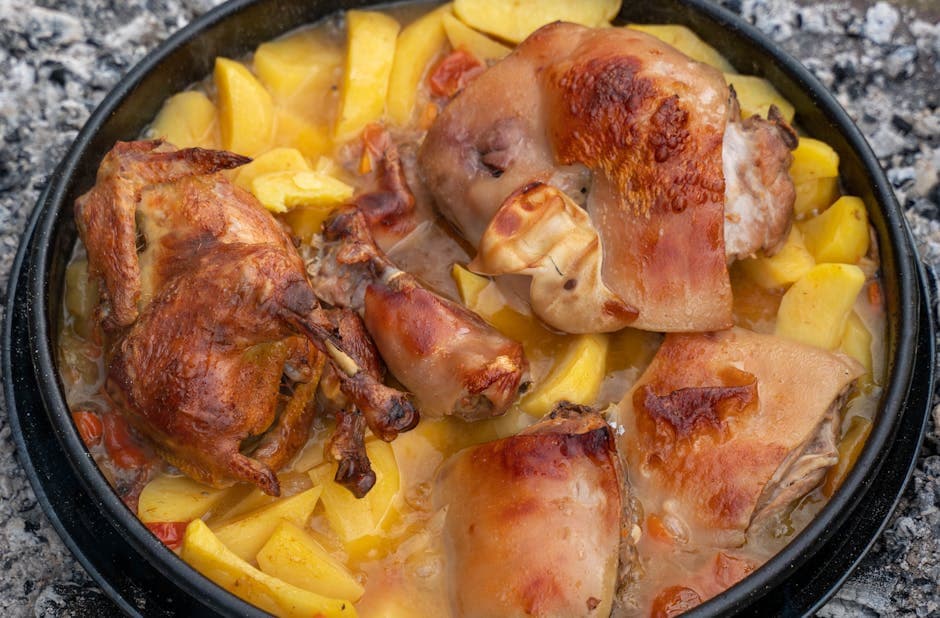
Kedjenou (Ivorian Slow-Cooked Chicken)
Côte d'Ivoire's signature claypot chicken — slow-cooked sealed with vegetables, no liquid added, in its own intensely concentrated juices.
About This Recipe
Kedjenou (sometimes written kédjénou) is the national dish of Côte d'Ivoire and one of West Africa's great low-and-slow techniques. Chicken pieces are layered in a sealed terracotta canari pot with onions, tomato, peppers, garlic, ginger, and a single hot pepper — no added water, no stock — then cooked slowly over coals or low heat, shaken vigorously every few minutes (never stirred with a spoon) to keep everything moving without breaking the seal. The result is chicken that has stewed in nothing but its own juices and the moisture from the vegetables: tender, deeply concentrated, with a sauce so glossy it looks lacquered. Traditionally served with attiéké — fermented cassava couscous — kedjenou is the soul of Akan and Baoulé village cooking and now appears on every restaurant menu from Abidjan to Bouaké.
Ingredients
Serves 4
- 1.4 kgbone-in chicken pieces (mix of thigh, drumstick, breast)
- 2 largeyellow onions, thickly sliced
- 3 largeripe tomatoes, roughly chopped
- 2 tbsptomato paste
- 1green bell pepper, cut into chunks
- 1red bell pepper, cut into chunks
- 6 clovesgarlic, smashed
- 2 tbspfresh ginger, sliced
- 1Scotch bonnet pepper, whole (do not pierce)
- 2 leavesbay
- 2 sprigsfresh thyme
- 1 cubechicken bouillon (Maggi or Jumbo)
- 1.5 tspfine salt
- 1 tspblack pepper
- 1 tspground white pepper
- 2 tbspneutral oil
- 2 tbspfresh parsley or basil, chopped, to finish
Instructions
- 1
Season the chicken
Toss the chicken pieces with salt, both peppers, the crumbled bouillon cube, and the oil. Let stand 15 minutes.
- 2
Layer the pot
Use a heavy lidded pot (a Dutch oven, terracotta canari, or claypot). Layer half the onions and tomatoes on the bottom, then the chicken, then the remaining onions, tomatoes, both bell peppers, garlic, ginger, bay, and thyme. Lay the whole Scotch bonnet on top. Stir in the tomato paste.
- 3
Seal and cook
Cover with the lid. If your lid doesn't seal tightly, lay a sheet of foil between pot and lid. Set over the lowest heat your stove will hold (or in a 150°C oven).
No liquid is added — the chicken and vegetables will release plenty as they cook.
- 4
Shake every 7 minutes
Cook 60–75 minutes. Every 7 minutes, lift the pot by the handles and shake it firmly side to side — this redistributes everything without breaking the seal or smashing the vegetables. Never stir with a spoon.
Resist the urge to lift the lid; every peek lets steam escape and dilutes the concentrated flavor.
- 5
Check the bird
After 60 minutes, lift the lid for the first time. The chicken should fall easily off the bone and the bottom of the pot should be coated in a thick glossy sauce. If liquid still looks thin, cook 15 more minutes uncovered.
- 6
Finish and serve
Remove and discard the Scotch bonnet (or split it open and stir in for serious heat). Adjust salt. Scatter with parsley or basil and serve from the pot with attiéké, rice, or fufu.
Did you make this?
Rate it and help other cooks find the recipes that actually work.
One tap to sign in, and we'll save the rating you just picked.
Everything you need to plan your week — free
- Meal calendar
- Grocery list
- AI recipe ideas
Cook this hands-free
Get AI meal plans, step-by-step cooking mode, and your saved recipes in the free Bento app.
Pro Tips
- →
Do not pierce the Scotch bonnet — left whole, it perfumes the dish; pierced or chopped, it makes the dish dangerously hot.
- →
Shaking, not stirring, is the cardinal kedjenou technique — it keeps the vegetables intact so they remain identifiable on the plate.
- →
If you have a clay pot, soak it in water for 30 minutes before use; the slow moisture release is exactly the kedjenou principle.
Variations
- •
Kedjenou de pintade: the original village version made with guinea fowl, which has a stronger flavor that suits the long cook.
- •
Kedjenou with okra: stir 200 g whole okra into the pot in the last 15 minutes.
- •
Smoked-fish kedjenou: layer 200 g smoked tilapia or mackerel with the chicken for extra depth.
Storage
Refrigerate up to 3 days; the dish is even better on day two. Reheat covered on low heat. Freezes well for 2 months.
History & Origin
Kedjenou originates with the Akan and Baoulé peoples of central and southern Côte d'Ivoire, where it was traditionally cooked sealed in a clay canari pot buried partially in hot coals — the slow steamless steaming gave the dish its concentrated flavor. It became a national emblem after independence in 1960 and is now featured on every Ivorian restaurant menu worldwide.
Frequently Asked Questions
Can I use a slow cooker?
Yes — a 4-quart slow cooker on low for 4 hours is an excellent stand-in. The shaking step matters less in a slow cooker; just give a gentle stir at the halfway mark.
Do I really need to skip adding water?
Yes — that's the whole point of kedjenou. The chicken and vegetables release just enough moisture for a concentrated sauce. Adding water turns it into ordinary chicken stew.
What is attiéké and where do I buy it?
Attiéké is fermented cassava couscous, the classic kedjenou pairing. Look for it frozen or vacuum-packed in West-African grocers. In a pinch, plain steamed couscous is acceptable but lacks the slight sourness.
How hot is it traditionally?
Medium — the Scotch bonnet perfumes the pot but doesn't dominate when left whole. If you want serious heat, split the chili before adding.
Nutrition Facts
Per serving (400g / 14.1 oz) · 4 servings total
Time Summary
Have Questions?
Ask our AI cooking assistant anything about this recipe — substitutions, techniques, scaling.
Chat with AI Chef →Featured in Guides
This recipe is featured in the following curated guides:
More Ivorian Recipes
You Might Also Like
Similar dishes from other cuisines around the world.
Free Kitchen Tools
Calculators and converters that pair with this page — no signup needed.
Put This Into a Plan
Schedule it, shop for it, and track what you already have.
Read Next
Longer reads that go deeper on the ideas behind this dish.
Community
Join the conversation
Sign in to leave a comment and save your favourite recipes