
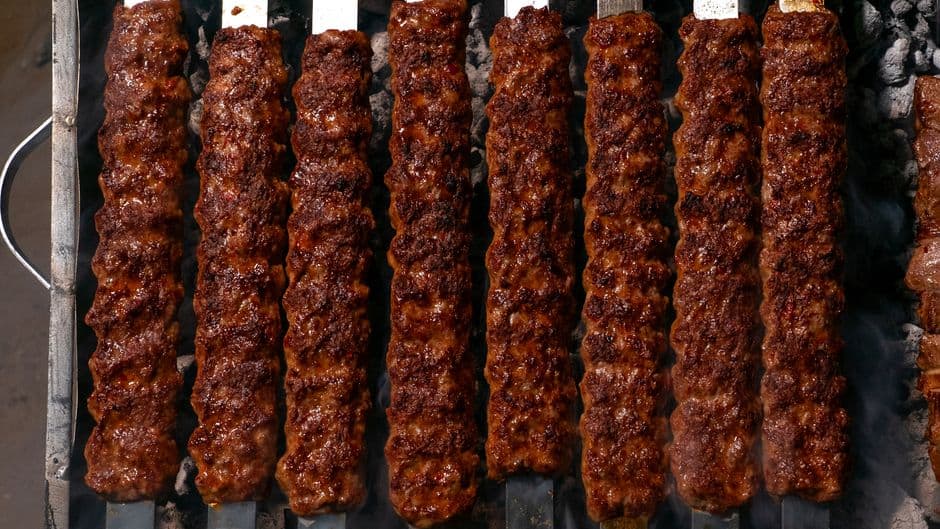
Joojeeh Kabab
Persian saffron and lemon marinated chicken skewers — grilled until charred and served with rice and sumac.
About This Recipe
Joojeeh kabab (baby chicken kabab) is one of Iran's most popular grilled dishes — chicken pieces marinated in a vivid yellow saffron and lemon marinade, then grilled over charcoal until the outside is charred and the inside is juicy and fragrant. The marinade is simple but the saffron bloomed in hot water gives the chicken a distinctive golden colour and floral aroma that no other spice can replicate. It is eaten at every Persian picnic, celebration and restaurant, always served with saffron-buttered rice and grilled tomatoes.
Ingredients
Serves 4
- 1 kgboneless chicken thighs(cut into 4cm pieces)
- 1 tspsaffron(ground and bloomed in 3 tbsp hot water)
- 2 largeonions(grated)
- 120 mllemon juice(from about 3 lemons)
- 80 mlolive oil
- 1.5 tspsalt
- 0.5 tspblack pepper
- 0.5 tspturmeric
- 4tomatoes(halved, to grill alongside)
- 1 tspsumac(to serve)
- 2 tbspbutter(melted, to baste)
Instructions
- 1
Make marinade
Combine bloomed saffron, grated onion, lemon juice, olive oil, salt, pepper and turmeric in a bowl.
- 2
Marinate chicken
Add chicken pieces. Turn to coat thoroughly. Cover and refrigerate minimum 4 hours, preferably overnight.
- 3
Thread on skewers
Remove chicken from marinade. Thread pieces onto metal skewers, alternating with any onion pieces from the marinade.
- 4
Grill
Grill over very hot charcoal or a preheated barbecue, turning every 2 minutes, for 12–15 minutes total until cooked through and charred in spots.
- 5
Baste and serve
Brush with melted butter in the final 2 minutes. Serve on a bed of saffron rice with grilled tomatoes. Dust with sumac.
Did you make this?
Rate it and help other cooks find the recipes that actually work.
One tap to sign in, and we'll save the rating you just picked.
Everything you need to plan your week — free
- Meal calendar
- Grocery list
- AI recipe ideas
Track what you eat
Snap your meal to log calories and macros, run fasting timers and track water in the free SnapCal app.
Pro Tips
- →
Grated onion (not chopped) is the key — the onion juice acts as a tenderiser and is the basis of the marinade.
- →
Bloom the saffron in hot water for 10 minutes — this extracts maximum colour and flavour.
- →
Charcoal grilling is strongly preferred — the smoke character pairs beautifully with the saffron marinade.
- →
Taste and adjust salt at the very end — flavors concentrate as liquids reduce, and a final pinch of flaky salt sharpens the whole dish.
Variations
- •
Use chicken wings instead of thighs for a starter-sized portion.
- •
Add a pinch of dried rose petals to the marinade for a distinctly Persian floral note.
- •
Vegetarian: swap the protein for roasted king oyster mushrooms, smoked tofu or cooked chickpeas — adjust seasoning slightly upward to compensate.
- •
Spicier: add a finely chopped fresh chile or a teaspoon of crushed Aleppo/Urfa pepper to the aromatics for warm, layered heat instead of a single sharp hit.
Storage
Marinated raw chicken keeps for 24 hours. Cooked kabab: refrigerate 3 days.
History & Origin
Persian kabab culture is ancient — skewered meat over fire predates Persian civilisation. Joojeeh kabab (joojeeh = baby chicken or 'chick') became a staple of 20th-century Persian restaurants and the country's picnic culture. The saffron-lemon marinade is considered characteristically Persian and distinct from Levantine, Turkish or Central Asian kabab traditions.
Frequently Asked Questions
Can I use chicken breast instead of thighs?
You can, but thighs are strongly recommended — they stay moist during the high-heat grilling. Chicken breast easily overcooks and dries out over charcoal. If using breast, reduce grilling time by 3 minutes.
Can I make this ahead of time?
Yes — most of the components can be prepared up to a day in advance and refrigerated separately. Reheat gently and assemble just before serving so textures stay distinct.
What can I substitute if I don't have all the ingredients?
Stay close to the role each ingredient plays: swap aromatics for similar ones (shallot for onion, lime for lemon), and keep the fat-acid-salt balance intact. Spice blends can usually be approximated with what's in the cupboard.
How do I know it's authentic?
Authenticity sits on a spectrum — what matters more is honoring the technique and balance of flavors. If the dish tastes harmonious and respects how cooks in its home region would build it, you're on solid ground.
Nutrition Facts
Per serving · 4 servings total
Time Summary
Have Questions?
Ask our AI cooking assistant anything about this recipe — substitutions, techniques, scaling.
Chat with AI Chef →Featured in Guides
This recipe is featured in the following curated guides:
More Persian Recipes
You Might Also Like
Similar dishes from other cuisines around the world.
Browse by Ingredient
More recipes built around the same core ingredients.
Free Kitchen Tools
Calculators and converters that pair with this page — no signup needed.
Put This Into a Plan
Schedule it, shop for it, and track what you already have.
Read Next
Longer reads that go deeper on the ideas behind this dish.
Community
Join the conversation
Sign in to leave a comment and save your favourite recipes