
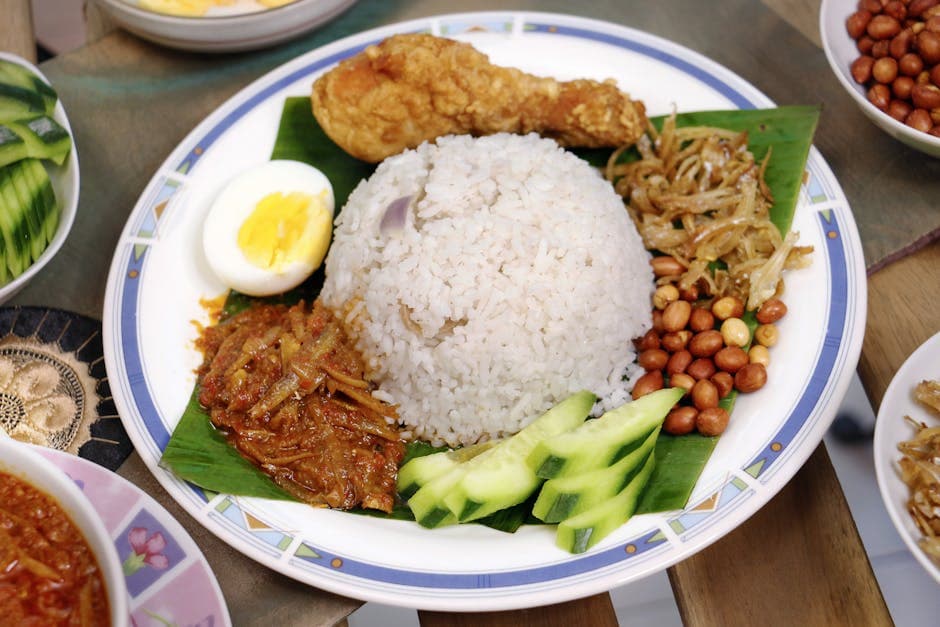
Nasi Lemak (Malaysian Coconut Rice with Sambal)
Malaysia's beloved national dish — fragrant pandan-scented coconut rice served with fiery sambal, crispy anchovies, peanuts, cucumber and egg.
About This Recipe
Nasi lemak — literally 'rich rice' or 'fatty rice' — is Malaysia's unofficial national dish, eaten at all hours from breakfast banana-leaf parcels at 7 a.m. to midnight late-night sambal feasts in Kuala Lumpur food courts. At its heart it is jasmine rice steamed in coconut milk with knotted pandan leaves and a slice of ginger, producing grains that are fluffy, fragrant and faintly sweet. The rice is the platform; what makes a nasi lemak truly extraordinary is the sambal that accompanies it. Sambal tumis is a slow-cooked chilli paste of dried chillies, shallots, garlic, lemongrass, belacan (fermented shrimp paste) and tamarind, fried in oil until the oil splits and the paste turns dark, glossy mahogany. Around the rice and sambal sit the supporting cast: crispy fried ikan bilis (anchovies), roasted peanuts, slices of cucumber, a halved hard-boiled or fried egg, and often a piece of fried chicken or rendang for those buying the deluxe version. Traditionally it is wrapped in banana leaf, the package compressed flat so that by the time you unwrap it on the bus or at your desk, the leaf has perfumed everything inside. The dish is endlessly variable — every Malaysian aunty has the correct recipe — but the trinity of coconut rice, dark sambal, and crispy anchovies is sacred.
Ingredients
Serves 4
- 400 gjasmine rice, rinsed until water runs clear
- 400 mlcoconut milk (full fat)
- 200 mlwater, plus 1 tsp salt
- 3pandan leaves, knotted (or 1/2 tsp pandan paste)
- 1 thumbfresh ginger, sliced into rounds
- 20dried red chillies, soaked in hot water 20 minutes then drained
- 8shallots, 4 garlic cloves, 1 stalk lemongrass (white part), 1 tbsp belacan
- 100 mlneutral oil, plus 2 tbsp tamarind paste and 2 tbsp palm sugar
- 100 gikan bilis (dried anchovies), and 80 g raw peanuts
- 4eggs, plus 1 cucumber sliced for serving
Instructions
- 1
Wash and soak the rice
Rinse the jasmine rice 3–4 times until the water runs nearly clear. Drain well. This removes excess surface starch and gives separated, fluffy grains rather than a sticky mass. Soaking for 15 minutes before cooking helps the grains absorb evenly.
- 2
Cook the coconut rice
Combine drained rice, coconut milk, water, salt, knotted pandan leaves and ginger in a heavy pot. Bring to a boil over medium-high heat, stir once, then cover and reduce to the lowest possible heat. Cook 18 minutes, then turn off heat and let stand covered another 10 minutes.
Do not lift the lid during cooking — escaping steam ruins the texture. A heat diffuser under the pot prevents the bottom from scorching, a real risk with coconut milk.
- 3
Pound the sambal paste
Blend the soaked chillies, shallots, garlic, lemongrass and belacan in a food processor to a thick paste, adding 2–3 tablespoons of water if needed. A mortar and pestle gives a slightly more authentic texture but takes 25 minutes of work.
- 4
Fry the sambal
Heat the oil in a wok over medium heat. Add the chilli paste and fry, stirring nearly constantly, for 20–25 minutes. The paste will pass through three stages: wet and bright red, dark red and thick, finally splitting as the oil pools at the edges and the paste turns deep mahogany. This is the dish — do not rush it.
- 5
Finish the sambal
Stir in the tamarind paste and palm sugar. Cook another 3 minutes until glossy. Taste and balance — it should be hot, sweet, sour and pungent in roughly equal measure, with a deep savory base. Set aside off heat.
- 6
Fry the anchovies and peanuts
In a separate pan, dry-roast the peanuts over medium heat until just golden, 4–5 minutes; set aside. Add 2 tablespoons oil to the same pan, fry the ikan bilis 2–3 minutes until crisp and deep gold, drain on paper towels. Both should crunch audibly when shaken.
- 7
Cook the eggs and plate up
Fry or hard-boil the eggs to your preference. To plate: mound coconut rice in the center, top with a generous spoon of sambal, scatter anchovies and peanuts around, lay cucumber slices on one side, halved egg on the other. Serve immediately while the rice is hot and the toppings are crisp.
Did you make this?
Rate it and help other cooks find the recipes that actually work.
One tap to sign in, and we'll save the rating you just picked.
Everything you need to plan your week — free
- Meal calendar
- Grocery list
- AI recipe ideas
Track what you eat
Snap your meal to log calories and macros, run fasting timers and track water in the free SnapCal app.
Pro Tips
- →
Belacan is essential — it provides the umami backbone. Toast it briefly in a dry pan or wrap in foil and grill 1 minute before pounding for a deeper aroma.
- →
The sambal is meant to be made in big batches and kept; it improves over 2–3 days as the flavors marry. Most Malaysian households always have a jar in the fridge.
- →
If your coconut milk is very thick, replace some of the water with extra water to keep the rice from cooking up gluey.
- →
Banana leaf wrapping is more than presentation — it perfumes the rice. Pass leaves over a flame to soften before wrapping.
Variations
- •
Nasi lemak ayam — add fried chicken thigh marinated in turmeric and lemongrass.
- •
Nasi lemak rendang — top with beef rendang slow-cooked in coconut and spices for the special-occasion deluxe version.
- •
Nasi lemak sotong — substitute squid sambal for plain sambal, popular on the east coast.
- •
Vegetarian nasi lemak — omit belacan and anchovies, add fried tempeh and a sambal made with toasted seaweed for umami.
Storage
Coconut rice keeps 2 days refrigerated; reheat with a splash of water in the microwave or steamer to restore moisture. Sambal keeps 2 weeks refrigerated in a sealed jar (the oil seal helps preservation) and freezes well in ice-cube trays for up to 3 months. Anchovies and peanuts must be re-crisped in a dry pan before re-serving.
History & Origin
Nasi lemak appears in 19th-century Malay literature as a simple peasant breakfast designed to power a day of plantation labor — coconut rice for energy, sambal for appetite, anchovies for protein. It crossed class lines in 20th-century Kuala Lumpur and was officially proclaimed Malaysia's national dish in informal cultural surveys throughout the 2000s.
Frequently Asked Questions
Is nasi lemak eaten only for breakfast?
Originally yes, but modern Malaysians eat it at every meal. Hawker stalls sell breakfast versions wrapped in banana leaf and dinner versions on plates with fried chicken.
What does belacan smell like and is it really necessary?
Belacan smells aggressively of fermented shrimp — it's an acquired aroma but it transforms cooked dishes. It is essential to authentic sambal; substitutes like Thai shrimp paste or fish sauce give a different (lesser) result.
Can I make the sambal less spicy?
Use fewer dried chillies, or remove the seeds before soaking. Some cooks use Kashmiri chillies (mild, color-rich) for half the quantity to keep the color without the heat.
Why is my rice sticky?
Either too much liquid, insufficient rinsing of the rice, or the lid was lifted during cooking. Use a 1:1.5 rice-to-liquid ratio by volume when combining coconut milk and water, and resist peeking.
Nutrition Facts
Per serving (480g / 16.9 oz) · 4 servings total
Time Summary
Have Questions?
Ask our AI cooking assistant anything about this recipe — substitutions, techniques, scaling.
Chat with AI Chef →Featured in Guides
This recipe is featured in the following curated guides:
More Malaysian Recipes
You Might Also Like
Similar dishes from other cuisines around the world.
Browse by Ingredient
More recipes built around the same core ingredients.
Free Kitchen Tools
Calculators and converters that pair with this page — no signup needed.
Put This Into a Plan
Schedule it, shop for it, and track what you already have.
Read Next
Longer reads that go deeper on the ideas behind this dish.
Community
Join the conversation
Sign in to leave a comment and save your favourite recipes