
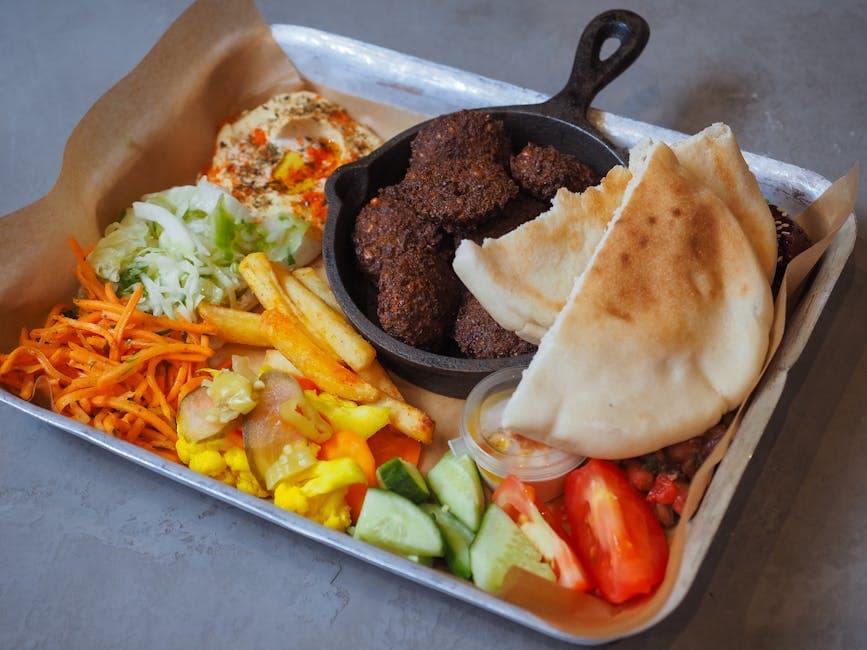
Sabich
Iraqi-Israeli pita stuffed with fried eggplant, boiled egg, hummus, salads, amba, and zhug — Tel Aviv breakfast icon.
About This Recipe
Sabich is the breakfast that Iraqi Jews brought to Israel in the 1950s — a pita pocket layered like a small architectural wonder: smooth hummus, slabs of golden fried eggplant, an entire hard-boiled egg sliced thinly (specifically a haminado, simmered overnight in tea), Israeli salad of cucumber-tomato, tahini, chopped parsley, amba (a fermented mango sauce that's the soul of the dish), and a fiery spoon of zhug. The result is creamy, smoky, tangy, hot, fresh, and rich all at once — every bite different from the last. Originally a Saturday-morning post-synagogue meal, sabich is now a Tel Aviv street-food star sold from tiny one-counter pita shops where the line is always twelve people deep.
Ingredients
Serves 4
- 2 largeglobe eggplants, sliced 1 cm thick
- fine salt for salting
- neutral oil for frying
- 4 largeeggs, soft-boiled or haminado (long-cooked Iraqi eggs)
- 4 largefresh pita breads (or laffa)
- 200 ggood-quality hummus
- 5 tbsptahini sauce (thinned with lemon and water)
- 2 largetomatoes, finely diced
- 2Persian cucumbers, finely diced
- 1 smallred onion, finely chopped
- 1 small bunchflat-leaf parsley, finely chopped
- 1lemon, juiced
- 2 tbspolive oil
- 4 tbspamba (Iraqi pickled mango sauce)
- 2 tbspzhug (Yemeni green chili sauce)
- freshly ground black pepper
Instructions
- 1
Salt the eggplant
Layer eggplant slices in a colander with salt between each. Weight with a plate and let drain 30 minutes; this softens the flesh and improves frying texture.
- 2
Make haminado eggs (optional but classic)
Place eggs in a pot covered with water plus a tablespoon of black tea leaves, a peeled onion skin, and a pinch of salt. Simmer the gentlest possible heat for 4–6 hours (or overnight on the lowest setting). The whites turn beige; the yolks become silky. Otherwise, hard-boil eggs for 8 minutes and slice.
- 3
Make Israeli salad
Toss tomatoes, cucumbers, red onion, and parsley with lemon juice, olive oil, salt, and pepper. Taste and brighten — should be sharp and fresh.
- 4
Pat and fry the eggplant
Press eggplant slices between paper towels to dry. Heat 1 cm oil in a wide skillet. Fry slices in batches until deeply golden brown and creamy inside, about 3 minutes per side. Drain on paper towels.
- 5
Warm pita and split
Wrap pitas in foil and warm in a 180°C oven for 5 minutes. Slice off the top quarter of each and pry open into a pocket.
- 6
Layer the sabich
Smear the inside of each pita generously with hummus, all the way to the bottom. Add 3 slices of eggplant. Pile in a slotted spoon of Israeli salad. Lay slices of egg along the top. Drizzle heavily with tahini. Spoon over amba and a streak of zhug.
- 7
Finish
Tuck in a final sprig of parsley. Wrap the base of each pita in paper towel or parchment — the eat is enthusiastic and amba will drip.
Did you make this?
Rate it and help other cooks find the recipes that actually work.
One tap to sign in, and we'll save the rating you just picked.
Everything you need to plan your week — free
- Meal calendar
- Grocery list
- AI recipe ideas
Track what you eat
Snap your meal to log calories and macros, run fasting timers and track water in the free SnapCal app.
Pro Tips
- →
Amba is the soul of sabich — don't skip it. Look for jarred amba at Middle Eastern stores or improvise with mango chutney + fenugreek + cumin + vinegar.
- →
Slow-cooked haminado eggs are the most distinctive element. If you have time to start them the night before, do.
- →
Fry the eggplant until very dark — under-fried eggplant tastes bitter and rubbery; properly fried slices melt like custard.
Variations
- •
Sabich with fried potatoes added (Iraqi version).
- •
Sabich bowl: serve over rice with all the toppings, no pita.
- •
Replace zhug with skhug rosso (red zhug) for a sweeter, slightly milder finish.
Storage
Components keep separately 3 days refrigerated — assemble fresh. Assembled sabich does not keep; the pita disintegrates within an hour.
History & Origin
Sabich was brought to Israel by Iraqi Jewish immigrants in the 1950s. Its name derives from sabaha, the Arabic word for morning — it was originally eaten as a Saturday-morning Shabbat meal where cooking was forbidden, so everything was prepared the night before. The first commercial sabich stall opened in Ramat Gan in the 1960s.
Frequently Asked Questions
Can I bake the eggplant instead of frying?
Yes — brush slices with oil and roast at 220°C for 25 minutes. Texture is less luscious but lighter and easier.
Where do I buy amba?
Middle Eastern or Israeli grocery stores, or online. Once opened, it keeps refrigerated for months.
Nutrition Facts
Per serving (460g / 16.2 oz) · 4 servings total
Time Summary
Have Questions?
Ask our AI cooking assistant anything about this recipe — substitutions, techniques, scaling.
Chat with AI Chef →More Israeli Recipes
You Might Also Like
Similar dishes from other cuisines around the world.
Browse by Ingredient
More recipes built around the same core ingredients.
Free Kitchen Tools
Calculators and converters that pair with this page — no signup needed.
Put This Into a Plan
Schedule it, shop for it, and track what you already have.
Read Next
Longer reads that go deeper on the ideas behind this dish.
Community
Join the conversation
Sign in to leave a comment and save your favourite recipes