
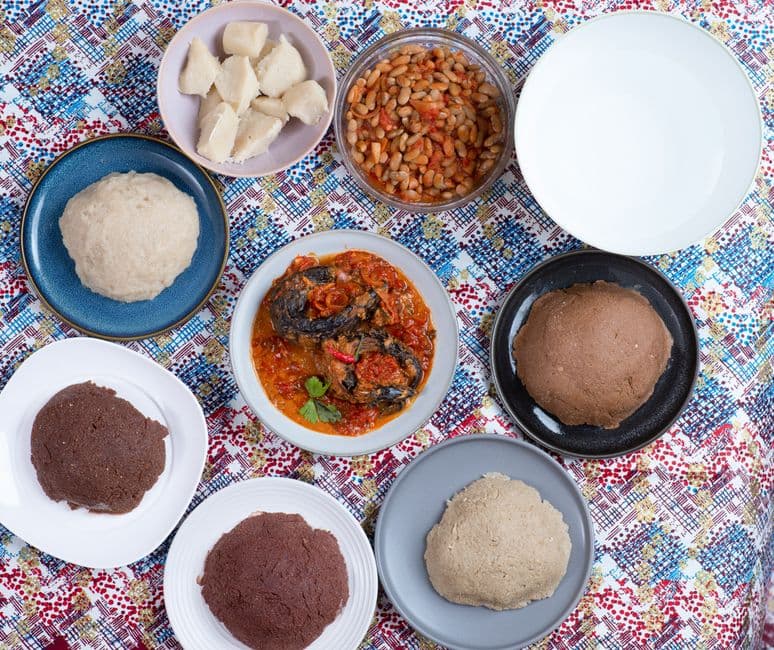
Isombe
Un plato burundés muy sabroso a base de hojas de yuca cocidas a fuego lento con maní, aceite de palma y especias aromáticas.
Acerca de esta receta
El isombe es uno de los platos más famosos de la cocina de Burundi, elaborado con hojas de yuca que se machacan, se hierven y luego se cuecen a fuego lento en una rica salsa de maní molido, aceite de palma y aromáticos. Las hojas de yuca sufren una transformación durante la cocción: su amargor y toxicidad se eliminan mediante una ebullición prolongada, dejando una salsa sedosa de color verde intenso con una complejidad terrosa que es única. El isombe se consume en toda la región de los Grandes Lagos de África central, donde la yuca es un cultivo de doble propósito que proporciona raíces con almidón y hojas ricas en proteínas. En Burundi es un plato de orgullo cultural y se sirve a menudo en celebraciones.
Ingredientes
Sirve 4
- 500 ghojas de yuca frescas o congeladas, finamente picadas (o 200 g secas)
- 150 gmantequilla de maní natural
- 3 cdared palm oil
- 1cebolla grande, finamente picada
- 4 dientesajo, picado
- 1chile verde, picado
- 400 mlagua o caldo de verduras
- 1 cdtasal
- 0.5 cdtapimienta negra
Instrucciones
- 1
Hojas de yuca precocidas
Si usa hojas frescas, hierva en una olla grande con agua sin sal durante 45 minutos, cambiando el agua dos veces para eliminar el amargor. Si lo usa congelado, descongélelo y exprima el exceso de líquido. Escurrir bien y picar en trozos grandes.
- 2
Sofreír los aromáticos
Calienta el aceite de palma en una olla grande a fuego medio. Freír la cebolla durante 5 minutos hasta que se ablande. Agregue el ajo y el chile, cocine 1 minuto.
- 3
Agrega hojas de yuca
Agrega las hojas de yuca precocidas y cocina por 5 minutos, revolviendo frecuentemente.
- 4
Agrega salsa de mantequilla de maní
Batir la mantequilla de maní con el agua o el caldo hasta que quede suave. Vierta sobre las hojas y revuelva para combinar.
- 5
Cocine a fuego lento hasta que espese
Cocine a fuego lento durante 20 a 30 minutos, revolviendo ocasionalmente, hasta que la salsa esté espesa, cremosa y con todo su sabor. Sazone con sal y pimienta.
- 6
Servir
Sirva caliente con ugali, arroz o plátano frito.
¿Has preparado esta receta?
Valórala y ayuda a otros a encontrar las recetas que de verdad funcionan.
Inicia sesión con un toque y guardaremos la valoración que acabas de elegir.
Todo lo que necesitas para planificar tu semana — gratis
- Calendario de comidas
- Lista de compras
- Ideas de recetas con IA
Controla lo que comes
Fotografía tu comida para registrar calorías y macros, usa temporizadores de ayuno y controla tu agua en la app gratuita SnapCal.
Consejos profesionales
- →
Cambiar el agua mientras se cocinan previamente las hojas frescas de yuca es esencial: elimina los compuestos cianogénicos dañinos.
- →
Las hojas de yuca congeladas están ampliamente disponibles en las tiendas de comestibles africanas y eliminan el paso de ebullición previa.
- →
El aceite de palma rojo le da al isombe su característico tono naranja dorado; no lo sustituya por aceite normal.
- →
Pruebe y ajuste la sal al final — los sabores se concentran a medida que los líquidos se reducen, y un último pellizco de sal escamosa afilará todo el plato.
Variaciones
- •
Isombe con pescado ahumado: añadir pescado ahumado desmenuzado en los últimos 10 minutos de cocción.
- •
Isombe con leche de coco: reemplace el caldo con leche de coco para obtener una versión más cremosa y suave.
- •
Vegetariano: cambiar la proteína por hongos ostra real asados, tofu ahumado o garbanzos cocidos — ajustar el condimento ligeramente hacia arriba para compensar.
- •
Más picante: agregue un chile fresco finamente picado o una cucharadita de pimienta de Alepo/Urfa triturada a los aromáticos para obtener un picante cálido y en capas en lugar de un solo golpe fuerte.
Almacenamiento
Refrigere por hasta 4 días. Los sabores se intensifican durante la noche, haciéndolo aún mejor al día siguiente. Se congela bien durante 1 mes.
Historia y origen
Se cree que el isombe formó parte de la cocina de Burundi y Ruanda durante varios siglos, antes de la introducción de la yuca en la región. Platos similares aparecen en toda la región de los Grandes Lagos, desde la República Democrática del Congo hasta Tanzania, lo que refleja la herencia culinaria compartida entre las comunidades de habla bantú.
Preguntas frecuentes
¿Las hojas de yuca son seguras para comer?
Sí, una vez preparado adecuadamente. Las hojas frescas de yuca deben hervirse con cambios de agua para eliminar los glucósidos cianogénicos. Las hojas secas y congeladas comercialmente han sido preprocesadas y son seguras de usar directamente.
¿Con qué puedo sustituir el aceite de palma rojo?
El aceite de coco con una pizca de cúrcuma para darle color es el sustituto más cercano, aunque el sabor será diferente.
¿Puedo hacer esto con anticipación?
Sí — la mayoría de los componentes se pueden preparar con un día de anticipación y refrigerar por separado. Recaliente suavemente y ensamble justo antes de servir para que las texturas se mantengan distintas.
¿Qué puedo sustituir si no tengo todos los ingredientes?
Manténgase cerca del papel que juega cada ingrediente: cambie los aromáticos por otros similares (chalote por cebolla, lima por limón), y mantenga el equilibrio de grasa-ácido-sal intacto. Las mezclas de especias generalmente se pueden aproximar con lo que está en la despensa.
Datos nutricionales
Por porción (280g) · 4 porciones totales
Resumen de tiempo
¿Tiene preguntas?
Pregúntele a nuestro asistente de cocina con IA cualquier cosa sobre esta receta: sustituciones, técnicas, escalado.
Chatea con AI Chef →Destacado en Guías
Esta receta aparece en las siguientes guías seleccionadas:
Más recetas de Burundian
También Te Puede Gustar
Platos similares de otras cocinas del mundo.
Herramientas de Cocina Gratuitas
Calculadoras y conversores que acompañan a esta página — sin registro.
Conviértelo en un Plan
Prográmalo, haz la compra y controla lo que ya tienes.
Calendario de planificación de comidas
Coloca esta receta en un día y organiza la semana a su alrededor.
App de lista de la compra
Convierte esta lista de ingredientes en una lista de la compra agrupada por pasillo.
Nutricionista con IA
Pregunta por sustituciones, macros y porciones de este plato en lenguaje sencillo.
Sigue Leyendo
Lecturas más largas que profundizan en las ideas detrás de este plato.
Comunidad
Únete a la conversación
Inicia sesión para dejar un comentario y guardar tus recetas favoritas