
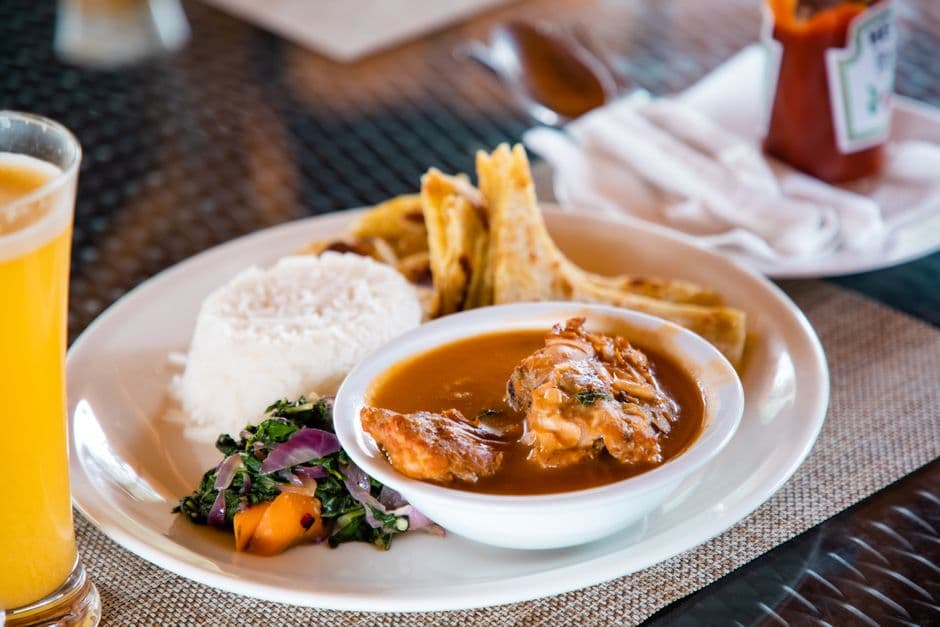
Matoke
Plátanos verdes cocidos al vapor en una salsa rica de cacahuete y tomate, el alimento básico nacional amado de Uganda. Sustancial, cremoso y profundamente reconfortante.
Acerca de esta receta
El matoke (plátanos verdes cocidos al vapor y triturados) es el plato nacional de Uganda y una piedra angular de la cultura Baganda en la región central del país. Los plátanos se envuelven en sus propias hojas y se cuecen al vapor hasta que estén suaves, luego, tradicionalmente, se trituran dentro del manojo de hojas y se sirven con una variedad de guisos y salsas. El plato es central en la vida ceremonial de Uganda, presente en bodas, funerales y celebraciones, donde servir matoke en abundancia es un signo de hospitalidad y prosperidad. Rico en potasio y carbohidratos complejos, el matoke ha sustentado a las comunidades ugandesas durante siglos y sigue siendo el alimento básico preferido sobre el arroz o el maíz en gran parte del país.
Ingredientes
Sirve 4
- 8 medianoPlátanos verdes para cocinar (matake/plátanos verdes), pelados
- 200 gpasta de maní (mantequilla de maní, sin azúcar)
- 400 gtomates enlatados cortados en cubitos
- 1 grandecebolla, finamente picada
- 3 dientesajo, picado
- 1 cdtajengibre fresco, rallado
- 500 mlcaldo de verduras o carne
- 2 cdaaceite vegetal
- 1 cdtacomino molido
- 1 cdtacilantro molido
- 1/2 cdtacúrcuma
- 1 puñadohojas de cilantro fresco, para decorar
- 1 cdtasal al gusto
- 1 pizcahojuelas de chile (opcional)
Instrucciones
- 1
preparar los plátanos
Pela los plátanos verdes (usa guantes para quitar la savia). Cortar por la mitad o dejar entero. Colóquelo inmediatamente en un recipiente con agua fría con sal para evitar la decoloración.
- 2
Cocine al vapor el matoke
Forre una canasta vaporera con hojas de plátano o papel de aluminio. Coloque los trozos de plátano en la canasta, cúbralos bien y cocine al vapor sobre agua hirviendo durante 35 a 40 minutos hasta que estén completamente suaves y blandos. Alternativamente, envuélvalo bien en papel de aluminio y cocine en un horno a 180°C durante 45 minutos.
- 3
hacer la salsa de maní
Calienta el aceite en una cacerola a fuego medio. Freír la cebolla durante 8 minutos hasta que esté dorada. Agrega el ajo, el jengibre, el comino, el cilantro y la cúrcuma y cocina por 2 minutos. Agrega los tomates cortados en cubitos y cocina por 5 minutos hasta que la salsa espese y el aceite se separe.
- 4
Agrega la pasta de maní
Agrega la pasta de maní a la salsa de tomate hasta que esté completamente incorporada. Vierta el caldo gradualmente, revolviendo constantemente para crear una salsa rica y suave. Cocine a fuego lento durante 10 minutos, revolviendo con frecuencia. Sazone con sal y hojuelas de chile si lo usa.
- 5
Machacar y servir
Retire los plátanos cocidos al vapor y tritúrelos ligeramente con un tenedor; deje un poco de textura en lugar de hacer un puré suave. Sirva el puré de matoke en platos o tazones, cubierto con la salsa de maní. Adorne con cilantro fresco.
¿Has preparado esta receta?
Valórala y ayuda a otros a encontrar las recetas que de verdad funcionan.
Inicia sesión con un toque y guardaremos la valoración que acabas de elegir.
Todo lo que necesitas para planificar tu semana — gratis
- Calendario de comidas
- Lista de compras
- Ideas de recetas con IA
Controla lo que comes
Fotografía tu comida para registrar calorías y macros, usa temporizadores de ayuno y controla tu agua en la app gratuita SnapCal.
Consejos profesionales
- →
Use guantes al pelar plátanos verdes; la savia es muy pegajosa y mancha las manos.
- →
No utilice plátanos amarillos maduros; se volverán demasiado dulces y blandos.
- →
La salsa de maní se puede preparar con anticipación y recalentar; se espesa a medida que se enfría.
- →
Para una presentación más tradicional, triture los plátanos mientras aún estén en su papel de aluminio.
Variaciones
- •
Agregue 400 g de carne de cabra o ternera en cubos a la salsa de maní para obtener una versión carnosa.
- •
Agrega 200 g de espinacas picadas o col rizada a la salsa para obtener una nutrición adicional.
- •
Use leche de coco en lugar de la mitad del caldo para obtener una salsa más cremosa y dulce.
- •
Vegetariano: cambia la proteína por champiñones de ostra rey asados, tofu ahumado o garbanzos cocidos—ajusta el sazón ligeramente hacia arriba para compensar.
Almacenamiento
Guarde el matoke y la salsa por separado en recipientes herméticos en el refrigerador hasta por 3 días. Recalentar la salsa con un chorrito de agua. El puré de matoke se puede recalentar en el microondas o en una vaporera.
Historia y origen
Matoke ha sido el alimento básico del pueblo Baganda del centro de Uganda durante más de 500 años. Se cree que los cultivares de banano cultivados para matoke se introdujeron en África oriental desde el sudeste asiático a través de las rutas comerciales del Océano Índico. El Reino de Buganda formalizó el matoke como alimento real, y su importancia en la cultura se refleja en el proverbio: "Una comida sin matoke no es una comida real".
Preguntas frecuentes
¿Cuáles son los mejores plátanos para usar en matoke?
Los plátanos para cocinar de las tierras altas de África Oriental (también llamados Matooke o plátanos de las tierras altas de África Oriental) son tradicionales. Los plátanos verdes son el mejor sustituto disponible y se comportan de manera muy similar cuando se cocinan.
¿Puedo hacer esto con anticipación?
Sí, la mayoría de los componentes se pueden preparar hasta con un día de anticipación y refrigerar por separado. Vuelva a calentar suavemente y ensamble justo antes de servir para que las texturas se mantengan distintas.
¿Qué puedo sustituir si no tengo todos los ingredientes?
Manténgase atento al papel que desempeña cada ingrediente: cambie los aromáticos por otros similares (chalote por cebolla, lima por limón) y mantenga intacto el equilibrio entre grasa, ácido y sal. Las mezclas de especias generalmente se pueden aproximar a lo que hay en la alacena.
¿Cómo sé que es auténtico?
La autenticidad se encuentra en un espectro; lo que más importa es honrar la técnica y el equilibrio de sabores. Si el plato tiene un sabor armonioso y respeta cómo lo prepararían los cocineros de su región de origen, está en tierra firme.
Datos nutricionales
Por porción (420g) · 4 porciones totales
Resumen de tiempo
¿Tiene preguntas?
Pregúntele a nuestro asistente de cocina con IA cualquier cosa sobre esta receta: sustituciones, técnicas, escalado.
Chatea con AI Chef →Destacado en Guías
Esta receta aparece en las siguientes guías seleccionadas:
Más recetas de Ugandan
También Te Puede Gustar
Platos similares de otras cocinas del mundo.
Herramientas de Cocina Gratuitas
Calculadoras y conversores que acompañan a esta página — sin registro.
Calculadora para escalar recetas
Reduce a la mitad o duplica cada cantidad de esta receta sin hacer cuentas mentales.
Conversor de medidas
Convierte tazas, gramos, onzas y mililitros en ambos sentidos.
Conversor para freidora de aire
Convierte el tiempo y la temperatura del horno a ajustes de freidora de aire.
Conviértelo en un Plan
Prográmalo, haz la compra y controla lo que ya tienes.
Calendario de planificación de comidas
Coloca esta receta en un día y organiza la semana a su alrededor.
App de lista de la compra
Convierte esta lista de ingredientes en una lista de la compra agrupada por pasillo.
Nutricionista con IA
Pregunta por sustituciones, macros y porciones de este plato en lenguaje sencillo.
Sigue Leyendo
Lecturas más largas que profundizan en las ideas detrás de este plato.
Comunidad
Únete a la conversación
Inicia sesión para dejar un comentario y guardar tus recetas favoritas