
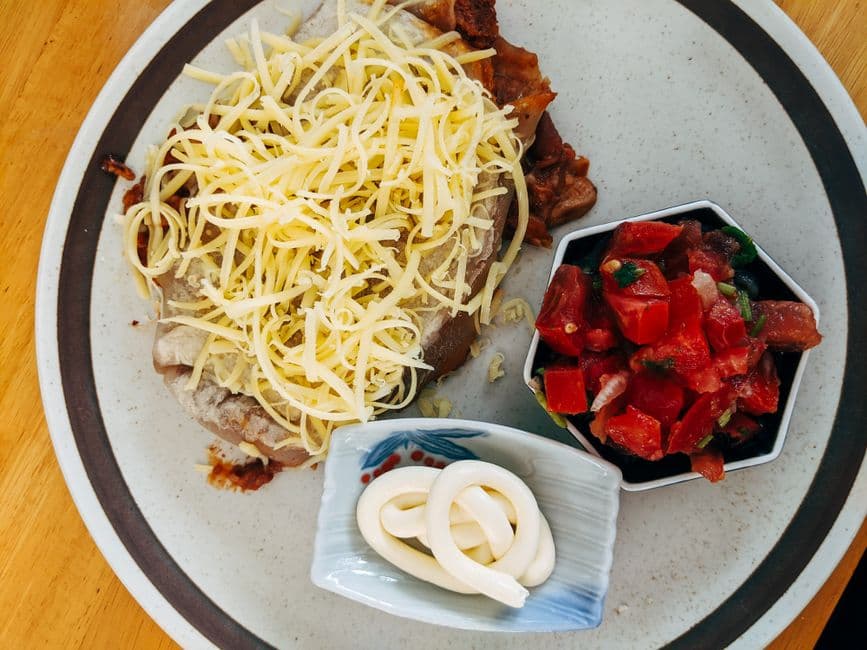
Kapana
Tiras de carne de res de Namibia a la parrilla, servidas con salsa de tomate peri-peri y pan fresco.
Acerca de esta receta
Kapana es el alma de la escena de comida callejera de Windhoek, y se vende en mercados al aire libre llamados "puestos de kapana", donde los vendedores asan carne directamente sobre brasas. La palabra en sí deriva de una expresión local Oshiwambo que significa "cortado". Los vendedores cortan cortes finos de carne barata, los colocan sobre parrillas de hierro abrasadoras y los mezclan con una salsa brillante con chile hecha de tomates, cebolla y vinagre. Comer kapana es un ritual comunitario: los amigos comparten una pila envuelta en periódicos mientras están de pie, observando cómo se mueve la ciudad.
Ingredientes
Sirve 4
- 700 gsolomillo o grupa de res, en rodajas finas
- 2 cdacooking oil
- 1 cdtasal
- 1 cdtapimienta negra
- 3tomates maduros, finamente picados
- 1cebolla pequeña, finamente picada
- 2chiles rojos, finamente picados
- 2 cdavinagre blanco
- 1 cdasalsa inglesa
- 1 cdtaazúcar
- 4panecillos de pan blanco, para servir
Instrucciones
- 1
hacer la salsa kapana
Combine los tomates, la cebolla, los chiles, el vinagre, la salsa inglesa y el azúcar en un tazón. Sazone con sal y reserve para que los sabores se mezclen durante al menos 10 minutos.
- 2
Sazona la carne de res
Seque las rodajas de carne y frótelas con aceite, sal y pimienta. Dejar reposar a temperatura ambiente durante 5 minutos.
- 3
Asar a fuego alto
Calienta una sartén de hierro fundido o braai a fuego alto hasta que esté muy caliente. Ase las tiras de carne durante 2 a 3 minutos por lado hasta que se quemen los bordes y estén bien cocidas.
- 4
Pica y mezcla
Transfiera la carne asada a una tabla de cortar y córtela en trozos pequeños. Mezcle inmediatamente con la mitad de la salsa kapana.
- 5
Servir
Aplíquelos sobre panecillos y vierta más salsa encima. Sirva inmediatamente mientras esté caliente.
¿Has preparado esta receta?
Valórala y ayuda a otros a encontrar las recetas que de verdad funcionan.
Inicia sesión con un toque y guardaremos la valoración que acabas de elegir.
Todo lo que necesitas para planificar tu semana — gratis
- Calendario de comidas
- Lista de compras
- Ideas de recetas con IA
Controla lo que comes
Fotografía tu comida para registrar calorías y macros, usa temporizadores de ayuno y controla tu agua en la app gratuita SnapCal.
Consejos profesionales
- →
Utilice el calor más intenso posible: el carbón es esencial para lograr un sabor auténtico.
- →
Los cortes baratos como el filete o la falda funcionan bien, ya que el corte fino y el calor alto los mantienen tiernos.
- →
Agregue un chorrito de salsa de soja a la salsa para mojar para darle más profundidad umami.
- →
Pruebe y ajuste la sal al final — los sabores se concentran a medida que los líquidos se reducen, y un último pellizco de sal escamosa afilará todo el plato.
Variaciones
- •
Pollo Kapana: sustituye la carne por muslos de pollo.
- •
Kapana Vegan: utiliza tiras de champiñones portobello aderezadas con pimentón ahumado.
- •
Vegetariano: cambiar la proteína por hongos ostra real asados, tofu ahumado o garbanzos cocidos — ajustar el condimento ligeramente hacia arriba para compensar.
- •
Más picante: agregue un chile fresco finamente picado o una cucharadita de pimienta de Alepo/Urfa triturada a los aromáticos para obtener un picante cálido y en capas en lugar de un solo golpe fuerte.
Almacenamiento
Es mejor comerlo fresco. Las sobras se mantienen refrigeradas hasta por 2 días; recalentar en una sartén caliente.
Historia y origen
Kapana se originó en el crecimiento urbano posterior a la independencia de Namibia, cuando los vendedores del mercado informal comenzaron a vender carne asada a precios asequibles a los trabajadores en el municipio de Katutura, en Windhoek, en la década de 1990. Desde entonces, se ha convertido en la comida callejera más querida del país, se celebra en festivales y aparece en guías de viaje de todo el mundo.
Preguntas frecuentes
¿Qué corte de carne se utiliza tradicionalmente?
Los cortes secundarios baratos, como la espaldilla, la grupa o los despojos, son tradicionales porque son asequibles y se cocinan rápidamente cuando se cortan en rodajas finas.
¿Puedo cocinar kapana en el interior?
Sí, una parrilla de hierro fundido muy caliente funciona bien, aunque extrañarás el aroma ahumado a leña y carbón de un braai al aire libre.
¿Puedo hacer esto con anticipación?
Sí — la mayoría de los componentes se pueden preparar con un día de anticipación y refrigerar por separado. Recaliente suavemente y ensamble justo antes de servir para que las texturas se mantengan distintas.
¿Qué puedo sustituir si no tengo todos los ingredientes?
Manténgase cerca del papel que juega cada ingrediente: cambie los aromáticos por otros similares (chalote por cebolla, lima por limón), y mantenga el equilibrio de grasa-ácido-sal intacto. Las mezclas de especias generalmente se pueden aproximar con lo que está en la despensa.
Datos nutricionales
Por porción (280g) · 4 porciones totales
Resumen de tiempo
¿Tiene preguntas?
Pregúntele a nuestro asistente de cocina con IA cualquier cosa sobre esta receta: sustituciones, técnicas, escalado.
Chatea con AI Chef →Destacado en Guías
Esta receta aparece en las siguientes guías seleccionadas:
Más recetas de Namibian
También Te Puede Gustar
Platos similares de otras cocinas del mundo.
Herramientas de Cocina Gratuitas
Calculadoras y conversores que acompañan a esta página — sin registro.
Conviértelo en un Plan
Prográmalo, haz la compra y controla lo que ya tienes.
Calendario de planificación de comidas
Coloca esta receta en un día y organiza la semana a su alrededor.
App de lista de la compra
Convierte esta lista de ingredientes en una lista de la compra agrupada por pasillo.
Importador de recetas
Guarda esta receta —y cualquier URL de receta— en una biblioteca ordenada.
Sigue Leyendo
Lecturas más largas que profundizan en las ideas detrás de este plato.
Cocina filipina: un adobo completo, sinigang, lechon y los atrevidos sabores del archipiélago
13 mín.
Quinua vs arroz: diferencias en nutrición, proteínas y cocción
12 mín.
Plan de alimentación cetogénica de 7 días: recetas completas bajas en carbohidratos con menos de 20 g de carbohidratos netos por día
15 mín.
Comunidad
Únete a la conversación
Inicia sesión para dejar un comentario y guardar tus recetas favoritas