
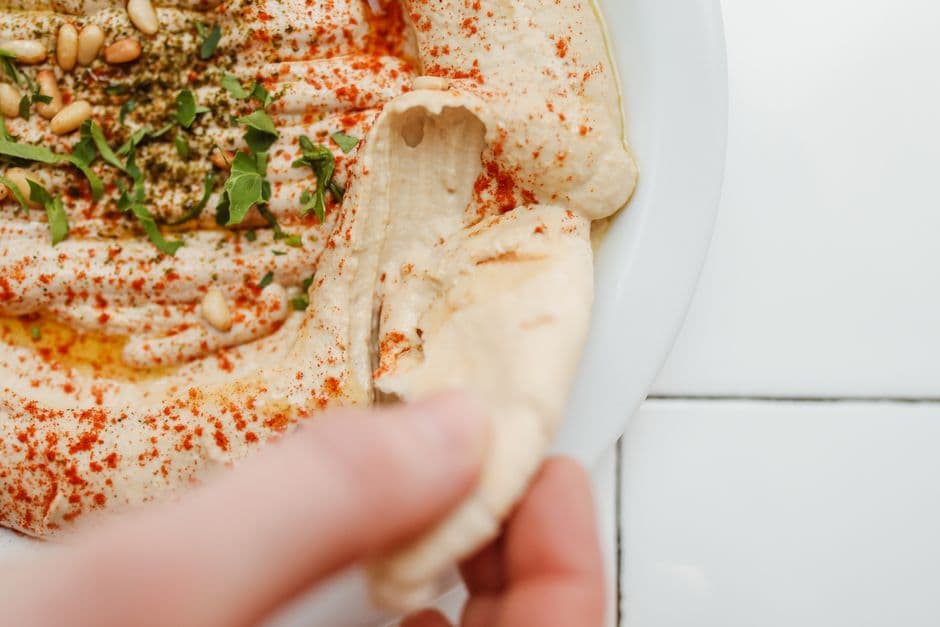
Msabbaha
Garbanzos enteros calientes en salsa tahini con comino, aceite de oliva y limón: el primo rústico y conmovedor del hummus.
Acerca de esta receta
Msabbaha (también escrito musabbaha) se come en todo el Levante y es uno de los excelentes platos de desayuno y almuerzo de la cultura árabe israelí. A diferencia del hummus suave, el msabbaha se sirve caliente con garbanzos enteros recién cocidos flotando en una salsa tahini suelta con limón y comino, cubierta con una generosa cantidad de aceite de oliva. Tiene un carácter más texturizado e inmediato que el hummus y es profundamente reconfortante.
Ingredientes
Sirve 4
- 800 ggarbanzos enlatados(escurrido, líquido reservado)
- 120 gtahini
- 3 cdajugo de limón
- 2 dientesajo(picado)
- 1 cdtacomino molido
- 4 cdaaceite de oliva virgen extra
- 0.5 cdtasal
- 0.5 cdtapimentón(to garnish)
- 1 manojo pequeñoperejil fresco(picados)
Instrucciones
- 1
Calentar los garbanzos
Calienta los garbanzos con 4 cucharadas del líquido reservado en una olla a fuego medio hasta que estén calientes y humeantes.
- 2
hacer salsa tahini
Batir el tahini con el jugo de limón, el ajo, el comino y la sal. Diluya con agua fría hasta obtener una consistencia de salsa que se pueda verter.
- 3
Combine
Vierta la mayor parte de la salsa tahini en los garbanzos calientes. Revuelva suavemente para cubrir.
- 4
Plate
Sirva en tazones poco profundos. Vierta la salsa tahini restante por encima.
- 5
Finish
Rocíe generosamente con aceite de oliva. Espolvoree con pimentón y esparza perejil fresco. Sirva inmediatamente con pan de pita tibio.
¿Has preparado esta receta?
Valórala y ayuda a otros a encontrar las recetas que de verdad funcionan.
Inicia sesión con un toque y guardaremos la valoración que acabas de elegir.
Todo lo que necesitas para planificar tu semana — gratis
- Calendario de comidas
- Lista de compras
- Ideas de recetas con IA
Controla lo que comes
Fotografía tu comida para registrar calorías y macros, usa temporizadores de ayuno y controla tu agua en la app gratuita SnapCal.
Consejos profesionales
- →
Servir caliente es lo que diferencia al msabbaha del hummus: no lo dejes enfriar.
- →
Una cucharada de muy buen aceite de oliva marca una diferencia espectacular en el plato final.
- →
Triture algunos garbanzos con el dorso de una cuchara para obtener una base más espesa y cremosa.
- →
Prueba y ajusta la sal al final — los sabores se concentran cuando los líquidos se reducen, y un pellizco final de sal en escamas agudiza todo el plato.
Variaciones
- •
Cubra con una cucharada de hummus preparado para obtener una versión más rica.
- •
Añade un huevo frito encima para un desayuno completo.
- •
Vegetariano: cambia la proteína por champiñones ostra king asados, tofu ahumado o garbanzos cocidos — ajusta el condimento un poco hacia arriba para compensar.
- •
Más picante: añade un chile fresco finamente picado o una cucharadita de pimienta de Aleppo/Urfa molida a los aromáticos para un calor cálido y estratificado en lugar de un golpe agudo único.
Almacenamiento
Refrigere por 3 días. Vuelva a calentar suavemente con un chorrito de agua; agregue tahini y aceite de oliva fresco.
Historia y origen
Msabbaha se come en todo el Levante: Palestina, Israel, Líbano, Siria y Jordania. En Israel se asocia particularmente con la hummusia árabe-israelí (restaurantes de hummus) que abren al amanecer para la multitud que desayuna.
Preguntas frecuentes
¿Cuál es la diferencia con el hummus normal?
El hummus se mezcla suave y se sirve frío o a temperatura ambiente. Msabbaha se sirve caliente con garbanzos enteros y una salsa tahini más ligera, más rústica y reconfortante.
¿Puedo hacer esto con anticipación?
Sí — la mayoría de los componentes pueden prepararse con hasta un día de anticipación y refrigerarse por separado. Recalienta suavemente y ensambla justo antes de servir para que las texturas permanezcan distintas.
¿Qué puedo sustituir si no tengo todos los ingredientes?
Mantente cerca del papel que juega cada ingrediente: intercambia aromáticos por otros similares (chalota por cebolla, lima por limón), y mantén el equilibrio grasa-ácido-sal intacto. Las mezclas de especias generalmente se pueden aproximar con lo que hay en la despensa.
¿Cómo sé que es auténtico?
La autenticidad está en un espectro — lo que importa más es honrar la técnica y el equilibrio de sabores. Si el plato sabe armonioso y respeta cómo los cocineros en su región de origen lo construirían, estás en terreno sólido.
Datos nutricionales
Por porción · 4 porciones totales
Resumen de tiempo
¿Tiene preguntas?
Pregúntele a nuestro asistente de cocina con IA cualquier cosa sobre esta receta: sustituciones, técnicas, escalado.
Chatea con AI Chef →Más recetas de cocina israelí
También Te Puede Gustar
Platos similares de otras cocinas del mundo.
Explorar por Ingrediente
Más recetas construidas alrededor de los mismos ingredientes principales.
Herramientas de Cocina Gratuitas
Calculadoras y conversores que acompañan a esta página — sin registro.
Conviértelo en un Plan
Prográmalo, haz la compra y controla lo que ya tienes.
Calendario de planificación de comidas
Coloca esta receta en un día y organiza la semana a su alrededor.
App de lista de la compra
Convierte esta lista de ingredientes en una lista de la compra agrupada por pasillo.
Importador de recetas
Guarda esta receta —y cualquier URL de receta— en una biblioteca ordenada.
Sigue Leyendo
Lecturas más largas que profundizan en las ideas detrás de este plato.
Comunidad
Únete a la conversación
Inicia sesión para dejar un comentario y guardar tus recetas favoritas