
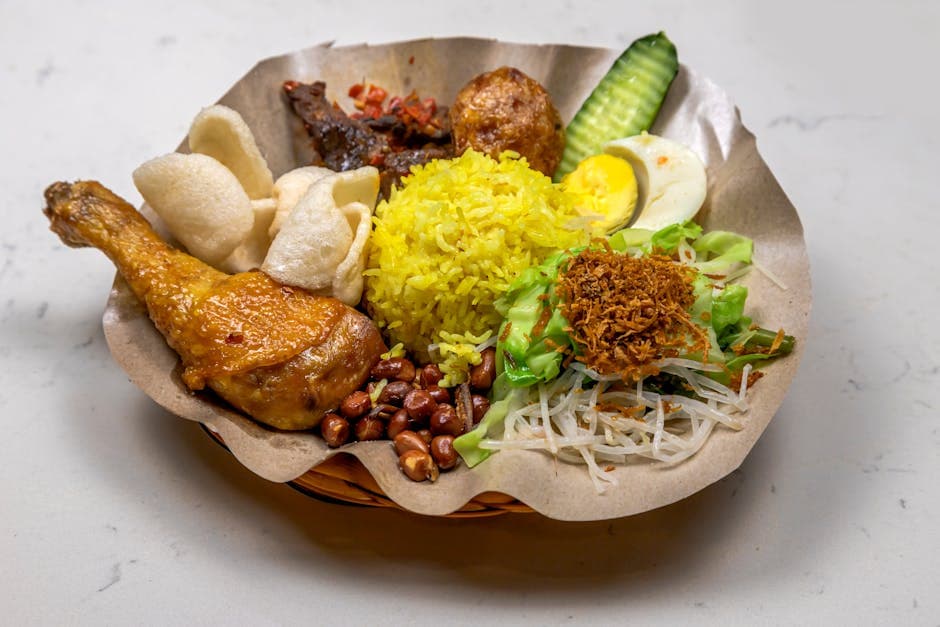
Nasi Kuning de Perak (Arroz con Cúrcuma)
Arroz aromático infusionado con cúrcuma y leche de coco del estado de Perak, servido con sambal y curry.
Acerca de esta receta
Nasi kuning (arroz amarillo) es un plato festivo encontrado en toda Malasia, pero la versión de Perak es reconocida por su sabor aromático y delicado. El arroz se cocina en leche de coco infusionada con cúrcuma, hierba de limón y hojas de pándano, creando arroz con un matiz amarillo sutil, aroma floral y textura cremosa.
Ingredientes
Sirve 4
- 2 tazasjazmín o arroz blanco de grano largo
- 300 mlleche de coco
- 400 mlagua o caldo de pollo
- 2 cdtacúrcuma molida
- 2 talloshierba de limón, magullada
- 3 hojashojas de pandan (opcional)
- 1 cdtasal
- 2 cdaghee or butter
- 4 dientesajo, picado
Instrucciones
- 1
Enjuagar el arroz
Enjuague el arroz con agua fría hasta que el agua salga clara. Escurrir bien.
- 2
Sofreír los aromáticos
Caliente el ghee en una olla arrocera o en una olla. Freír el ajo picado durante 20 segundos. Agrega la cúrcuma y fríe durante 10 segundos más hasta que esté fragante.
- 3
Cocinar el arroz
Agrega el arroz escurrido a la olla. Revuelva para cubrir con aceite y cúrcuma. Agregue limoncillo, hojas de pandan y sal. Vierta agua y leche de coco.
- 4
Steam
Llevar a ebullición y luego reducir el fuego a bajo. Tape y cocine a fuego lento durante 15 minutos hasta que se absorba el líquido y el arroz esté tierno.
- 5
Reposar y servir
Deje reposar el arroz tapado durante 5 minutos. Revuelva con un tenedor. Retire la hierba de limón y las hojas de pandan. Servir caliente.
¿Has preparado esta receta?
Valórala y ayuda a otros a encontrar las recetas que de verdad funcionan.
Inicia sesión con un toque y guardaremos la valoración que acabas de elegir.
Todo lo que necesitas para planificar tu semana — gratis
- Calendario de comidas
- Lista de compras
- Ideas de recetas con IA
Controla lo que comes
Fotografía tu comida para registrar calorías y macros, usa temporizadores de ayuno y controla tu agua en la app gratuita SnapCal.
Consejos profesionales
- →
Las hojas de pandan añaden un sutil aroma floral; No son esenciales pero sí muy recomendables.
- →
No levante la tapa durante la cocción o se escapará vapor.
- →
La proporción entre líquido y arroz es importante: un poco menos de líquido crea un arroz más esponjoso.
- →
Busque el jazmín o el arroz blanco de grano largo más fresco que pueda encontrar: es el ancla de sabor del plato.
- →
Sazone en capas a medida que avanza; La degustación en cada etapa evita un resultado final plano o demasiado salado.
Variaciones
- •
Agregue anacardos o maní tostados para darle textura.
- •
Incorpora las chalotas fritas después de cocinarlas.
- •
Agregue granos de maíz o guisantes.
- •
Vegetariano: reemplace la proteína principal con champiñones, paneer, tofu o frijoles abundantes para obtener una versión sin carne.
- •
Más picante: agregue chile fresco, una pasta de chile o una pizca de cayena con los aromáticos para obtener un perfil más cálido.
Almacenamiento
Es mejor comerlo fresco. Refrigere las sobras hasta por 3 días y vuelva a calentarlas suavemente con un chorrito de agua.
Historia y origen
El nasi kuning es común en Malasia y el sudeste asiático, pero la versión de Perak es particularmente apreciada por su perfil de especias aromáticas y la calidad de su cúrcuma local. Como muchos clásicos malayos, evolucionó en las cocinas caseras antes de ganarse un lugar en los menús de los restaurantes, y los cocineros regionales todavía discuten afablemente sobre la forma "correcta" de prepararlo. La siguiente versión refleja el modelo más cocinado, con notas en las que las prácticas locales divergen.
Preguntas frecuentes
¿Qué son las hojas de pandan?
El pandan es una hoja tropical fragante que se utiliza en todo el sudeste asiático por su aroma dulce, ligeramente parecido a la vainilla. Encuéntrelos frescos o congelados en los mercados asiáticos.
¿Puedo usar una olla arrocera?
Sí, una olla arrocera funciona perfectamente. Utilice la proporción estándar de arroz y agua y agregue leche de coco como parte del líquido.
¿Puedo preparar Perak Nasi Kuning (arroz con cúrcuma) con anticipación?
Sí, la mayoría de los componentes se conservan bien en el frigorífico durante uno o dos días. Vuelve a calentar suavemente con un chorrito de líquido para que vuelva a la vida.
¿Con qué puedo sustituir el jazmín o el arroz blanco de grano largo?
Si es difícil encontrar jazmín o arroz blanco de grano largo, los sustitutos más cercanos comparten su textura y contenido de agua. Ajuste ligeramente el condimento, ya que los sustitutos suelen tener menos carácter propio.
Datos nutricionales
Por porción · 4 porciones totales
Resumen de tiempo
¿Tiene preguntas?
Pregúntele a nuestro asistente de cocina con IA cualquier cosa sobre esta receta: sustituciones, técnicas, escalado.
Chatea con AI Chef →Destacado en Guías
Esta receta aparece en las siguientes guías seleccionadas:
Más recetas de cocina malaya
También Te Puede Gustar
Platos similares de otras cocinas del mundo.
Explorar por Ingrediente
Más recetas construidas alrededor de los mismos ingredientes principales.
Herramientas de Cocina Gratuitas
Calculadoras y conversores que acompañan a esta página — sin registro.
Conviértelo en un Plan
Prográmalo, haz la compra y controla lo que ya tienes.
Calendario de planificación de comidas
Coloca esta receta en un día y organiza la semana a su alrededor.
App de lista de la compra
Convierte esta lista de ingredientes en una lista de la compra agrupada por pasillo.
Importador de recetas
Guarda esta receta —y cualquier URL de receta— en una biblioteca ordenada.
Sigue Leyendo
Lecturas más largas que profundizan en las ideas detrás de este plato.
Comunidad
Únete a la conversación
Inicia sesión para dejar un comentario y guardar tus recetas favoritas