
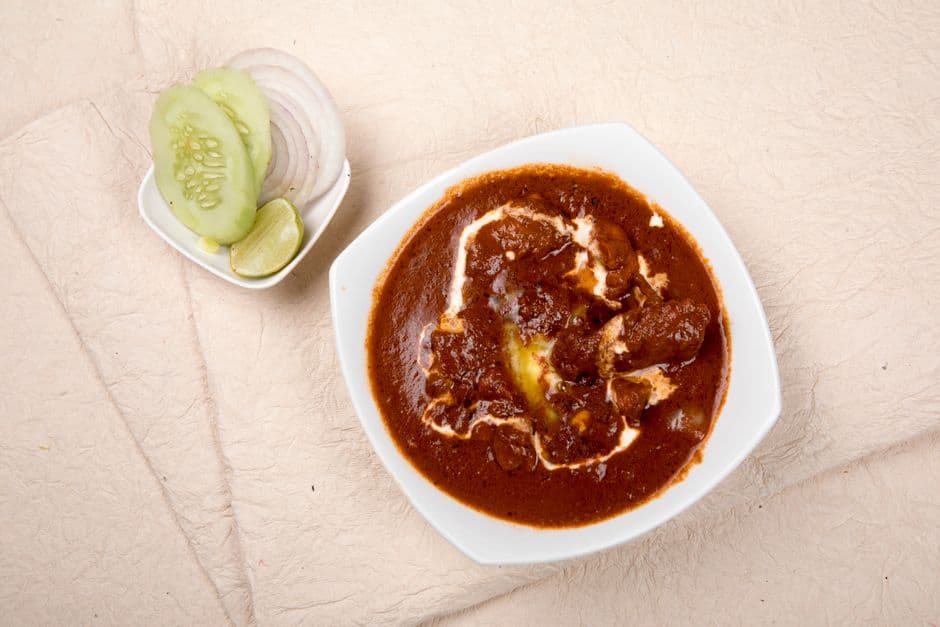
Rajma Masala (curry de haricots rouges punjabi)
L'aliment de réconfort emblématique du Panjab — ragoût de haricots rouges crémeux épicé avec des arômes chauds (cannelle, cardamome, clous de girofle), tomate et gingembre, servi avec du riz au cumin.
À propos de cette recette
Le rajma masala est le plat du déjeuner dominical du Pendjab, en Inde du Nord, et dans toute la diaspora il porte un poids émotionnel bien supérieur à la somme de ses modestes ingrédients. Des haricots rouges (rajma) — trempés toute une nuit, cuits à l'autocuiseur jusqu'à presque se défaire, puis mijotés lentement dans une sauce rouge profonde d'oignons frits, de tomates, de gingembre, d'ail, de piments rouges secs et d'un mélange d'épices complexe — donnent un ragoût si riche et savoureux qu'il est devenu le plat réconfortant végétarien par excellence de l'Inde. Le plat illustre le principe de cuisine pendjabi du bhuna : la friture patiente et lente des oignons jusqu'à un brun acajou profond et le soigneux « bhunao » de la base tomate-épices jusqu'à ce qu'elle rende de l'huile sur les bords — ce n'est qu'à ce moment-là que l'on ajoute les haricots. Servi avec du riz basmati vapeur (rajma chawal), un quartier de citron, de l'oignon cru en tranches et un piment vert, le rajma masala est ce que les familles pendjabies mangent après une longue semaine, ce que les étudiants cuisinent dans leurs résidences, ce que les mères envoient dans des tiffins avec leurs enfants. Malgré son ingrédient principal humble, il possède une profondeur qui rivalise avec les ragoûts français mijotés longuement — et comme eux, il a encore meilleur goût le lendemain, après que les saveurs ont eu une nuit pour se poser.
Ingrédients
Sert 4
- 300 gdried kidney beans, soaked overnight (or 3 x 400 g cans, drained and rinsed)
- 2 grandeonions, finely diced
- 4 moyenail, haché
- 1 c. à s.ginger, grated
- 1 c. à s.tomatoes (fresh or canned), chopped
- 2bâton de cannelle
- 4 c. à s.black cardamom pods (kali elaichi)
- 1 tsp eachgreen cardamom pods
- 2 c. à c.clous de girofle
- 1/2 tsp eachfeuilles de laurier
- 1 small piecegraines de cumin
- curcuma moulu
- ground coriander
Étapes
- 1
Cook the beans
Égouttez les haricots trempés et rincez-les. Mettez-les dans un autocuiseur avec 1 L d'eau fraîche, 1 c. à café de sel, le bâton de cannelle, la cardamome noire et les clous de girofle. Faites cuire sous pression à feu vif 8 sifflements (ou environ 25 minutes dans un Instant Pot à haute pression). Les haricots doivent être complètement tendres — vous devez pouvoir en écraser un entre le pouce et l'index.
- 2
Temper the spices
Pendant que les haricots cuisent, faites chauffer le ghee dans une marmite à fond épais à feu moyen. Ajoutez les graines de cumin et laissez-les crépiter 30 secondes. Ajoutez les oignons hachés et faites cuire 12–15 minutes, en remuant fréquemment, jusqu'à ce qu'ils soient d'un brun doré profond — pas blonds, pas pâles, vraiment dorés. Cette étape est la base de la sauce pendjabie et des oignons précipités gâchent le plat.
Ajoutez tôt une pincée de sel aux oignons – cela absorbe l’humidité et les aide à dorer plus rapidement.
- 3
Add aromatics
Ajoutez la pâte de gingembre, la pâte d'ail et les piments verts fendus aux oignons dorés. Faites revenir 2 minutes jusqu'à ce que l'odeur crue disparaisse et que le mélange soit parfumé. Ne laissez pas l'ail brûler — baissez le feu si nécessaire.
- 4
Add tomato
Versez la purée de tomates et ajoutez la coriandre en poudre, le piment du Cachemire, le curcuma et 1 c. à café de sel. Faites cuire 12–15 minutes à feu moyen-doux, en remuant toutes les 2 minutes, jusqu'à ce que la tomate ait réduit en une pâte épaisse et que vous voyiez de l'huile s'accumuler sur les bords — c'est le bhunao qui définit une vraie sauce pendjabie. Sans cette libération d'huile, le plat a un goût cru et acide.
- 5
Add the beans and liquid
Versez les haricots cuits à l'autocuiseur (avec leur liquide de cuisson) dans la sauce et remuez délicatement. Le mélange doit être onctueux mais pas liquide — ajoutez de l'eau chaude s'il est trop épais. Portez à frémissement.
- 6
Adjust texture
If the curry is too watery, simmer uncovered for 10 more minutes. If too thick, add splashes of water or the reserved bean cooking liquid. The finished rajma should be creamy but still pourable — like a thick stew, not a soup.
- 7
Taste and finish
Émiettez le kasuri methi entre vos paumes pour réveiller l'arôme et saupoudrez-le sur le rajma. Saupoudrez de garam masala, remuez une dernière fois et laissez reposer couvert 5 minutes hors du feu. Garnissez de coriandre hachée et servez sur du riz basmati chaud avec de l'oignon cru en tranches, un quartier de citron et un piment vert fendu à côté.
Vous l'avez cuisinée ?
Notez-la et aidez les autres à trouver les recettes qui fonctionnent vraiment.
Connectez-vous en un geste : nous enregistrons la note que vous venez de choisir.
Tout ce qu'il faut pour planifier votre semaine — gratuit
- Calendrier des repas
- Liste de courses
- Idées de recettes IA
Suivez ce que vous mangez
Photographiez votre repas pour enregistrer calories et macros, lancez des minuteurs de jeûne et suivez votre hydratation avec l’app gratuite SnapCal.
Conseils de pro
- →
Caramelizing the onions is non-negotiable for authentic flavor — don't rush this step. Deep golden = deep flavor.
- →
If using dried beans, reserve the cooking liquid — its starch thickens and richens the sauce beautifully. Don't use canned bean liquid; it's often too thick.
- →
La poudre de piment du Cachemire donne la riche couleur rouge sans trop de piquant ; la poudre de piment indienne ordinaire donnera trop de piquant et une couleur terne.
- →
Black cardamom (kali elaichi) is essential and very different from green cardamom — it's smoky and almost camphoraceous. Find it at Indian groceries; don't substitute.
Variantes
- •
Rajma chawal — l'accompagnement classique avec du riz basmati ; la seule façon dont la plupart des Pendjabis le mangent.
- •
Chana masala — substitute chickpeas for kidney beans; same spices, same technique.
- •
Rajma with spinach (palak rajma) — add 200 g fresh spinach (or frozen, thawed) in the last 10 minutes.
- •
Quick rajma (using canned beans) — follow the recipe but skip the bean-cooking step; uses 3 cans rinsed beans + 1.5 cups water, reduces simmering to 15 minutes.
Stockage
Refrigerate up to 5 days — the flavor improves by day 2. Freezes beautifully for 3 months. Reheat gently on the stovetop, adding a splash of water if it's too thick.
Histoire et origine
Rajma masala is a staple of everyday Punjabi home cooking, especially in northern India. The dish became even more iconic after Indian independence; in the post-partition era, kidney beans were promoted as a cheap, protein-rich alternative to meat, and rajma became the food that sustained millions through lean times. Today it remains the quintessential comfort food of Punjab — eaten at breakfast with rice and roti, or as a simple weeknight dinner.
Foire aux questions
Can I use canned beans?
Vous pouvez utiliser un trempage rapide (faire bouillir les haricots 2 minutes, laisser reposer 1 heure) mais la texture est nettement moins crémeuse. Un trempage d'une nuit donne le meilleur résultat et réduit le temps de cuisson.
Pourquoi mes haricots sont-ils encore durs après une longue cuisson ?
Black cardamom (kali elaichi) has a smoky, camphoraceous aroma very different from green cardamom. It's essential for authentic flavor. You can't substitute; find it at Indian groceries or online.
Why is my rajma watery?
Add too much water or the beans didn't release enough starch. Simmer uncovered to reduce, or add a splash of bean cooking liquid if you have it. The finished rajma should coat a spoon.
What should I serve with rajma?
Basmati rice (plain steamed or with cumin), warm roti or paratha, and a glass of cool lassi (buttermilk). A side of sliced onions and fresh cilantro are traditional.
Faits nutritionnels
Par portion (380g) · 4 portions totales
Résumé du temps
Vous avez des questions ?
Demandez quoi que ce soit à notre assistant culinaire IA sur cette recette : substitutions, techniques, mise à l'échelle.
Discutez avec AI Chef →Présenté dans les guides
Cette recette est présentée dans les guides sélectionnés suivants :
Plus de recettes indiennes
Vous Aimerez Aussi
Des plats similaires venus d'autres cuisines du monde.
Parcourir par Ingrédient
D'autres recettes construites autour des mêmes ingrédients principaux.
Outils de Cuisine Gratuits
Calculateurs et convertisseurs qui accompagnent cette page — sans inscription.
Calculateur de proportions
Divisez par deux ou doublez chaque quantité de cette recette sans calcul mental.
Convertisseur de mesures
Convertissez tasses, grammes, onces et millilitres dans les deux sens.
Calculateur de calories et de portions
Calculez les calories et les macros de la portion que vous mangez vraiment.
Transformer en Plan
Programmez-le, faites les courses et suivez ce que vous avez déjà.
Calendrier de planification des repas
Placez cette recette sur un jour et organisez la semaine autour.
Appli de liste de courses
Transformez cette liste d’ingrédients en liste de courses regroupée par rayon.
Importateur de recettes
Enregistrez cette recette — et n’importe quelle URL de recette — dans une bibliothèque organisée.
À Lire Ensuite
Des articles de fond sur les idées derrière ce plat.
Communauté
Rejoignez la conversation
Connectez-vous pour laisser un commentaire et enregistrer vos recettes préférées