
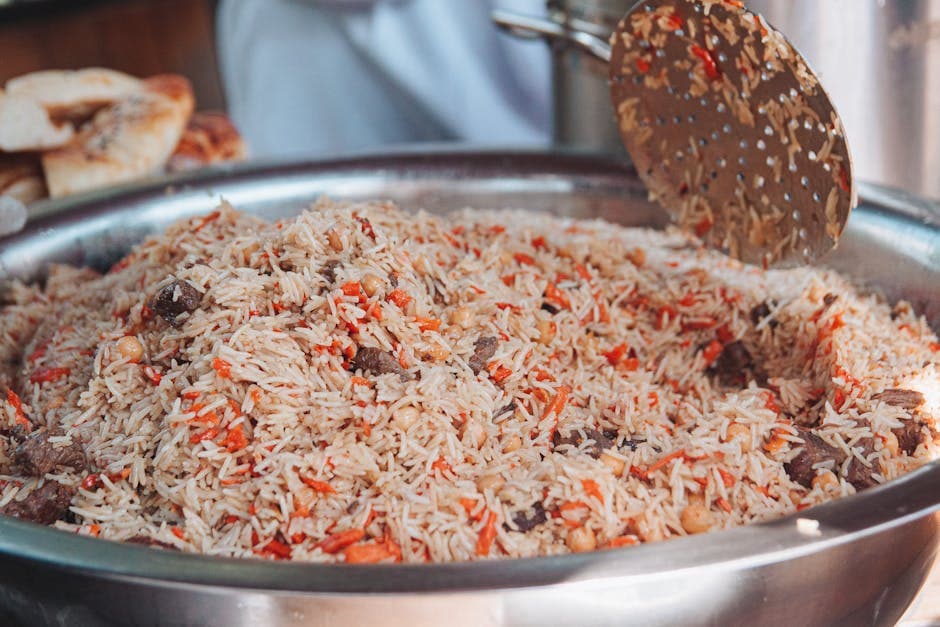
Plov uzbeko (pilaf de cordero y arroz)
El mejor plato de arroz de Asia Central: cordero, zanahoria y cebolla cocinados juntos en un gran kazán de hierro fundido, luego cubierto con arroz y cocido al vapor en los jugos de la carne. El plato nacional de Uzbekistán, que se come en todas las celebraciones.
Acerca de esta receta
El plov uzbeko es uno de los platos de arroz más importantes del mundo y el plato nacional de Uzbekistán; se considera tan importante que la UNESCO lo inscribió en su lista de Patrimonio Cultural Inmaterial en 2016. Cada ciudad uzbeka tiene su propio estilo: el plov de Samarcanda coloca capas de carne y arroz por separado; Fergana plov usa más zirvak (caldo) graso y oscuro; Al plov de Tashkent se le añade membrillo, garbanzos y agracejos secos. El hilo conductor es el kazán (un gran caldero esférico de hierro fundido) y el zirvak, la base profunda de cebolla caramelizada y zanahoria en grasa de cordero extraída que es la base del sabor de cada plov. Cocinar plov para una boda de 1.000 invitados es una forma de arte social en Uzbekistán: los maestros especiales de plov (oshpaz) inspiran un enorme respeto.
Ingredientes
Sirve 6
- 700 gpaletilla de cordero con hueso(cortar en trozos de 4 cm)
- 500 gdevzira rice(o basmati, remojado 30 min)
- 150 mlaceite de semilla de algodón o vegetal(o grasa de cordero fundida)
- 4large onions(cortado finamente en medias lunas)
- 4large carrots(cortado en palitos gruesos, no rallado)
- 1 enterohead of garlic(capas exteriores peladas y dejadas enteras)
- 700 mlagua caliente
- 2 cdtasemillas de comino
- 1 cdtacoriander seeds(crushed)
- 1 cdtapimienta negra
- 0.5 cdtacúrcuma
- 2 cdtasal
- 50 gagracejos o pasas secas(opcional pero tradicional)
Instrucciones
- 1
Calentar aceite muy caliente
Caliente el aceite en un wok grande o en una olla de fondo grueso a fuego lo más alto posible hasta que humee. El aceite debe estar muy caliente, casi a punto de humear.
- 2
Dorar el cordero
Agrega el cordero en una sola capa. No revuelva durante 3 minutos; déjelo dorar por completo. Dorar todos los lados, 8 minutos en total. Retirar y reservar.
- 3
cebollas caramelizadas
Agregue cebollas en rodajas a la grasa caliente. Cocine a fuego alto sin revolver durante 5 minutos, luego revuelva y cocine 10 minutos más hasta que tenga un color marrón dorado oscuro, casi carbonizado en los bordes.
La caramelización oscura de la cebolla es lo que le da al plov uzbeko su característico color y sabor profundo: las cebollas pálidas producen un plov pálido y de sabor plano.
- 4
Agrega las zanahorias y el zirvak.
Agrega las cerillas de zanahoria. Cocine revolviendo durante 8 minutos hasta que se ablanden. Agrega el comino, el cilantro, la pimienta, la cúrcuma y la sal. Cordero de vuelta. Agrega agua caliente; el zirvak debe cubrir la carne. Cocine a fuego lento 35 min.
- 5
Agrega el ajo y el arroz
Enterrar toda la cabeza de ajo en el zirvak. Escurra el arroz remojado y extiéndalo uniformemente por toda la superficie; no revuelva. Vierta el agua caliente restante sobre el arroz; apenas debe cubrirlo. Esparza los agracejos si los usa.
- 6
Vapor debajo de la tapa (tonto)
Llevar a ebullición. Cuando el arroz haya absorbido la mayor parte del agua, reduzca al fuego más bajo. Haz agujeros en el arroz hasta el fondo con una cuchara de madera. Cubra bien con un paño de cocina y luego con la tapa. Cocer al vapor 25 min.
- 7
Serve
Retire la tapa. El arroz debe quedar perfectamente separado y dorado en el fondo. Invierta en una fuente grande para servir o sirva desde la olla. Coloca la cabeza de ajo en el centro. Sirva con una sencilla ensalada de tomate y cebolla (achichuk).
¿Has preparado esta receta?
Valórala y ayuda a otros a encontrar las recetas que de verdad funcionan.
Inicia sesión con un toque y guardaremos la valoración que acabas de elegir.
Todo lo que necesitas para planificar tu semana — gratis
- Calendario de comidas
- Lista de compras
- Ideas de recetas con IA
Controla lo que comes
Fotografía tu comida para registrar calorías y macros, usa temporizadores de ayuno y controla tu agua en la app gratuita SnapCal.
Consejos profesionales
- →
Es fundamental utilizar fuego muy alto durante las primeras etapas: la caramelización no se puede lograr a fuego medio.
- →
El arroz Devzira (una variedad uzbeka de cáscara roja) es la opción tradicional: absorbe más líquido y sabor que el basmati y se mantiene firme. Disponible en las tiendas de comestibles de Asia Central.
- →
Pruebe y ajuste la sal al final — los sabores se concentran cuando los líquidos se reducen, y un último pellizco de sal escamosa realza todo el plato.
- →
Mise en place se paga a sí mismo: pique, mida y mezcle previamente todo antes de encender el calor, especialmente para cualquier paso que se mueva rápido.
Variaciones
- •
Plov de garbanzos: añadir 100g de garbanzos remojados con las zanahorias
- •
Plov de membrillo: añadir 1 membrillo cortado en gajos junto con el ajo
- •
Plov vegetariano: omita el cordero, use más aceite y caldo de verduras; sirva con orejones
- •
Más picante: agregue un chile fresco finamente picado o una cucharadita de pimienta de Alepo/Urfa triturada a los aromáticos para obtener un picante cálido y en capas en lugar de un solo golpe fuerte.
Almacenamiento
Plov mejora ligeramente respecto al primer día. Se mantiene refrigerado 3 días. Recalentar en una sartén amplia con un chorrito de agua, tapado.
Historia y origen
Plov (pilaf) es una de las preparaciones de arroz más antiguas del mundo, documentada en fuentes de Asia Central del siglo X. El legendario médico Avicena (Ibn Sina, 980-1037) mencionó al plov en sus escritos médicos como alimento reconstituyente. El plov uzbeko alcanzó su forma actual durante el Imperio Timúrida (siglos XIV-XVI), cuando Samarcanda era el centro de la civilización más grande del mundo islámico. Hoy en día, cocinar plov se considera una forma de arte sagrado en Uzbekistán.
Preguntas frecuentes
¿Por qué nunca se añade el arroz al zirvak?
Agregar el arroz a la base de carne y verduras rompería los granos y produciría una masa blanda y almidonada. El enfoque en capas (arroz que descansa sobre el zirvak, absorbiendo los sabores a través del vapor y la evaporación desde abajo) mantiene cada grano separado y le permite absorber los jugos de la carne desde el fondo mientras se cuece al vapor desde arriba. Éste es el mayor logro de la técnica del plov.
¿Puedo hacer esto con anticipación?
Sí — la mayoría de los componentes se pueden preparar hasta un día antes y refrigerar por separado. Recaliente suavemente y ensamble justo antes de servir para que las texturas permanezcan distintas.
¿Qué puedo sustituir si no tengo todos los ingredientes?
Manténgase cerca del papel que juega cada ingrediente: cambie los aromáticos por otros similares (chalota por cebolla, lima por limón) y mantenga el equilibrio de grasa-ácido-sal intacto. Los mezcles de especias generalmente se pueden aproximar con lo que esté en la despensa.
¿Cómo sé que es auténtico?
La autenticidad está en un espectro — lo que importa más es honrar la técnica y el equilibrio de sabores. Si el plato sabe armonioso y respeta cómo los cocineros en su región de origen lo construirían, estás en terreno sólido.
Datos nutricionales
Por porción · 6 porciones totales
Resumen de tiempo
¿Tiene preguntas?
Pregúntele a nuestro asistente de cocina con IA cualquier cosa sobre esta receta: sustituciones, técnicas, escalado.
Chatea con AI Chef →Destacado en Guías
Esta receta aparece en las siguientes guías seleccionadas:
Más recetas de cocina uzbeka
También Te Puede Gustar
Platos similares de otras cocinas del mundo.
Explorar por Ingrediente
Más recetas construidas alrededor de los mismos ingredientes principales.
Herramientas de Cocina Gratuitas
Calculadoras y conversores que acompañan a esta página — sin registro.
Conviértelo en un Plan
Prográmalo, haz la compra y controla lo que ya tienes.
Calendario de planificación de comidas
Coloca esta receta en un día y organiza la semana a su alrededor.
App de lista de la compra
Convierte esta lista de ingredientes en una lista de la compra agrupada por pasillo.
Importador de recetas
Guarda esta receta —y cualquier URL de receta— en una biblioteca ordenada.
Sigue Leyendo
Lecturas más largas que profundizan en las ideas detrás de este plato.
Curry británico: una historia completa del pollo Tikka Masala y el plato nacional adoptado por Gran Bretaña
13 mín.
Cocina uzbeka: un completo plov, shashlik, samsa y los antiguos sabores de la ruta de la seda
13 mín.
La guía completa de tofu: todos los tipos, cómo prensarlo, cocinarlo y condimentarlo
11 mín.
Comunidad
Únete a la conversación
Inicia sesión para dejar un comentario y guardar tus recetas favoritas