
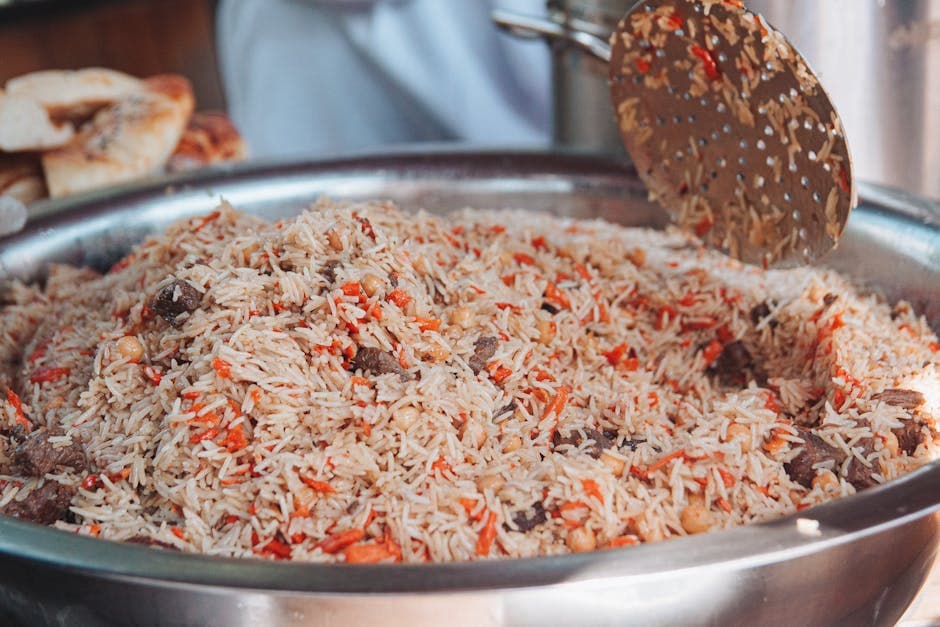
Norin
Fideos cortados a mano uzbekos con carne de caballo y caldo — un plato celebratorio que se sirve en bodas y Navruz.
Acerca de esta receta
Norin es uno de los platos más antiguos y ceremonialmente importantes de Uzbekistán — fideos finos enrollados a mano apilados con carne de caballo desmenuzada (o res) y un caldo de carne rico y claro vertido en la mesa. Se prepara para las ocasiones más importantes: bodas, funerales y la celebración del Año Nuevo de primavera de Navruz. Los fideos se enrollan papel-delgado, se apilan y se cortan en hebras finas con habilidad extraordinaria por cocineros uzbekos. La combinación de fideos sedosos y carne guisada tierna en caldo claro es engañosamente simple y profundamente satisfactoria.
Ingredientes
Sirve 6
- 400 gharina común
- 200 mlagua tibia
- 2huevos
- 1 cdtasal
- 800 gcarne de res o carne de caballo(con hueso o use pierna de res)
- 2 grandecebollas(uno cortado a la mitad para caldo y otro en rodajas finas para decorar)
- 2 medianozanahorias
- 1 cdtagranos de pimienta negra
- 2hojas de laurel
- 1 cdtasal(para el caldo)
- 2 cdaaceite vegetal
- 2 cdaperejil fresco o eneldo(picado, para servir)
Instrucciones
- 1
Preparar el caldo
Coloque la carne, la cebolla cortada a la mitad, las zanahorias, los granos de pimienta y las hojas de laurel en una olla grande. Cubrir con agua fría. Llevar a ebullición, desnatar la espuma. Cocine a fuego lento tapado durante 1,5 a 2 horas hasta que la carne esté muy tierna. Cuela el caldo y reserva. Triture la carne finamente a mano.
- 2
hacer masa de fideos
Batir los huevos con agua y sal. Mezclar con la harina. Amasar durante 10 minutos hasta obtener una masa suave y rígida. Descansar 30 minutos tapado.
- 3
Enrollar los fideos
Divida la masa en 4 pedazos. Enrolle cada trozo, fino como un papel, sobre una superficie ligeramente enharinada. Apila las hojas enrolladas, espolvoreándolas con harina. Enrolle la pila y córtela en tiras muy finas, de 2 a 3 mm de ancho. Sacuda para soltarse.
- 4
Freír la cebolla
Corta la cebolla restante en rodajas finas. Freír en aceite hasta que estén dorados. Dejar de lado.
- 5
Cocinar los fideos
Cocine los fideos en agua hirviendo con sal durante 3 a 4 minutos hasta que estén tiernos. Drenar.
- 6
Assemble
Apila los fideos en tazones. Cubra con carne desmenuzada y aros de cebolla fritos. Sirva el caldo caliente por encima. Adorne con perejil.
¿Has preparado esta receta?
Valórala y ayuda a otros a encontrar las recetas que de verdad funcionan.
Inicia sesión con un toque y guardaremos la valoración que acabas de elegir.
Todo lo que necesitas para planificar tu semana — gratis
- Calendario de comidas
- Lista de compras
- Ideas de recetas con IA
Controla lo que comes
Fotografía tu comida para registrar calorías y macros, usa temporizadores de ayuno y controla tu agua en la app gratuita SnapCal.
Consejos profesionales
- →
La masa de los fideos debe quedar firme; una masa más suave da fideos blandos que no se pueden cortar finamente.
- →
Dejar reposar la masa no es opcional: se desarrolla el gluten que hace posible que quede fina.
- →
Enrollar la masa lo más finamente posible (casi transparente) le da la característica textura sedosa del norin.
- →
Prueba y ajusta la sal al final — los sabores se concentran cuando los líquidos se reducen.
Variaciones
- •
Utilice pierna de res si no dispone de carne de caballo; el sabor y la técnica son casi idénticos.
- •
Agrega una pizca de cúrcuma al caldo para obtener un color dorado.
- •
Vegetariano: cambia la proteína por champiñones de ostra rey asados, tofu ahumado o garbanzos cocidos.
- •
Más picante: agrega un chile fresco finamente picado o una cucharadita de pimienta de Alepo/Urfa molida.
Almacenamiento
El caldo y la carne se refrigeran durante 4 días. Es mejor preparar los fideos frescos; se pueden secar y almacenar a temperatura ambiente durante 2 días.
Historia y origen
Norin es anterior a la Ruta de la Seda y se cree que es uno de los platos de fideos más antiguos de Asia Central, preparado mucho antes de la llegada del polo (pilaf). Su asociación con Navruz (el Año Nuevo persa celebrado en toda Asia Central) lo conecta con tradiciones del calendario agrícola preislámico que tienen miles de años.
Preguntas frecuentes
¿Es la carne de caballo esencial para norin auténtico?
En Uzbekistán, sí — la carne de caballo (kazy) es la opción tradicional. Fuera de Asia Central, la carne de res magra es el sustituto estándar.
¿Puedo preparar esto con anticipación?
Sí — la mayoría de los componentes se pueden preparar hasta un día de anticipación. Recalienta suavemente y monta justo antes de servir.
¿Qué puedo sustituir si no tengo todos los ingredientes?
Mantente cerca del rol de cada ingrediente: cambia los aromáticos por similares, y mantén intacto el equilibrio.
¿Cómo sé que es auténtico?
La autenticidad está en un espectro — lo que importa más es honrar la técnica y el equilibrio de sabores.
Datos nutricionales
Por porción · 6 porciones totales
Resumen de tiempo
¿Tiene preguntas?
Pregúntele a nuestro asistente de cocina con IA cualquier cosa sobre esta receta: sustituciones, técnicas, escalado.
Chatea con AI Chef →Destacado en Guías
Esta receta aparece en las siguientes guías seleccionadas:
Más recetas de cocina uzbeka
También Te Puede Gustar
Platos similares de otras cocinas del mundo.
Explorar por Ingrediente
Más recetas construidas alrededor de los mismos ingredientes principales.
Herramientas de Cocina Gratuitas
Calculadoras y conversores que acompañan a esta página — sin registro.
Conviértelo en un Plan
Prográmalo, haz la compra y controla lo que ya tienes.
Calendario de planificación de comidas
Coloca esta receta en un día y organiza la semana a su alrededor.
App de lista de la compra
Convierte esta lista de ingredientes en una lista de la compra agrupada por pasillo.
Importador de recetas
Guarda esta receta —y cualquier URL de receta— en una biblioteca ordenada.
Sigue Leyendo
Lecturas más largas que profundizan en las ideas detrás de este plato.
Comunidad
Únete a la conversación
Inicia sesión para dejar un comentario y guardar tus recetas favoritas