
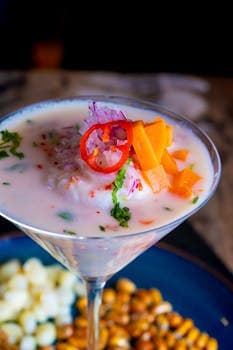
Ceviche de Lubina con Leche de Tigre — Estilo Acurio
Lubina cortada en dados en una cura de leche de tigre y lima, con batata, maíz choclo y cancha crujiente: el plato nacional de Perú.
⭐Inspired by Gastón Acurio · 🇵🇪 PeruAcerca de esta receta
Este plato está inspirado en la defensa de toda la vida de Gastón Acurio de la cocina peruana.
Ingredientes
Sirve 4
- 600 gsea bass fillet(apto para sushi, sin piel y cortado en dados de 2 cm)
- 12fresh limes(Preferiblemente limas peruanas o claves.)
- 1cebolla roja(en rodajas muy finas)
- 1rocoto chili(o habanero rojo, sin semillas y finamente picado)
- 1 cdtapasta de ají amarillo(Pasta de ají amarillo peruano)
- 1 pequeñogarlic clove(picado hasta formar pasta)
- 2 cdacilantro fresco (cilantro)(hojas y tallos tiernos, picados)
- 1 stickapio(finely diced)
- 2camotes(for serving)
- 1mazorca de choclo (maíz peruano de grano grande)(o maíz dulce normal, descascarillado)
- 60 gcancha (maíz peruano tostado)(o nueces de maíz saladas, para decorar)
- sal(to taste)
Instrucciones
- 1
Prepara los acompañamientos
Hierva las batatas enteras hasta que estén completamente tiernas, de 20 a 25 minutos. Hervir el choclo/maíz durante 12 minutos. Dejar enfriar ambos, pelar los boniatos y cortarlos en rodajas de 1 cm. Cortar el maíz en ruedas.
Estos acompañamientos no son negociables: equilibran el ácido de la leche de tigre.
- 2
Remojar la cebolla
Remoja la cebolla morada en rodajas en agua helada durante 10 minutos; esto suaviza su picante y la hace crujiente. Escurrir y secar.
- 3
hacer la leche de tigre
En un bol, mezcle el jugo de 10 limones, el rocoto, la pasta de ají amarillo, el ajo, la mitad del cilantro, el apio y 1 cucharadita de sal. Sabor: debe ser muy ácido, ligeramente picante y agradablemente aromático. Esta es tu leche de tigre.
La sal, el ácido y el chile deben ser fuertes: el pescado los diluirá.
- 4
Cura el pescado
5 minutos antes de servir, agrega el pescado cortado en cubitos a la leche de tigre y revuelve suavemente. Deje curar durante exactamente 3 a 5 minutos; el pescado debe volverse opaco por fuera pero permanecer ligeramente translúcido en el centro. El curado excesivo hace que el pescado se vuelva calcáreo.
- 5
Plato estilo peruano
Vierta el ceviche y una cantidad generosa de leche de tigre en tazones poco profundos. Coloque las rodajas de camote y las ruedas de maíz al lado. Cubra el pescado con la cebolla morada escurrida y el cilantro restante. Esparce cancha por encima. Agrega el jugo de las 2 limas restantes si quieres más acidez. Servir inmediatamente.
¿Has preparado esta receta?
Valórala y ayuda a otros a encontrar las recetas que de verdad funcionan.
Inicia sesión con un toque y guardaremos la valoración que acabas de elegir.
Todo lo que necesitas para planificar tu semana — gratis
- Calendario de comidas
- Lista de compras
- Ideas de recetas con IA
Cocina con las manos libres
Consigue planes de comida con IA, modo de cocina paso a paso y tus recetas guardadas en la app gratuita Bento.
Consejos profesionales
- →
El pescado debe ser apto para sushi: cómprelo en una pescadería, nunca en un supermercado.
- →
Cure durante exactamente 3 a 5 minutos; un curado excesivo hace que el pescado se vuelva calcáreo y duro.
- →
Beba los restos de leche de tigre en un vaso pequeño; los peruanos dicen que es la mejor cura para la resaca del mundo.
Variaciones
- •
Ceviche mixto de mariscos: agregue camarones crudos cortados en cubitos, calamares y pulpo junto con el pescado.
- •
Tiradito: en lugar de cortar el pescado en cubitos, córtelo en rodajas finas como sashimi y aliñe con leche de tigre, una variación nikkei (japonesa-peruana).
- •
Ceviche vegano: sustituye el pescado por palmitos o champiñones ostra asados.
Almacenamiento
El ceviche debe consumirse inmediatamente; no se puede almacenar. La leche de tigre sola se conserva durante 24 horas.
Historia y origen
El ceviche tiene raíces que se remontan al menos a 2.000 años en la costa peruana, donde las antiguas civilizaciones moche curaban el pescado en jugo de plátano fermentado de maracuyá. Los españoles trajeron los cítricos, los inmigrantes japoneses en el siglo XIX trajeron la técnica del cuchillo sashimi y el resultado es el ceviche peruano moderno. Los restaurantes La Mar de Gastón Acurio llevaron este plato a una audiencia global a partir de finales de la década de 2000.
Preguntas frecuentes
¿Por qué se llama 'leche de tigre'?
La leche de tigre es el líquido cítrico picante y de aspecto lechoso en el que se cura el pescado. El nombre se refiere tanto a su apariencia como a su reputación como un poderoso afrodisíaco y cura para la resaca en el folclore peruano.
¿El ceviche está realmente crudo?
Sí, el pescado está técnicamente crudo, pero el ácido cítrico del jugo de lima "desnaturaliza" las proteínas, produciendo una textura similar a la del pescado ligeramente cocido. La curación debe ser breve (3-5 minutos) para que el pescado quede tierno.
¿En qué se diferencia el ceviche peruano del ceviche mexicano?
El ceviche peruano cura el pescado durante solo 3 a 5 minutos (las versiones mexicanas a menudo curan durante más de 30 minutos y producen pescado calcáreo), utiliza ajíes peruanos (no jalapeños) y siempre se sirve inmediatamente con camote, choclo de maíz y cancha, acompañamientos no negociables exclusivos del Perú.
¿A qué debe saber la leche de tigre?
Agresivamente ácido, ligeramente picante, profundamente sabroso y aromático: la sal y el ácido deben ser asertivos porque el pescado los diluirá. Muchos peruanos beben la leche de tigre sobrante como un pequeño chupete; se dice que es una cura para la resaca.
¿Puedo hacer ceviche sin limas frescas?
El jugo de lima embotellado pierde la mayor parte de su carácter a las pocas horas de ser embotellado. Si no dispone de limas frescas, utilice el limón más fresco que pueda encontrar; los puristas se oponen, pero es mejor que la lima embotellada rancia.
Datos nutricionales
Por porción (320g) · 4 porciones totales
Resumen de tiempo
¿Tiene preguntas?
Pregúntele a nuestro asistente de cocina con IA cualquier cosa sobre esta receta: sustituciones, técnicas, escalado.
Chatea con AI Chef →Destacado en Guías
Esta receta aparece en las siguientes guías seleccionadas:
Más recetas de cocina peruana
También Te Puede Gustar
Platos similares de otras cocinas del mundo.
Explorar por Ingrediente
Más recetas construidas alrededor de los mismos ingredientes principales.
Herramientas de Cocina Gratuitas
Calculadoras y conversores que acompañan a esta página — sin registro.
Conviértelo en un Plan
Prográmalo, haz la compra y controla lo que ya tienes.
Sigue Leyendo
Lecturas más largas que profundizan en las ideas detrás de este plato.
Comunidad
Únete a la conversación
Inicia sesión para dejar un comentario y guardar tus recetas favoritas