
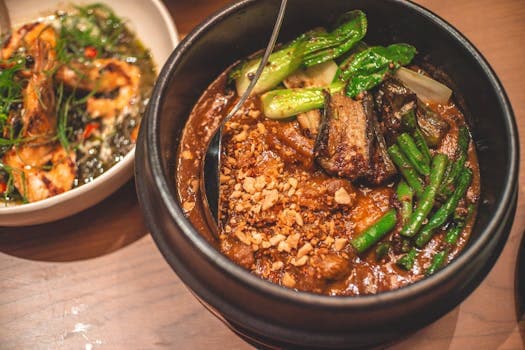
الحديث بينوي أدوبو - مستوحى من مارغريتا فوريس
بطن لحم الخنزير مطهو ببطء في الخل وفول الصويا والثوم وأوراق الغار حتى يصبح طريًا ويذوب - الطبق الوطني الفلبيني المكرر.
⭐Inspired by Margarita Forés · 🇵🇭 Philippinesحول هذه الوصفة
هذه الوصفة مستوحاة من الشيف مارجريتا فوريس - أفضل طاهية في آسيا لعام 2016 - وبطولتها للمطبخ الفلبيني الحديث على المسرح العالمي. أدوبو هو الطبق الوطني في الفلبين: لحم مطهو ببطء في الخل وفول الصويا والثوم وأوراق الغار، مع تنوعات إقليمية لا حصر لها. وقد جادل فوريس منذ فترة طويلة بأن أدوبو، إذا تم تصنيعه بشكل صحيح، يستحق نفس الاهتمام بالطعام الفاخر الذي يحظى به الرامن أو الفو. تأخذ هذه الوصفة التقاليد المنزلية وترفعها من خلال الصبر والتقنية - بطن لحم الخنزير المطهو ببطء حتى تتحول الصلصة إلى طلاء لامع يشبه الطلاء.
المكونات
يخدم 6
- 1.2 كغبطن لحم الخنزير(الجلد، مقطعة إلى مكعبات 5 سم)
- 120 ملالخل الأبيض الفلبيني (سوكانج بوتي)(أو خل الأرز)
- 120 ملصلصة الصويا
- 10 فصوصالثوم(حطمت ومقشرة)
- 5أوراق الغار
- 2 ملعقة صغيرةحبات الفلفل الأسود(سحق طفيفة)
- 2الفلفل الحار الطيور التايلاندية(اختياري، شق)
- 2 ملعقة كبيرةالسكر البني
- 300 ملالماء
- 2 ملعقة كبيرةزيت محايد
- 2بصل الربيع(شرائح رقيقة للتقديم)
- أرز الياسمين على البخار(للخدمة)
التعليمات
- 1
نقع
الجمع بين لحم الخنزير والخل وصلصة الصويا والثوم وأوراق الغار والفلفل والفلفل الحار في وعاء ثقيل. التدليك والراحة لمدة 30 دقيقة على الأقل. لا تخطي. ماء مالح هو الأساس.
- 2
اغلي الماء أولاً، ولا تحركي الخل أبدًا
ضع الوعاء مكشوفًا على الموقد. يُغلى المزيج دون التقليب - تقول التقاليد الفلبينية أن تحريك الخل قبل أن يغلي يجعله ذو مذاق خام. يُغلى المزيج بقوة لمدة دقيقتين، ثم يُخفض إلى نار خفيفة.
إن قاعدة "لا تحرك" هي تقنية حقيقية وليست خرافة. الغليان يزيل قساوة الخل الخام.
- 3
طهي ببطء وبطء
أضف الماء والسكر البني. يُغطى القدر بشكل غير محكم ويُترك على نار خفيفة لمدة تتراوح بين 60 و75 دقيقة، مع تقليب لحم الخنزير مرة أو مرتين حتى يصبح اللحم طريًا بالشوكة.
- 4
تقليل إلى ورنيش
اكشف الغطاء واستمر في الطهي لمدة 15-20 دقيقة حتى تنخفض الصلصة إلى حوالي 200 مل من السائل اللامع، شبه الحلو. يجب أن يبدو لحم الخنزير مطليًا.
- 5
لحم الخنزير المقرمش (اختياري لكن موصى به)
ارفع لحم الخنزير على طبق. في مقلاة منفصلة، سخني الزيت المحايد ساخنًا جدًا. احرق قطع لحم الخنزير بحيث يكون جانب الجلد لأسفل لمدة 90 ثانية حتى تصبح الأسطح ذات لون بني عميق ومقرمشة قليلاً. العودة إلى الصلصة وإرم لتزجيج.
- 6
يقدم على طريقة أدوبو
كومة على طبق دافئ. ملعقة صلصة طلى على القمة. مبعثر مع البصل الربيع. يُقدم الطبق مع وعاء مليء بأرز الياسمين المطهو على البخار، فطبق أدوبو بدون الأرز غير مكتمل.
هل جرّبت هذه الوصفة؟
قيّمها وساعد الآخرين في العثور على الوصفات التي تنجح فعلاً.
سجّل الدخول بنقرة واحدة وسنحفظ التقييم الذي اخترته للتو.
كل ما تحتاجه لتخطيط أسبوعك — مجانًا
- تقويم الوجبات
- قائمة التسوق
- أفكار وصفات بالذكاء الاصطناعي
اطبخ دون الحاجة للمس الشاشة
احصل على خطط وجبات بالذكاء الاصطناعي ووضع طهي خطوة بخطوة ووصفاتك المحفوظة في تطبيق Bento المجاني.
نصائح للمحترفين
- →
لا تحركي الخليط أثناء الغليان الأول، فهذه حكمة مطبخ فلبينية حقيقية.
- →
يعتبر بطن لحم الخنزير مع الجلد ضروريًا للحصول على القرمشة النهائية.
- →
يكون مذاق Adobo دائمًا أفضل في اليوم التالي - تقدم للأمام إذا استطعت.
الاختلافات
- •
دجاج أدوبو: استبدل أفخاذ الدجاج بالعظم؛ تقليل الغليان إلى 30 دقيقة.
- •
Adobong Puti (White Adobo): احذف صلصة الصويا - فقط الخل والثوم والخليج وحبوب الفلفل. النسخة السابقة قبل الإسبانية.
- •
Adobo sa Gata: أضف 200 مل من حليب جوز الهند إلى الخليط في الدقائق العشر الأخيرة - تباين إقليمي في بيكولانو.
تخزين
يتحسن مع تقدم العمر - يُوضع في الثلاجة لمدة 5 أيام، ويُجمد لمدة 3 أشهر.
التاريخ والأصل
أدوبو يسبق الاستعمار الإسباني للفلبين - كان الفلبينيون الأصليون يحفظون اللحوم في الخل قبل وقت طويل من أن يطلق عليها الإسبان اسمًا (من "أدوبار" الإسبانية للتتبيل). اليوم هناك العشرات من المتغيرات الإقليمية. كانت مارجريتا فوريس، التي حصلت على لقب أفضل طاهية في آسيا لعام 2016، صوتًا رائدًا في الارتقاء بالمطبخ الفلبيني إلى مستوى الاهتمام العالمي بالطعام الفاخر.
الأسئلة المتداولة
لماذا لا تحرك الخل أدوبو؟
تنص تقاليد المطبخ الفلبيني على أن التحريك قبل أن يغلي الخل بالكامل يترك مذاق الطبق نيئًا وقاسيًا. يؤدي الغليان بقوة لمدة دقيقتين بدون غطاء إلى إزالة الحموضة المتطايرة، وبعد ذلك يمكنك التحريك بحرية. هذه تقنية حقيقية وليست خرافة.
ما نوع الخل الذي يجب أن أستخدمه؟
يعتبر سوكانغ بوتي الفلبيني (خل القصب الأبيض) تقليديًا ومثاليًا - حلو قليلاً وليس قاسيًا بشكل مفرط. خل الأرز هو البديل الأقرب. لا تستخدم الخل الأبيض المقطر، فهو شديد العدوانية.
لماذا حصلت مارغريتا فوريس على لقب أفضل طاهية في آسيا؟
حصلت على لقب أفضل 50 مطعمًا في آسيا كأفضل طاهية في عام 2016، تقديرًا لأربعة عقود من عملها في بناء المطبخ الفلبيني الحديث - من خلال Cibo وGrace Park وLusso، ومن خلال السفراء الدوليين المكثفين للطعام الفلبيني. لقد كانت إحدى الشخصيات المركزية في الحركة "الفلبينية الحديثة" العالمية.
لماذا يعتبر أدوبو الطبق الوطني في الفلبين؟
أدوبو يسبق الاستعمار الإسباني، حيث كان الفلبينيون الأصليون يحفظون اللحوم في الخل قبل وقت طويل من وصول الإسبان. اليوم هناك العشرات من المتغيرات الإقليمية. مزيجها من الخل وفول الصويا والثوم وأوراق الغار هو طبق فلبيني فريد، ويتم تناول الطبق بشكل ما في جميع جزر الأرخبيل التي يزيد عددها عن 7000 جزيرة.
لماذا لا تحرك الخل أدوبو قبل أن يغلي؟
تنص تقاليد المطبخ الفلبيني على أن التحريك قبل أن يغلي الخل بالكامل يترك مذاق الطبق نيئًا وقاسيًا. يؤدي الغليان بقوة لمدة دقيقتين بدون غطاء إلى إزالة الحموضة المتطايرة، وبعد ذلك يمكنك التحريك بحرية. هذه تقنية حقيقية، وليست خرافة – جربها في كلا الاتجاهين وستجد الفرق ملحوظًا.
حقائق التغذية
لكل وجبة (320g) · 6 حصص إجمالية
ملخص الوقت
هل لديك أسئلة؟
اسأل مساعد الطبخ الذي يعمل بالذكاء الاصطناعي لدينا أي شيء عن هذه الوصفة - البدائل والتقنيات والقياس.
الدردشة مع AI Chef →ظهرت في الأدلة
هذه الوصفة واردة في الأدلة المنسقة التالية:
المزيد من وصفات فلبيني
قد يعجبك أيضًا
أطباق مشابهة من مطابخ أخرى حول العالم.
تصفّح حسب المكوّن
وصفات أخرى مبنية على المكوّنات الأساسية نفسها.
أدوات مطبخ مجانية
حاسبات ومحوّلات تكمّل هذه الصفحة — دون الحاجة إلى تسجيل.
حوّلها إلى خطة
جدولها، تسوّق لها، وتابع ما لديك بالفعل.
اقرأ بعد ذلك
مقالات أطول تتعمّق في الأفكار وراء هذا الطبق.
مجتمع
انضم إلى المحادثة
قم بتسجيل الدخول لترك تعليق وحفظ وصفاتك المفضلة