Dinner
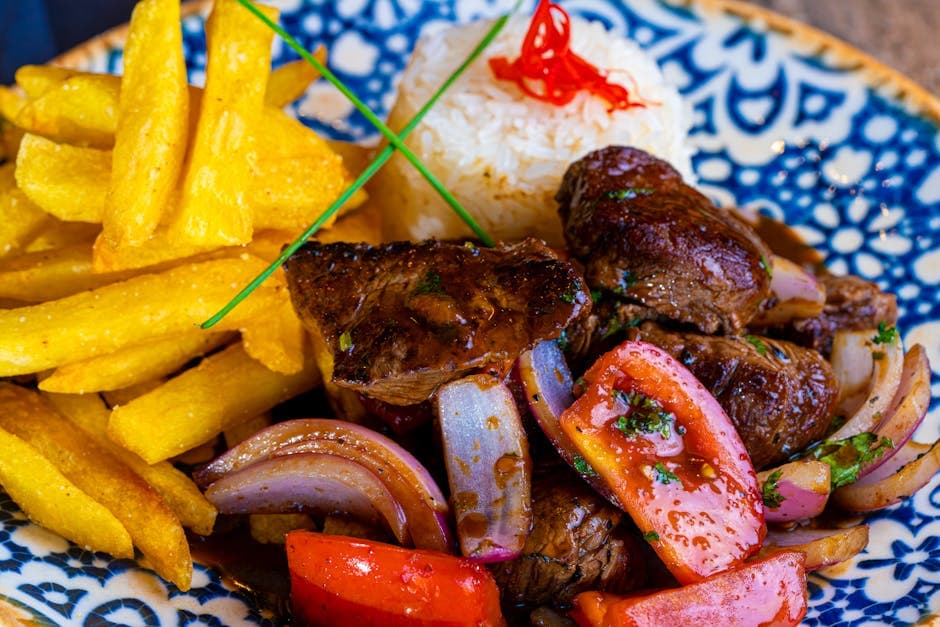
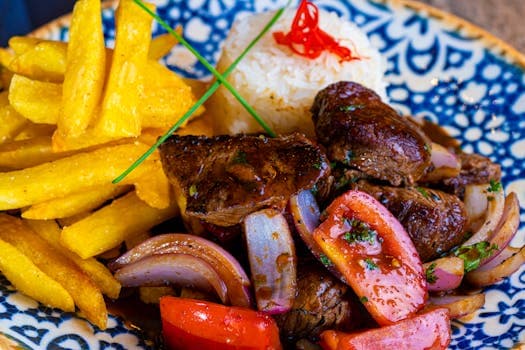
Peruvian Lomo Saltado – Stir-Fried Beef with Tomatoes, Peppers and French Fries
The extraordinary Peruvian-Chinese stir-fry: tender beef, onions and tomatoes with soy sauce, served over chips and rice.
40 min560 kcalMedium
Ceviche, lomo saltado, causa — the world's most exciting emerging cuisine.
More recipes built around the same core ingredients.
Track what you eat
Snap your meal to log calories and macros, run fasting timers and track water in the free SnapCal app.
Plan your meals, track fasting and build your grocery list — free
MyCookingCalendar's dashboard runs right in your browser, no download needed.
Latin American Cuisine: Recipes from Mexico to Argentina
Explore the diverse flavors of Latin America with 40+ authentic recipes from Mexico, Peru, Brazil, and beyond.
15 Beginner-Friendly Recipes Anyone Can Cook
15 genuinely easy, well-rated recipes from around the world — no advanced technique, no specialty equipment, most done in 30 minutes or less.
15 No-Cook Recipes: Real Meals Without Turning On the Stove
15 genuinely no-cook recipes — ceviche, cured salmon, salads, dips and no-bake desserts — verified against real steps and cook times, not just labeled 'easy'.
Peruvian cuisine draws on one of the world's deepest agricultural inheritances: the Andes domesticated the potato — Peru still grows over 3,000 native varieties — along with quinoa, aji peppers, and corn in dozens of forms. Onto this base layered Spanish colonial cooking, then two immigrant waves that created entire fusion genres: Chinese-Peruvian chifa, born of 19th-century Cantonese laborers, gave the country lomo saltado and arroz chaufa; Japanese-Peruvian nikkei refined ceviche technique and produced tiradito, sashimi-cut fish under aji sauces.
Three geographies cook three cuisines. The coast is ceviche country: fresh fish cured minutes in lime juice with red onion, aji limo, and leche de tigre, served with sweet potato and choclo corn. The Andean highlands favor hearty preparations — pachamanca, meats and tubers earth-baked over hot stones; cuy (guinea pig); and soups like chupe de quinua. The Amazon contributes river fish like paiche, juane rice bundles steamed in bijao leaves, and fruits such as camu camu and aguaje.
Home cooking depends on the aji trinity: aji amarillo's fruity heat in huancaína sauce and aji de gallina, aji panca's smoky depth in marinades and anticuchos, and rocoto's sharp fire in rocoto relleno. Most savory dishes begin with an aderezo of onion, garlic, and aji paste cooked down in oil. Lima's rise as a global restaurant capital — driven by Gastón Acurio and the cuisine's recognition since the 2000s — has made these pantry staples internationally available.
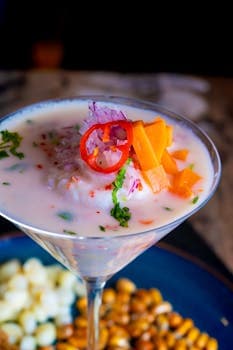
Ceviche and Leche de Tigre
Fresh fish cured briefly in lime with red onion and aji limo, its citrus-fish marinade drunk as leche de tigre.
Aji Peppers
Aji amarillo, aji panca, and rocoto form the cuisine's flavor spine, prized for fruit and aroma as much as heat.
Native Potatoes and Andean Crops
Over 3,000 potato varieties plus quinoa, choclo corn, and olluco connect modern cooking to pre-Incan agriculture.
Chifa: Chinese-Peruvian Fusion
Cantonese technique met criollo ingredients to create lomo saltado wok-fried beef and arroz chaufa fried rice.
Nikkei: Japanese-Peruvian Fusion
Japanese precision with raw fish produced tiradito and reshaped modern ceviche toward shorter, cleaner curing.
Criollo Stews and Sauces
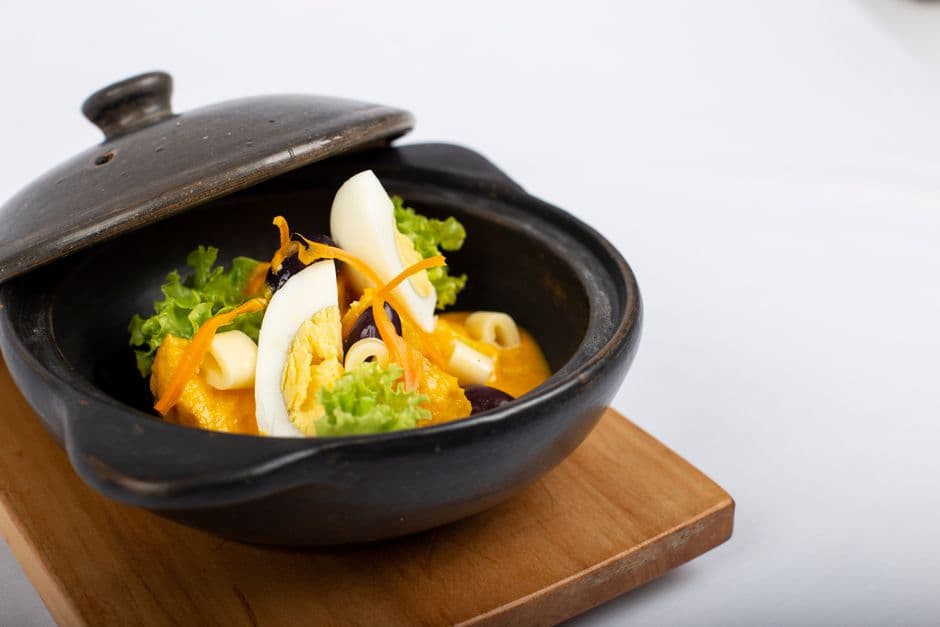
Aji de gallina, papa a la huancaína, and seco braises build from the onion-garlic-aji aderezo base.
Peruvian food is known for ceviche — lime-cured fresh fish with red onion and aji pepper — plus lomo saltado, aji de gallina, causa, and anticucho beef-heart skewers. It's celebrated for native ingredients (3,000+ potato varieties, quinoa, aji peppers) and for its fusion traditions: Chinese-Peruvian chifa and Japanese-Peruvian nikkei cuisine. Lima is widely ranked among the world's top food cities.
Peruvian ceviche cures fish very briefly — minutes, not hours — keeping the interior nearly raw, a refinement credited partly to Japanese-Peruvian influence. It uses intensely acidic Peruvian limes, aji limo or rocoto chili, and red onion, and is served with sweet potato and choclo corn. The leftover citrus-fish marinade, leche de tigre, is served as a drink or appetizer.
Moderately, and the heat is distinctive rather than punishing. Aji amarillo, the most-used pepper, is fruity with manageable heat and often blended with dairy into mild sauces like huancaína. Rocoto is genuinely hot but used selectively. Many staples — lomo saltado, causa, arroz con pollo — are flavorful without significant heat, and chili is easy to scale down.
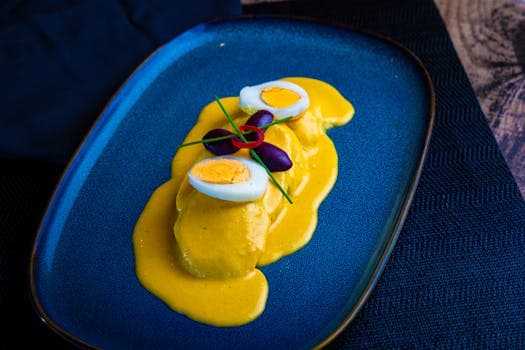
Papa a la huancaína — boiled potatoes under a blended sauce of aji amarillo, queso fresco, and evaporated milk — needs no special technique. Lomo saltado is a fast stir-fry of beef, onion, tomato, and soy served with fries and rice. A simple fish ceviche follows once you trust your fish source. Aji amarillo paste from a jar makes all three accessible.
Jarred aji amarillo and aji panca pastes are the essentials and ship internationally. Add red onions, limes, garlic, cumin, cilantro, soy sauce (for chifa dishes), queso fresco, and evaporated milk. Choclo corn and Peruvian giant kernels are worth seeking frozen. Potatoes, sweet potatoes, and rice cover the starches that anchor nearly every plate.
Calculators and converters that pair with this page — no signup needed.