Skip to content
🇳🇬

Nigerian Recipes

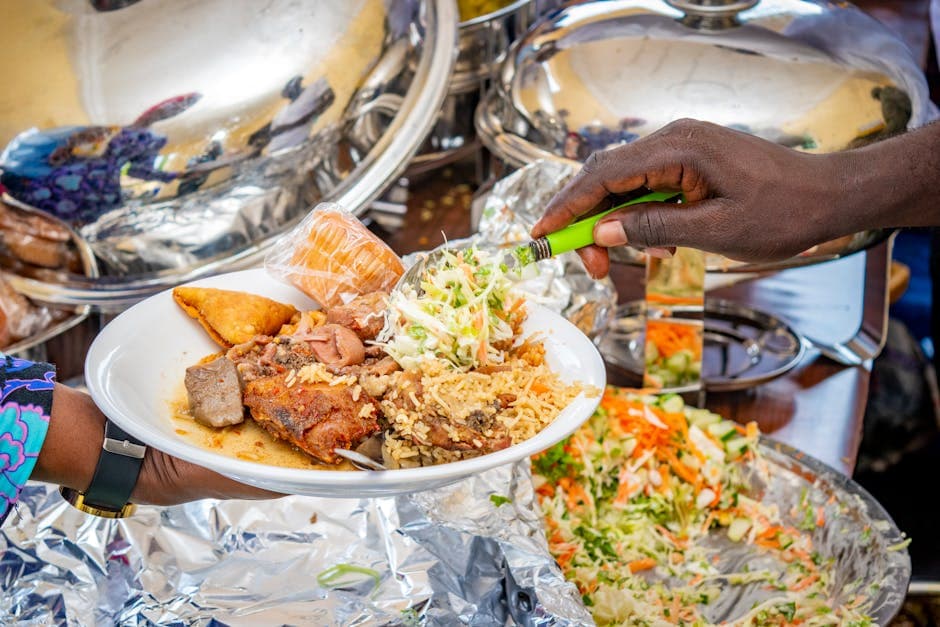
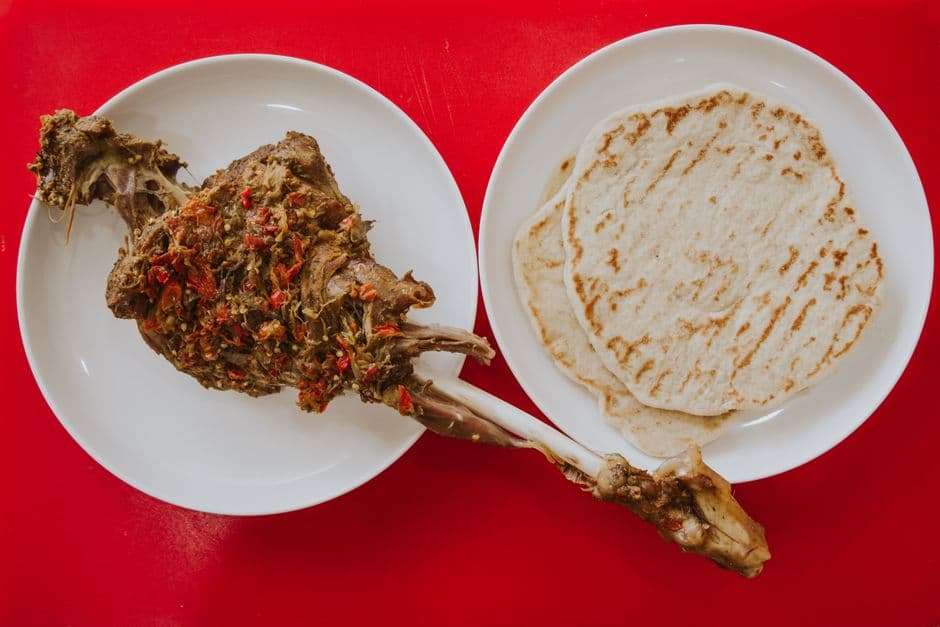
Jollof rice, egusi soup, suya — bold, aromatic West African classics.

53recipes
16Easy
33Medium
4Hard

Browse by Ingredient

More recipes built around the same core ingredients.

Track what you eat

Snap your meal to log calories and macros, run fasting timers and track water in the free SnapCal app.

Download Now

Plan your meals, track fasting and build your grocery list — free

MyCookingCalendar's dashboard runs right in your browser, no download needed.

Open the free dashboard

About Nigerian Cuisine

Nigerian cuisine reflects a federation of over 250 ethnic groups, with three culinary heavyweights setting the pace. Yoruba cooking in the southwest is famous for amala with ewedu, peppery party jollof, and the chili-onion depth of obe ata stews. Igbo kitchens in the southeast specialize in soups for pounded starches — ofe onugbu (bitterleaf), oha, and nsala white soup. Hausa and Fulani traditions in the north contribute suya, the spice-crusted grilled beef seasoned with yaji peanut-pepper blend, plus tuwo and masa rice cakes.

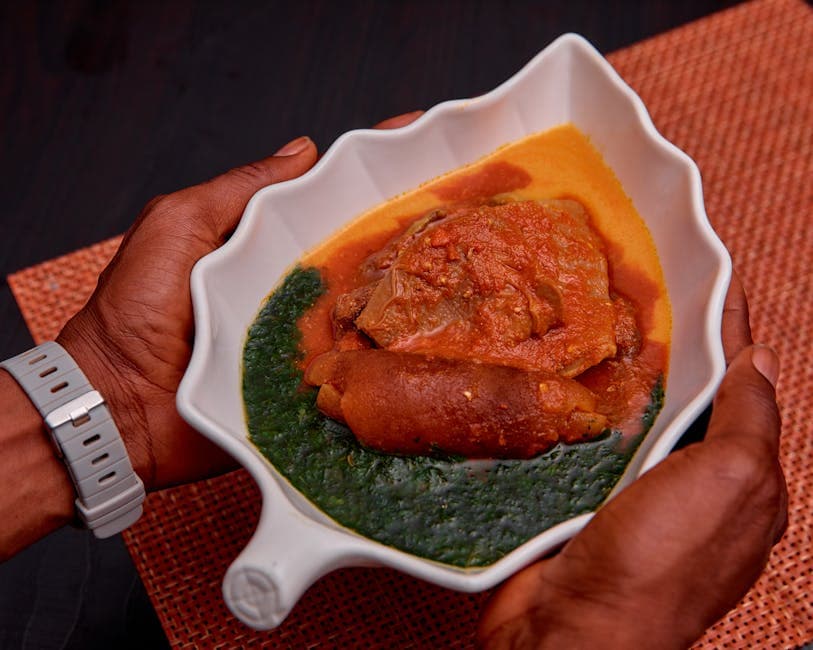
The cuisine's architecture is soup-and-swallow: rich, often palm-oil-based soups thickened with egusi (melon seeds), ogbono (wild mango seeds), or okra, eaten by hand with smooth doughs of pounded yam, eba (cassava garri), or fufu. Stockfish, dried crayfish, and smoked fish supply deep umami; iru (fermented locust beans) functions much like miso. Scotch bonnet and red bell peppers, blended with tomato and onion, form the base of countless stews — most famously the jollof rice that fuels a friendly rivalry with Ghana.

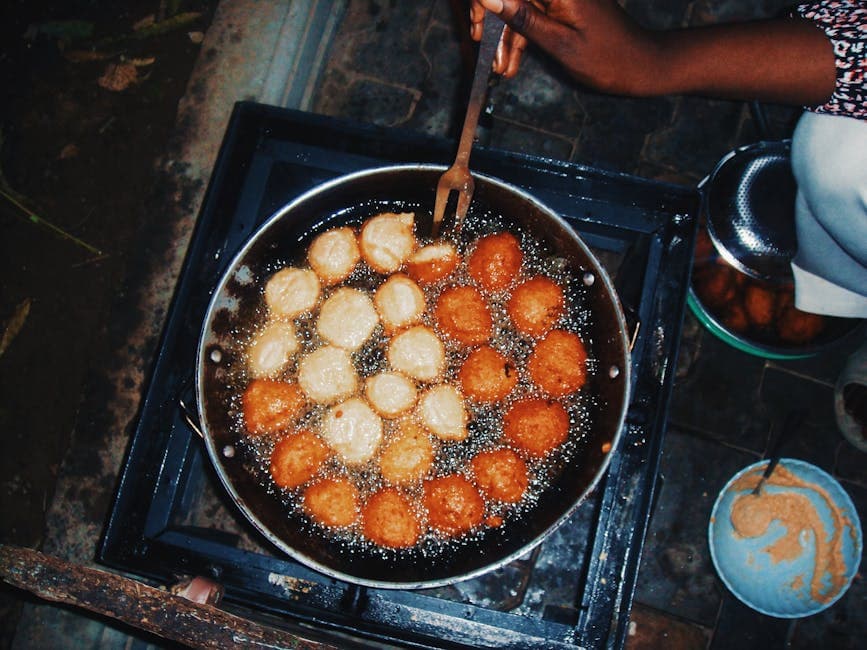
Home cooking is batch cooking. Households blend large quantities of pepper mix, simmer a master stew, and freeze portions to pair with rice, beans, plantains, or yam through the week. Street and party food is its own canon: puff puff doughnuts, akara bean fritters, moi moi steamed bean pudding, boli roasted plantain, and small chops trays at every owambe celebration. Palm oil, groundnut oil, and a generous hand with seasoning cubes define the everyday flavor base.

Jollof Rice

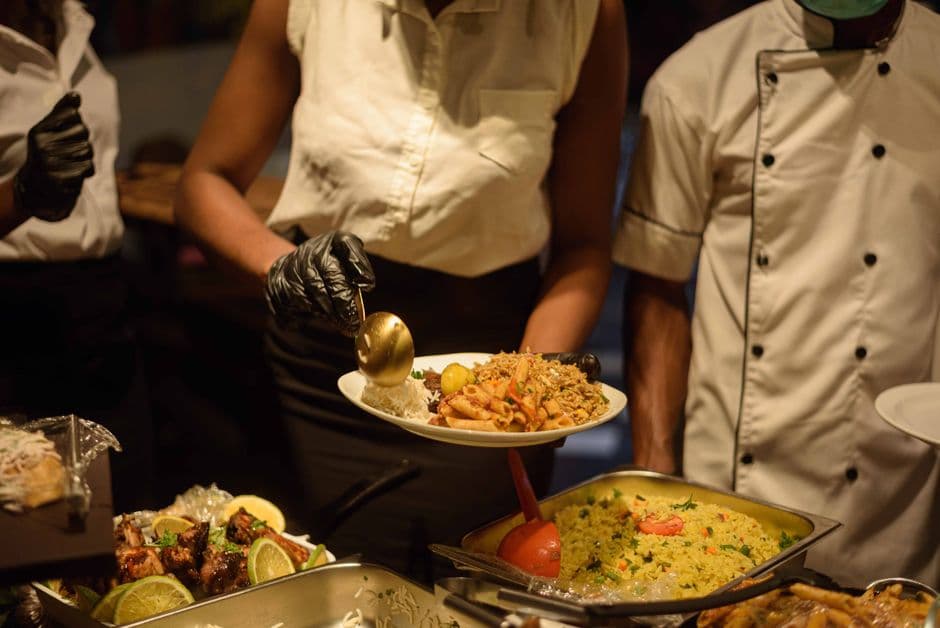
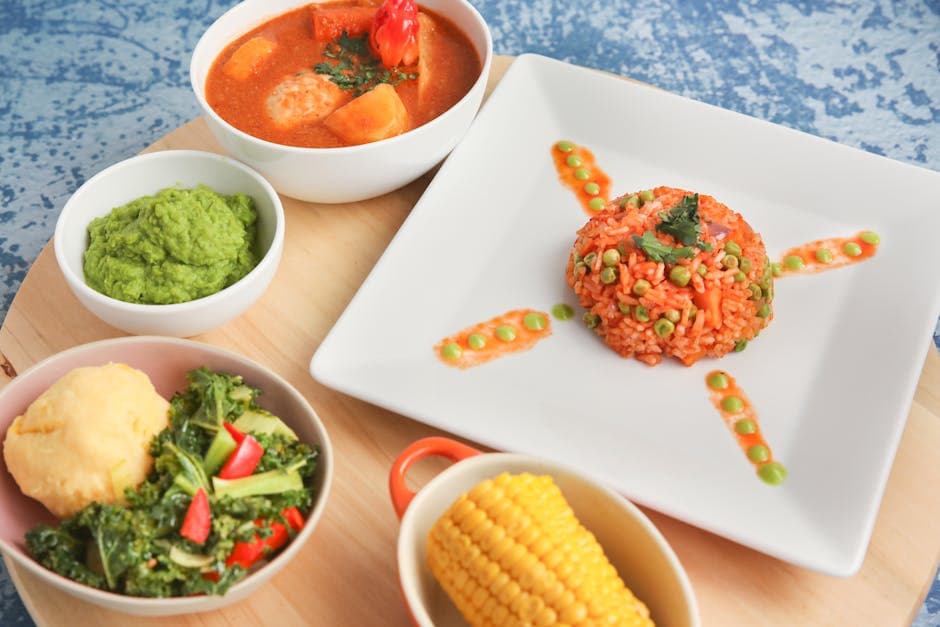
Long-grain rice cooked down in a blended tomato, red pepper, and scotch bonnet base until smoky — the centerpiece of every Nigerian party.

Soups & Swallows

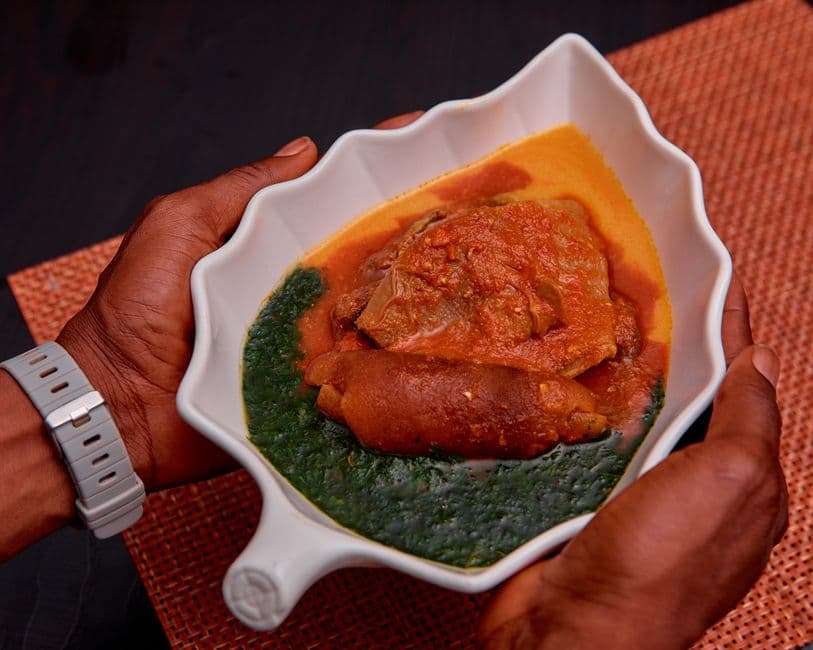
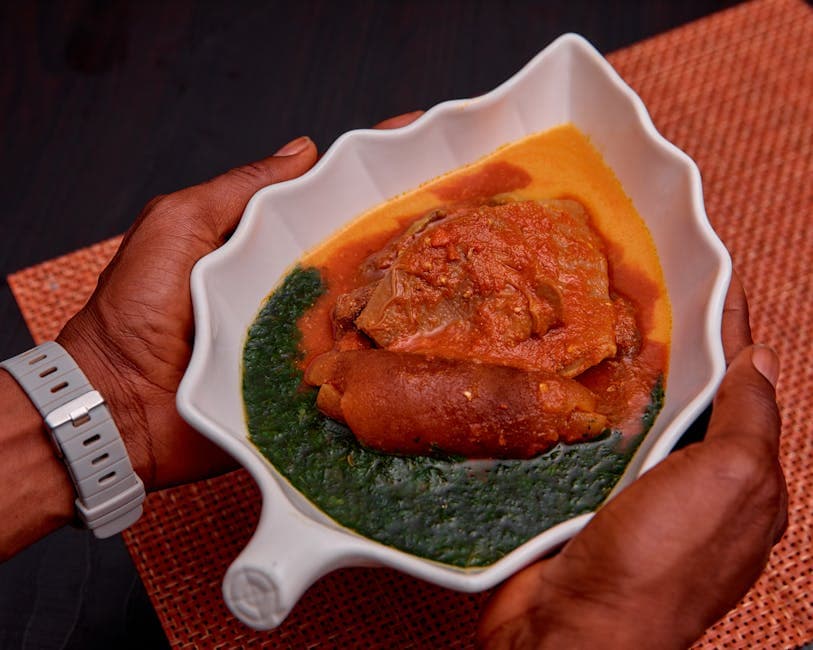
Egusi, ogbono, okra, and bitterleaf soups are eaten by hand with pounded yam, eba, amala, or fufu rather than spoons.

Palm Oil & Crayfish

Red palm oil and ground dried crayfish give Nigerian soups their characteristic color and deep, savory backbone.

Pepper Base (Obe Ata)

A blend of tomatoes, red bell peppers (tatashe), scotch bonnets, and onions, fried down in oil, starts most stews and rice dishes.

Suya & Yaji Spice

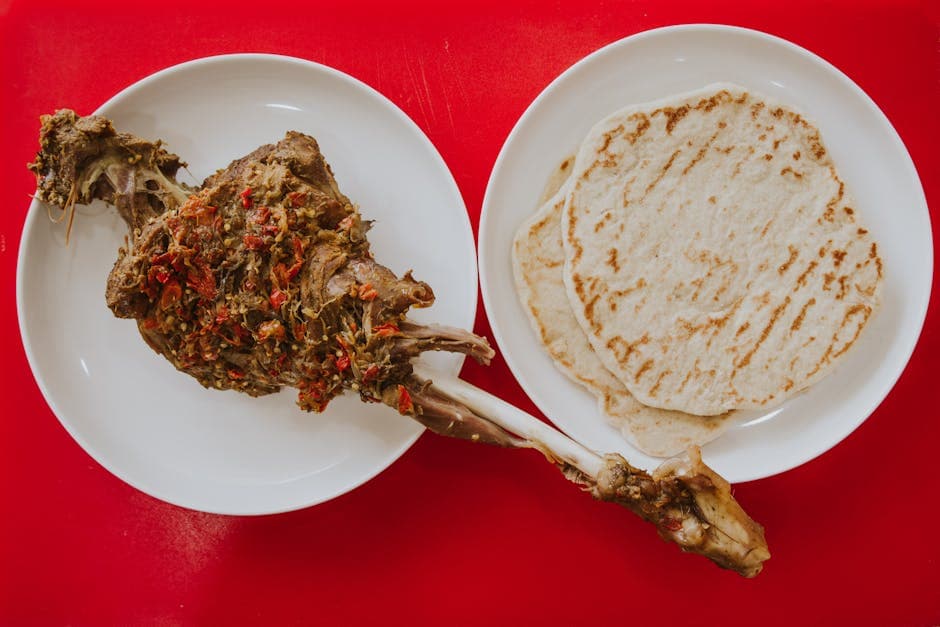
Northern-style beef skewers crusted in a ground peanut, ginger, and chili blend, grilled over open flame and sold at night roadside spots.

Beans & Plantains

Honey beans appear as akara fritters, moi moi pudding, and ewa agoyin mash, while plantains are fried as dodo or roasted as boli.

Nigerian Cooking FAQ

What is Nigerian food known for?▾

Jollof rice is the global flagship, followed by egusi soup with pounded yam, suya grilled beef, pepper soup, akara, moi moi, and fried plantains. The cuisine is known for bold heat from scotch bonnets, the red richness of palm oil, deep umami from dried crayfish and stockfish, and the soup-and-swallow style of eating thick stews by hand with starchy doughs.

Is Nigerian food very spicy?▾

Generally yes — scotch bonnet (ata rodo) is a standard ingredient, not a garnish, and dishes like ayamase, pepper soup, and party jollof carry serious heat. That said, heat is adjustable in home cooking, and dishes like moi moi, fried plantain, nsala soup, and coconut rice are naturally mild. Cooking it yourself lets you scale chilies down without losing the flavor base.

What is the difference between Nigerian and Ghanaian jollof?▾

Nigerian jollof typically uses long-grain parboiled rice and a base of tomatoes, red bell peppers, and scotch bonnet, prized for a smoky 'party rice' bottom-of-pot flavor. Ghanaian jollof traditionally uses aromatic jasmine or basmati-style rice and often includes more tomato paste and warming spices. Both countries claim superiority; the rivalry is affectionate and unresolvable.

What Nigerian dish should a beginner cook first?▾

Start with the basic pepper stew: blend tomatoes, red bell pepper, scotch bonnet, and onion, fry the blend down in oil with seasoning, then add chicken or beef and stock. Master that and you can make jollof rice (same base plus rice), egusi soup (add ground melon seeds), and ayamase. Fried plantain is the easiest side imaginable.

What pantry items do I need for Nigerian cooking?▾

Essentials: red palm oil, ground dried crayfish, dried or fresh scotch bonnets, seasoning cubes (Maggi or Knorr), egusi (ground melon seeds), ogbono powder, garri or pounded yam flour for swallows, long-grain parboiled rice, and honey beans. Smoked fish, stockfish, and iru (fermented locust beans) add the deeper traditional flavors; thyme and curry powder season stews and jollof.

Explore Other Cuisines