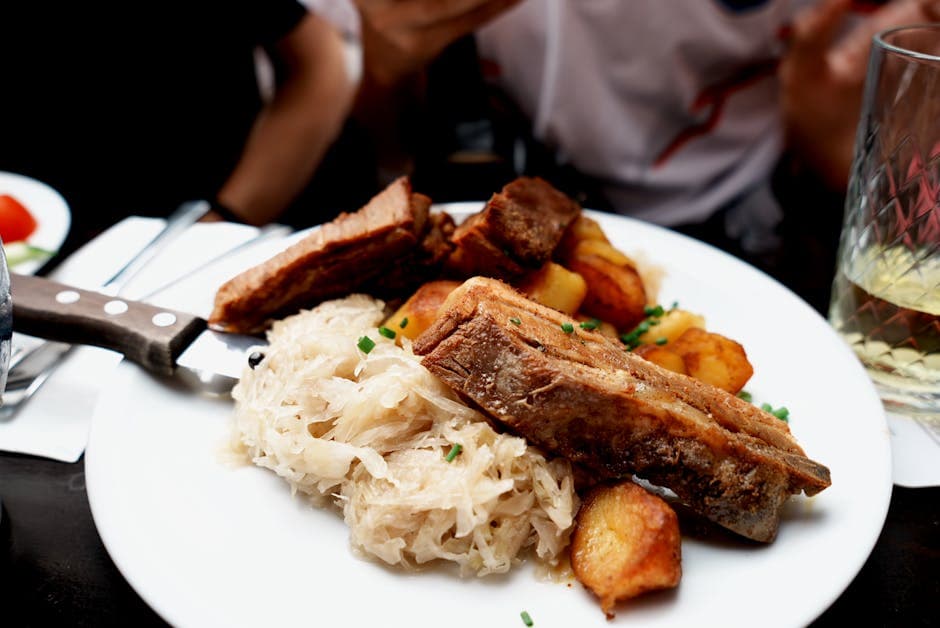
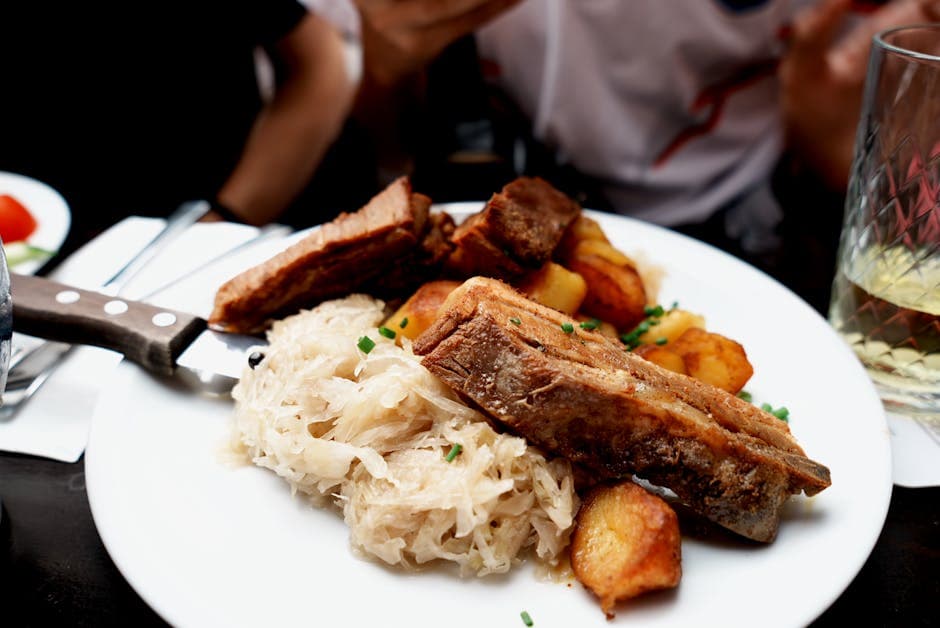
German Beef Sauerbraten
Germany's iconic pot roast — beef marinated 3 days in red wine vinegar, then slow-braised until meltingly tender with a rich, sweet-sour gingersnap gravy.
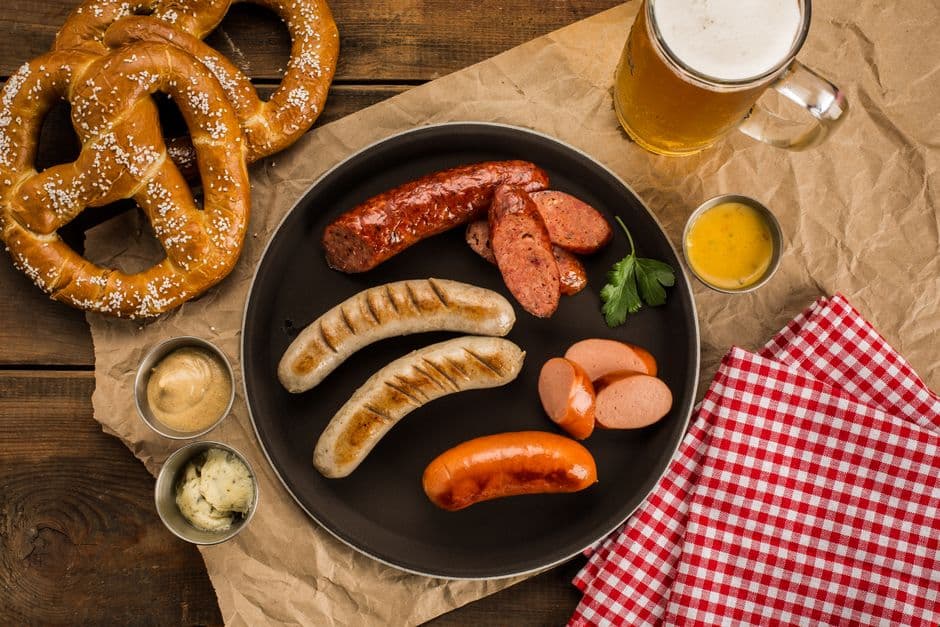
Sauerbraten, salsichas, pretzels e os sabores substanciais da Europa Central.
A culinária alemã nasceu de uma lógica de preservação do clima frio: chucrute, linguiças curadas e defumadas, picles e pães de centeio densos foram formas de sobreviver ao inverno que se tornaram assinaturas nacionais. A tradição Wurst conta com mais de 1.500 variedades documentadas – Nürnberger Rostbratwurst, Thüringer, Weisswurst e currywurst, a invenção da comida de rua de Berlim do pós-guerra. O pão é levado igualmente a sério: a Alemanha regista mais de 3.000 tipos de pão e a sua cultura do pão detém o estatuto de património imaterial da UNESCO.
As regiões cozinham de forma diferente. A Baviera fornece o estereótipo – pretzels, joelho de porco (Schweinshaxe), Weisswurst com mostarda doce e cultura de cervejaria. A Suábia, no sudoeste, contribui com Spätzle, Maultaschen (bolsões de macarrão apelidados de Herrgottsbescheißerle por esconderem carne de Deus durante a Quaresma) e lentilhas com salsicha. A Renânia oferece Sauerbraten, um assado marinado em vinagre, às vezes adoçado com passas, enquanto a culinária costeira do norte oferece pratos de peixe como Labskaus e arenque matjes.
A culinária caseira se concentra em refeições fartas de um prato: Schnitzel com salada de batata, Rouladen (rolinhos de carne enrolados em mostarda, picles e bacon) e ensopados Eintopf. As batatas chegaram no século 18 sob a promoção de Frederico, o Grande, e agora aparecem como bolinhos, panquecas (Kartoffelpuffer) e saladas de batata regionalmente divergentes - à base de maionese no norte, vinagre e caldo no sul. O ritual da tarde Kaffee und Kuchen mantém uma tradição séria de panificação, desde bolos da Floresta Negra até bolos streusel.
Wurst
Mais de 1.500 variedades de salsichas, de Bratwurst a Weisswurst e currywurst, definem a charcutaria alemã, cada uma com regras regionais sobre preparação e acompanhamentos.
Pão e Brötchen
Mais de 3.000 tipos de pão registrados, dominados por massa fermentada de centeio e grãos mistos, fazem da cultura alemã do pão um patrimônio listado pela UNESCO.
Chucrute e decapagem
A fermentação láctica de repolho, além de pepino em conserva e beterraba, reflete a tradição de preservação que está no cerne da culinária.
Pratos de batata
Bolinhos de massa (Klösse), panquecas (Kartoffelpuffer) e saladas de batata regionalmente distintas fazem da batata o alimento básico mais versátil da Alemanha.
Carnes assadas
Sauerbraten, Rouladen e Schweinshaxe apresentam cozimento lento de cortes marinados ou enrolados, normalmente servidos com molho e bolinhos.
Café e Kuchen
O ritual de café e bolo da tarde apoia um cânone de panificação, desde o gateau da Floresta Negra até Bienenstich e Stollen sazonal de Natal.
Cozinhe com as mãos livres
Tenha planos de refeição com IA, modo de cozinha passo a passo e suas receitas salvas no app gratuito Bento.
Planeje suas refeições, acompanhe seu jejum e crie sua lista de compras — grátis
O painel do MyCookingCalendar funciona direto no seu navegador, sem precisar baixar nada.
German & Austrian Cuisine: 28 Traditional Recipes
Explore hearty German and Austrian cooking with 28 traditional recipes from breads to schnitzel to strudel.
14 Real Recipes With 5 Ingredients or Less
14 well-rated recipes from around the world that use five ingredients or fewer — proof that a short ingredient list doesn't mean a compromise on flavor.

Germany's iconic pot roast — beef marinated 3 days in red wine vinegar, then slow-braised until meltingly tender with a rich, sweet-sour gingersnap gravy.

Paper-thin veal pounded flat, breaded in fine breadcrumbs and fried in clarified butter until billowing and golden.

Layers of chocolate sponge, whipped cream and morello cherries soaked in Kirschwasser — Germany's most famous cake.

Chewy, glossy, salt-crusted soft pretzels with the distinctive alkaline crust — perfect with mustard and beer.

A traditional German pot roast with a tangy marinade.

A classic German potato salad with a tangy dressing.

A savory German onion pie with a creamy filling.

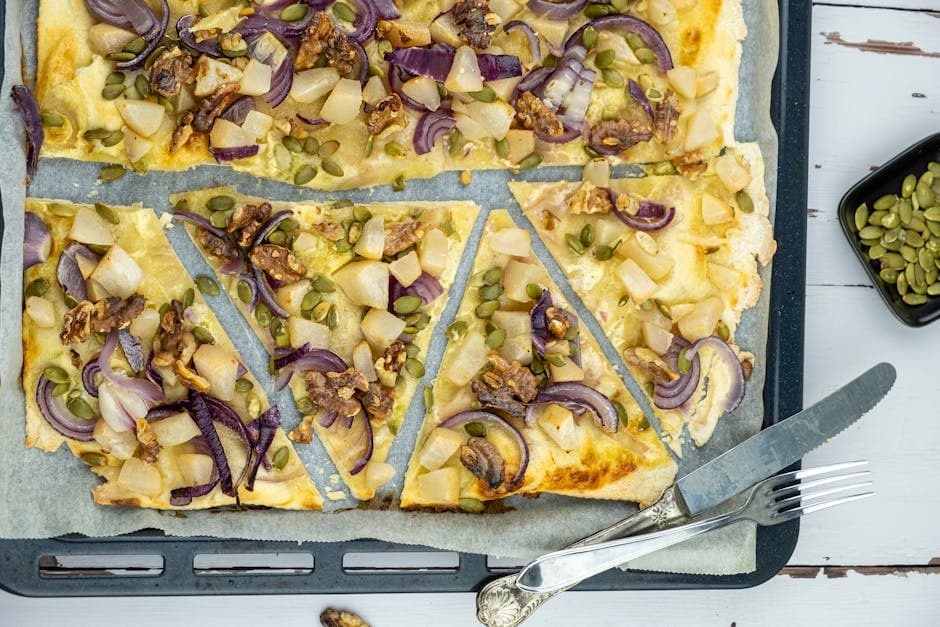
Alsatian-German flame cake — paper-thin crispy dough with crème fraîche, lardons and onion.

Classic breaded and fried veal cutlet.

Chocolate sponge layered with cherries and cream.

Chewy, golden pretzels with a lye-dipped crust.

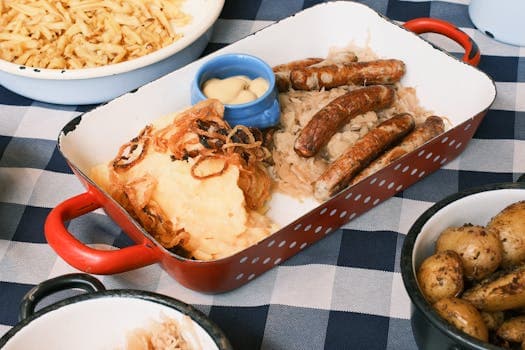
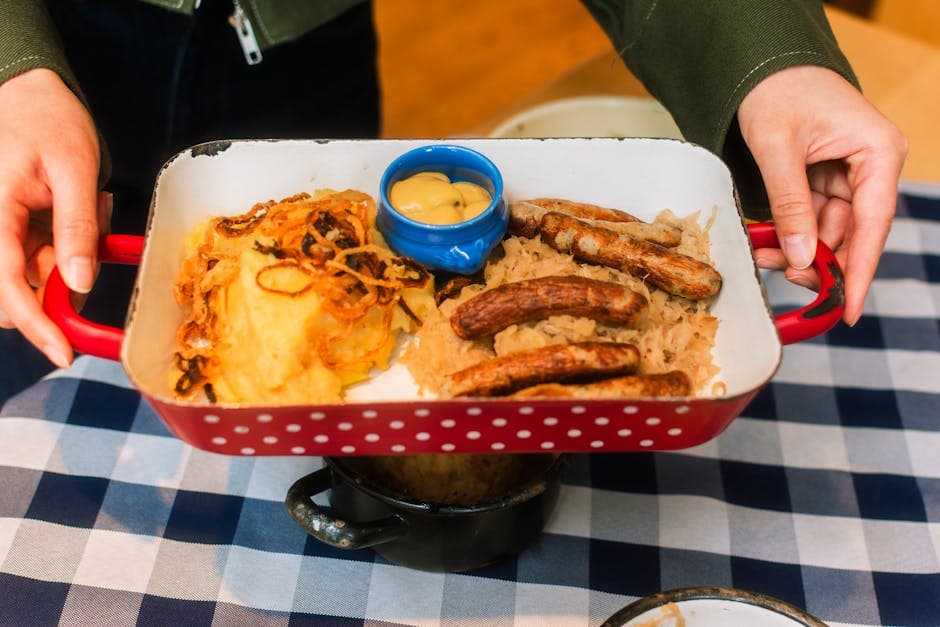
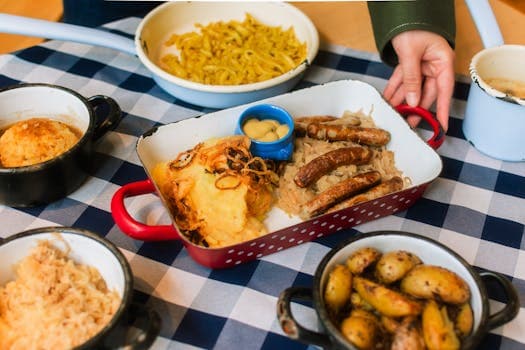
Grilled bratwurst served over tangy sauerkraut.

Tender, irregularly shaped German egg dumplings — the ultimate comfort food side dish from Baden-Württemberg. Serve buttered with caramelised onions, or baked cheesy as Käsespätzle.

Thin, tender veal escalope coated in light breadcrumbs and fried in clarified butter until golden and perfectly crispy — the iconic German-Austrian cutlet at its finest.

Germany's celebrated sweet-and-sour pot roast — beef marinated for days in a spiced wine vinegar pickle, then braised until tender and finished with a rich, tangy gravy.

A traditional German open-faced yeast cake covered in halved Italian plums, baked until the fruit caramelises and the dough becomes soft and fragrant.

Authentic Bavarian soft pretzels with a deep mahogany crust from a lye dip and a coarse salt crust — the definitive German snack.

German potato soup with bacon, leek and marjoram — hearty, comforting and deeply satisfying.

German onion tart on a yeast dough base with bacon, caraway and sour cream — the traditional autumn harvest cake.

Black Forest cherry cake — Germany's most famous cake with chocolate sponge, kirsch, cherries and cream.

Three-day red wine and vinegar marinated beef braise with gingerbread-thickened sauce and red cabbage — Germany's Sunday roast, modernised.

Marinated German pot roast — beef in red-wine vinegar with raisins, gingerbread-thickened gravy.

Germany's national pot roast — beef marinated for 4 days in red wine, vinegar and spices, then braised slowly with a sweet-sour gingerbread gravy.

Munich's morning sausage — pale veal-and-bacon wursts gently poached in water (never boiled), served with sweet Bavarian mustard, a soft pretzel and a tankard of weissbier.

Crispy breaded veal cutlet, pounded thin and fried in butter until golden — the classic Wiener Schnitzel of Germany and Austria.

German egg noodles layered with melted cheese and crispy fried onions, baked until bubbling — the Swabian comfort dish behind German mac-and-cheese.

Bavarian Lemon Herb Grain Bowl turns german pantry flavors into a complete grain bowl with salmon, mustard, caraway, potatoes and vinegar, and a fresh chives finish.

Berlin Smoky Tomato Soup turns german pantry flavors into a complete soup with white fish, mustard, caraway, potatoes and vinegar, and a fresh chives finish.

Swabian Sesame Lime Stew turns german pantry flavors into a complete stew with chicken legs, mustard, caraway, potatoes and vinegar, and a fresh chives finish.

Hamburg Charred Pepper Noodles turns german pantry flavors into a complete noodle dish with wheat noodles, mustard, caraway, potatoes and vinegar, and a fresh chives finish.

Rhine Green Herb Salad turns german pantry flavors into a complete salad with grilled chicken, mustard, caraway, potatoes and vinegar, and a fresh chives finish.

Saxon Lemon Herb Flatbread turns german pantry flavors into a complete flatbread with flatbread dough, mustard, caraway, potatoes and vinegar, and a fresh chives finish.

Black Forest Smoky Tomato Traybake turns german pantry flavors into a complete traybake with sweet potatoes, mustard, caraway, potatoes and vinegar, and a fresh chives finish.

Franconian Sesame Lime Fritters turns german pantry flavors into a complete fritters with salted fish, mustard, caraway, potatoes and vinegar, and a fresh chives finish.

Hessian Charred Pepper Breakfast Plate turns german pantry flavors into a complete breakfast plate with yogurt, mustard, caraway, potatoes and vinegar, and a fresh chives finish.

Bremen Green Herb Dessert turns german pantry flavors into a complete dessert with coconut, mustard, caraway, potatoes and vinegar, and a fresh chives finish.
German Market Lemon Herb Rice Bowl brings german flavor to a practical rice bowl built with chicken thighs, mustard, caraway, potatoes and vinegar, and a fresh chives finish.
German Village Smoky Tomato Soup brings german flavor to a practical soup built with mushrooms, mustard, caraway, potatoes and vinegar, and a fresh chives finish.
German Garden Sesame Lime Skillet brings german flavor to a practical skillet dinner built with cauliflower, mustard, caraway, potatoes and vinegar, and a fresh chives finish.
German Harbor Charred Pepper Noodles brings german flavor to a practical noodle dish built with rice noodles, mustard, caraway, potatoes and vinegar, and a fresh chives finish.
German Mountain Green Herb Salad brings german flavor to a practical salad built with grilled chicken, mustard, caraway, potatoes and vinegar, and a fresh chives finish.
German Festival Lemon Herb Flatbread brings german flavor to a practical flatbread built with flatbread dough, mustard, caraway, potatoes and vinegar, and a fresh chives finish.
German Homestyle Smoky Tomato Traybake brings german flavor to a practical traybake built with sweet potatoes, mustard, caraway, potatoes and vinegar, and a fresh chives finish.
German Street Sesame Lime Fritters brings german flavor to a practical fritters built with salted fish, mustard, caraway, potatoes and vinegar, and a fresh chives finish.
German Golden Charred Pepper Breakfast Plate brings german flavor to a practical breakfast plate built with beans, mustard, caraway, potatoes and vinegar, and a fresh chives finish.
German Weeknight Green Herb Dessert brings german flavor to a practical dessert built with coconut, mustard, caraway, potatoes and vinegar, and a fresh chives finish.
Sliced bratwurst tossed in a curry-spiced tomato sauce over rice, a rice-bowl take on Berlin's iconic currywurst.
A hearty, creamy German potato soup with leeks, carrots and sliced sausage, comfort food from the heart of German home cooking.
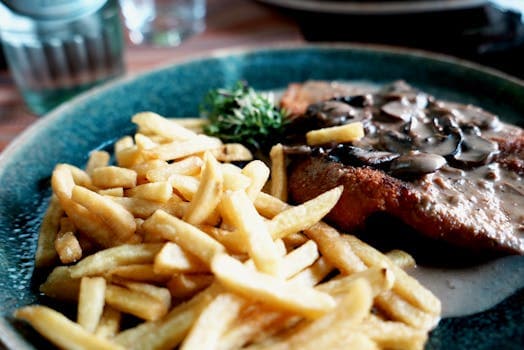
Breaded pan-fried pork cutlets topped with a rich mushroom cream gravy, a comforting German 'hunter's style' schnitzel.
Thinly sliced cucumbers dressed in a tangy vinegar and sour cream sauce with fresh dill, a classic cooling German side salad.
Pork shoulder slow-roasted with a scored, salted skin that crisps into crackling, served with a rich pan gravy, a classic German Sunday roast.
Crispy fried grated potato pancakes, seasoned simply with onion and egg, a beloved German snack served with applesauce.
A classic German breakfast spread of crusty rolls, sliced cheese, cold cuts, soft-boiled eggs and jam, eaten leisurely on weekends.
Layers of chocolate cake soaked in cherry liqueur, filled with whipped cream and cherries, Germany's most famous cake.
Thin beef slices rolled around bacon, onion and pickle, braised until tender in a rich gravy, a classic German Sunday dinner.
Marinated grilled chicken rolled in flatbread with cabbage, yogurt sauce and pickled vegetables, Germany's most beloved street food import.
Grilled German bratwurst served over tangy braised sauerkraut with caraway and apple, a hearty, classic combination.
Bell peppers stuffed with a seasoned ground beef and rice filling, simmered in a light tomato sauce, a German family dinner classic.
Warm sliced potatoes tossed in a tangy vinegar and bacon dressing, a classic German-style potato salad served without mayonnaise.
Beef marinated for days in vinegar and spices, then slow-braised until tender in a rich, tangy gingersnap-thickened gravy.
Red cabbage braised slowly with apple, vinegar and a touch of sugar until soft and deeply flavored, a beloved German side dish.
A thin, crispy flatbread topped with creme fraiche, bacon and onion, baked at high heat until the edges char, a beloved German-Alsatian snack.
Ground beef and rice baked together with tomato and paprika until bubbling, a simple, hearty German family casserole.
A German bratwurst sandwich topped with curry ketchup and green chile for a spicy twist on a Berlin classic.
Creamy German potato gratin baked with a light lemon-yogurt cream and a golden cheese crust.
German-style veal and pork meatballs simmered in a rich tomato basil sauce instead of the classic caper cream.
A hearty German white bean stew with smoked sausage, brightened with garlic and a finish of fresh lime.
A large, thin German egg pancake, folded and served with charred lemon for a bright, caramelized finish.
A savory German-style oat porridge simmered with tangy tomato and a touch of tamarind for depth.
Classic German pan-fried trout finished with a nutty brown butter sauce and a touch of crispy chile.
A German savory onion tart reimagined with coconut milk and fresh ginger for a fragrant, custardy filling.
Warm German potato salad dressed in vinegar and bacon fat, finished with a smoky hit of paprika.
Crispy-skinned German roast chicken basted with a garlicky tomato basil glaze in the last stretch of roasting.
German-style roasted root vegetables finished with a bright garlic-lime butter for a fresh, savory side dish.
Fluffy German jam-filled mini doughnuts rolled in a smoky charred lemon sugar for a bright, caramelized finish.
Crisp fried potato pancakes with a nutty toasted sesame finish, a German street-food classic.
Soft egg noodle spätzle tossed in golden herb butter, served as a warm grain bowl.
Pan-fried trout finished in nutty brown butter with lemon, served over rice, a German Sunday classic.
A hearty farmhouse bowl of stewed lentils and egg noodles, finished with toasted sesame.
Bell peppers stuffed with ground beef, rice and paprika, finished with a pat of herb butter.
Creamy layered potato gratin baked until golden, finished with a drizzle of nutty browned butter.
A juicy German-style meat patty burger seasoned with mustard and onion, on a toasted sesame bun.
Fluffy shredded pancake caramelized in browned butter, dusted with sugar, a beloved Austro-German dessert.
Sliced grilled sausage smothered in a curry-spiced tomato sauce, Berlin's favorite street food.
A culinária alemã é conhecida pelas salsichas (mais de 1.500 variedades), pretzels, chucrute, Schnitzel e pães excepcionais – mais de 3.000 tipos registrados. Os pratos exclusivos incluem Sauerbraten, junta de porco, macarrão Spätzle e bolo da Floresta Negra. É uma culinária farta de clima frio, baseada em carne de porco, batata, repolho e fermentação, com forte caráter regional e uma celebrada cultura cervejeira.
Wiener Schnitzel – vitela empanada e frita – é austríaca e legalmente protegida na Áustria; apenas a vitela pode levar o nome lá. A Alemanha abrange a família mais ampla do Schnitzel, tipicamente carne de porco: Schnitzel Wiener Art (ao estilo vienense, com carne de porco), Jägerschnitzel com molho de creme de cogumelos e Zigeunerschnitzel com pimentão. A própria técnica de empanar e fritar é partilhada por toda a Europa Central.
Os pratos tradicionais de celebração – junta de porco, bolinhos, molhos cremosos – são inegavelmente ricos, feitos para invernos frios e trabalho físico. Mas a alimentação alemã diária inclui Abendbrot, uma refeição leve à noite com pão, queijo e frios, além de saladas, peixe no norte e aspargos comidos obsessivamente durante o Spargelzeit na primavera. A comida caseira alemã moderna é mais leve do que sugere a imagem da cervejaria.
O Schnitzel de porco é rápido e ensina a técnica de empanar. Kartoffelpuffer (panquecas de batata) com purê de maçã precisam de quatro ingredientes. Um simples Eintopf – ensopado de lentilha com linguiça – é uma panela única e indulgente. Käsespätzle, a resposta alemã ao macarrão com queijo, pode ser feito com uma peneira se você não tiver uma prensa Spätzle. Bratwurst com salada quente de batata à base de vinagre completa o repertório inicial.
Um típico café da manhã alemão é centrado no pão: Brötchen fresco (pãezinhos crocantes) ou pão de centeio fatiado com manteiga, frios, queijo fatiado, geléia e mel, geralmente com ovo cozido e café. O muesli, inventado na vizinha Suíça, também é comum. A propagação é montada e não cozida – a exceção são os cafés da manhã quentes, reservados para fins de semana ou hotéis.