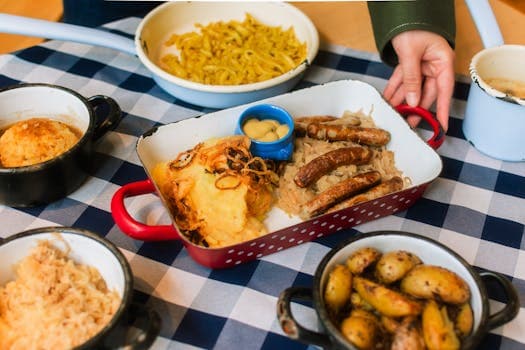
German Beef Sauerbraten
Germany's iconic pot roast — beef marinated 3 days in red wine vinegar, then slow-braised until meltingly tender with a rich, sweet-sour gingersnap gravy.
Sauerbraten, bratwurst, pretzels y los abundantes sabores de Europa Central.
La cocina alemana surgió de una lógica de conservación de clima frío: el chucrut, las salchichas curadas y ahumadas, los encurtidos y los densos panes de centeno fueron formas de sobrevivir al invierno que se convirtieron en firmas nacionales. La tradición de las Wurst cuenta con más de 1.500 variedades documentadas: Nürnberger Rostbratwurst, Thüringer, Weisswurst y currywurst, la invención de la comida callejera de Berlín de la posguerra. El pan se toma igualmente en serio: Alemania registra más de 3.000 tipos de pan y su cultura del pan está considerada patrimonio inmaterial de la UNESCO.
Las regiones cocinan de manera diferente. Baviera proporciona el estereotipo: pretzels, codillo de cerdo (Schweinshaxe), Weisswurst con mostaza dulce y cultura de cervecería. Suabia, en el suroeste, aporta Spätzle, Maultaschen (bolsas de pasta apodadas Herrgottsbescheißerle por ocultar la carne a Dios durante la Cuaresma) y lentejas con salchicha. Renania ofrece Sauerbraten, un asado marinado en vinagre a veces endulzado con pasas, mientras que la cocina de la costa norte incluye platos de pescado como Labskaus y arenque matjes.
La cocina casera se centra en abundantes platos de un solo plato: Schnitzel con ensalada de patatas, Rouladen (rollitos de carne envueltos en mostaza, pepinillos y tocino) y guisos Eintopf. Las patatas llegaron en el siglo XVIII bajo la promoción de Federico el Grande y ahora aparecen como bolas de masa, panqueques (Kartoffelpuffer) y ensaladas de patatas regionalmente divergentes: a base de mayonesa en el norte, vinagre y caldo en el sur. El ritual vespertino del Kaffee und Kuchen mantiene una importante tradición de repostería, desde el pastel de la Selva Negra hasta los pasteles streusel.
salchicha
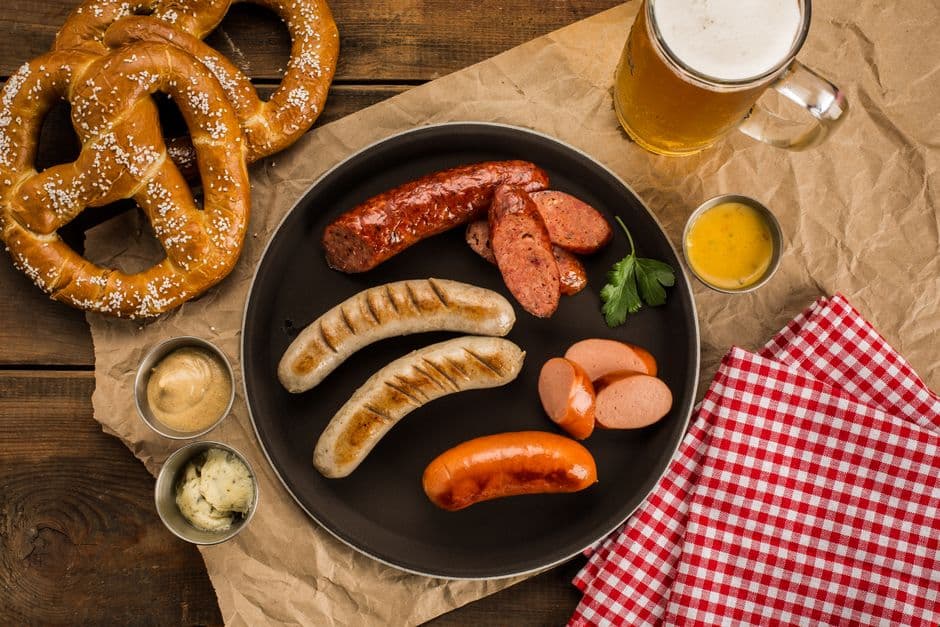
Más de 1.500 variedades de salchichas, desde Bratwurst hasta Weisswurst y currywurst, definen la charcutería alemana, cada una con reglas regionales sobre preparación y acompañamientos.
Pan y Brötchen
Más de 3.000 tipos de pan registrados, en los que predomina el centeno y las masas madre de cereales mixtos, hacen de la cultura del pan alemana un patrimonio declarado Patrimonio de la Humanidad por la UNESCO.
Chucrut y encurtido
La fermentación láctica del repollo, además de los pepinos y la remolacha encurtidos, refleja la tradición de conservación que es el núcleo de la cocina.
platos de patatas
Las albóndigas (Klösse), las tortitas (Kartoffelpuffer) y las ensaladas de patatas regionales hacen de la patata el alimento básico más versátil de Alemania.
carnes estofadas
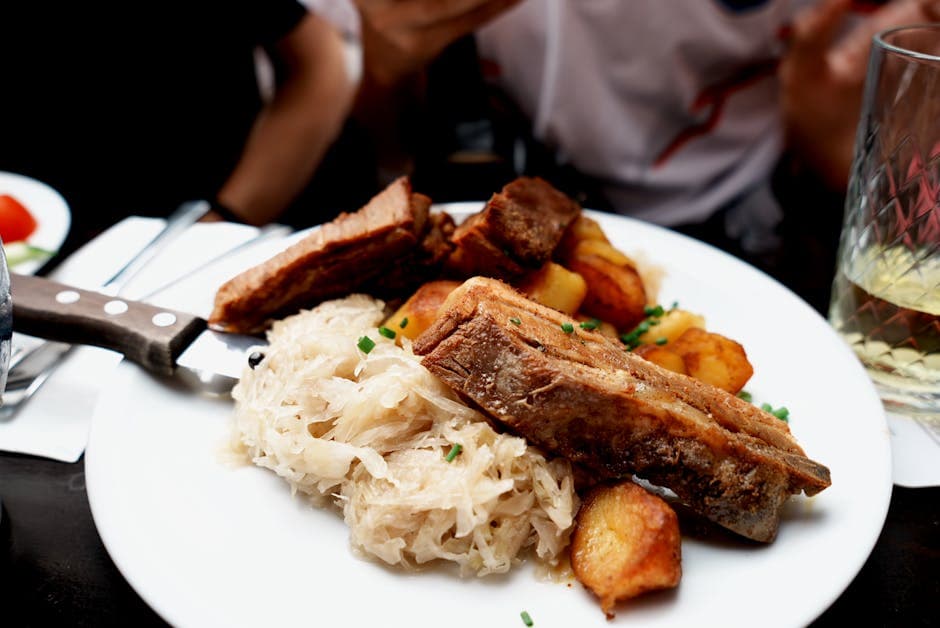
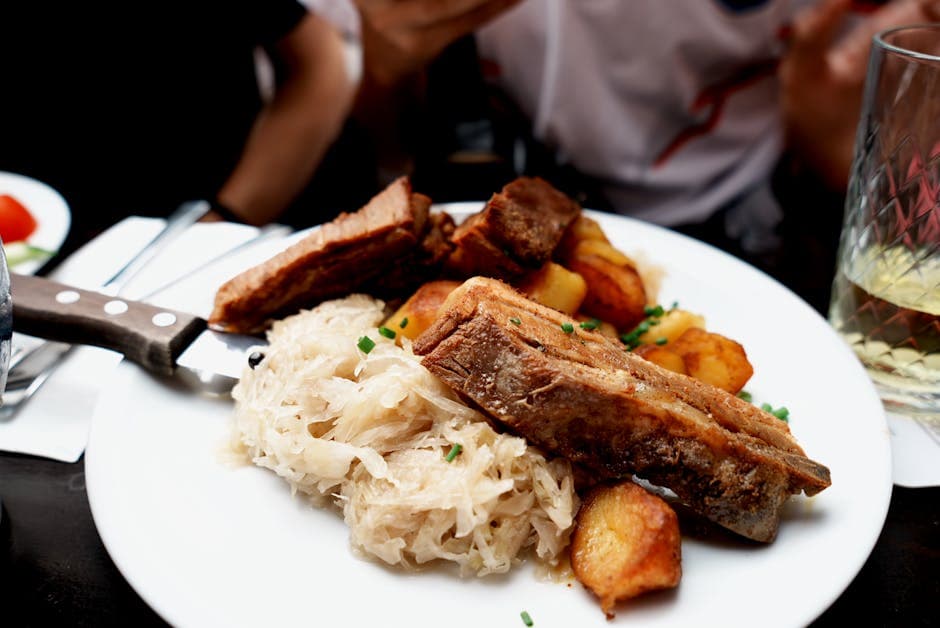
Sauerbraten, Rouladen y Schweinshaxe exhiben una cocción lenta de cortes marinados o enrollados, generalmente servidos con salsa y albóndigas.
Café y cocina
El ritual del café y el pastel de la tarde respalda un canon de repostería, desde el pastel de la Selva Negra hasta Bienenstich y el Stollen navideño de temporada.
Cocina con las manos libres
Consigue planes de comida con IA, modo de cocina paso a paso y tus recetas guardadas en la app gratuita Bento.
Planifica tus comidas, controla tu ayuno y crea tu lista de compras — gratis
El panel de MyCookingCalendar funciona directamente en tu navegador, sin descargas.
German & Austrian Cuisine: 28 Traditional Recipes
Explore hearty German and Austrian cooking with 28 traditional recipes from breads to schnitzel to strudel.
14 Real Recipes With 5 Ingredients or Less
14 well-rated recipes from around the world that use five ingredients or fewer — proof that a short ingredient list doesn't mean a compromise on flavor.

Germany's iconic pot roast — beef marinated 3 days in red wine vinegar, then slow-braised until meltingly tender with a rich, sweet-sour gingersnap gravy.

Paper-thin veal pounded flat, breaded in fine breadcrumbs and fried in clarified butter until billowing and golden.

Layers of chocolate sponge, whipped cream and morello cherries soaked in Kirschwasser — Germany's most famous cake.

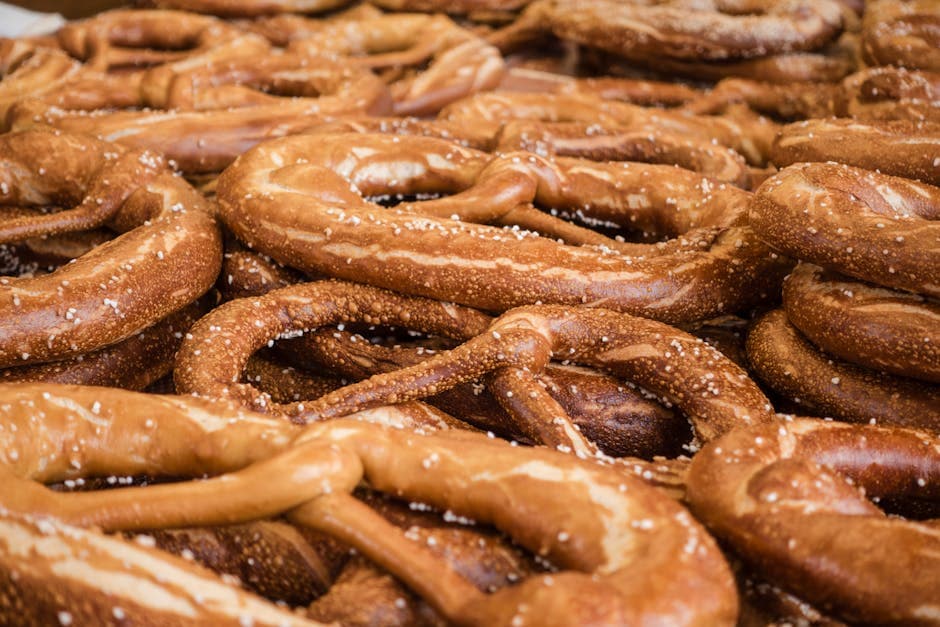
Chewy, glossy, salt-crusted soft pretzels with the distinctive alkaline crust — perfect with mustard and beer.

A traditional German pot roast with a tangy marinade.

A classic German potato salad with a tangy dressing.

A savory German onion pie with a creamy filling.

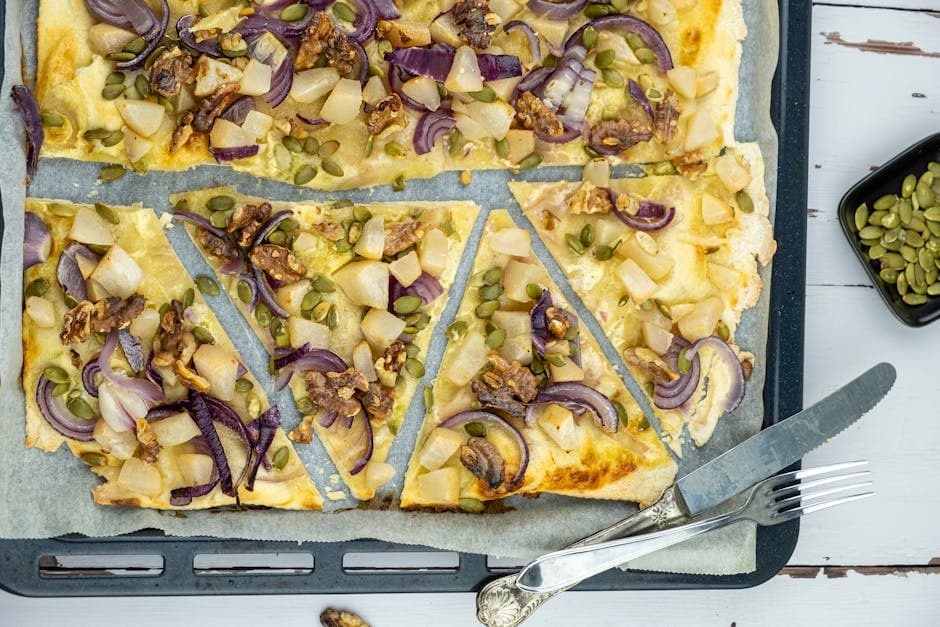
Alsatian-German flame cake — paper-thin crispy dough with crème fraîche, lardons and onion.

Classic breaded and fried veal cutlet.

Chocolate sponge layered with cherries and cream.

Chewy, golden pretzels with a lye-dipped crust.

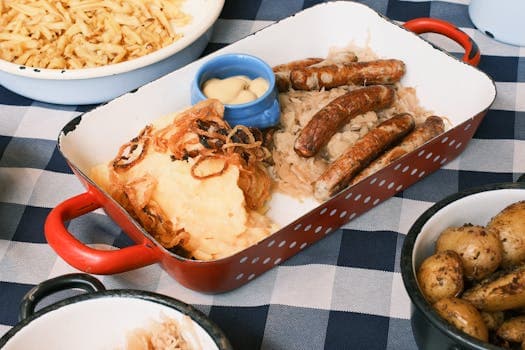
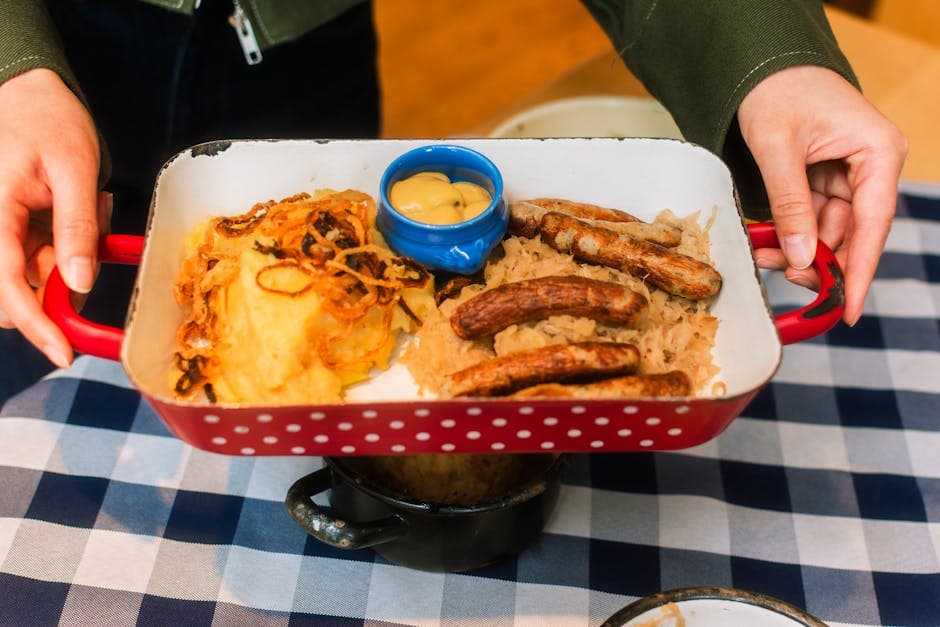
Grilled bratwurst served over tangy sauerkraut.

Tender, irregularly shaped German egg dumplings — the ultimate comfort food side dish from Baden-Württemberg. Serve buttered with caramelised onions, or baked cheesy as Käsespätzle.

Thin, tender veal escalope coated in light breadcrumbs and fried in clarified butter until golden and perfectly crispy — the iconic German-Austrian cutlet at its finest.

Germany's celebrated sweet-and-sour pot roast — beef marinated for days in a spiced wine vinegar pickle, then braised until tender and finished with a rich, tangy gravy.

A traditional German open-faced yeast cake covered in halved Italian plums, baked until the fruit caramelises and the dough becomes soft and fragrant.

Authentic Bavarian soft pretzels with a deep mahogany crust from a lye dip and a coarse salt crust — the definitive German snack.

German potato soup with bacon, leek and marjoram — hearty, comforting and deeply satisfying.

German onion tart on a yeast dough base with bacon, caraway and sour cream — the traditional autumn harvest cake.

Black Forest cherry cake — Germany's most famous cake with chocolate sponge, kirsch, cherries and cream.

Three-day red wine and vinegar marinated beef braise with gingerbread-thickened sauce and red cabbage — Germany's Sunday roast, modernised.

Marinated German pot roast — beef in red-wine vinegar with raisins, gingerbread-thickened gravy.

Germany's national pot roast — beef marinated for 4 days in red wine, vinegar and spices, then braised slowly with a sweet-sour gingerbread gravy.

Munich's morning sausage — pale veal-and-bacon wursts gently poached in water (never boiled), served with sweet Bavarian mustard, a soft pretzel and a tankard of weissbier.

Crispy breaded veal cutlet, pounded thin and fried in butter until golden — the classic Wiener Schnitzel of Germany and Austria.

German egg noodles layered with melted cheese and crispy fried onions, baked until bubbling — the Swabian comfort dish behind German mac-and-cheese.

Bavarian Lemon Herb Grain Bowl turns german pantry flavors into a complete grain bowl with salmon, mustard, caraway, potatoes and vinegar, and a fresh chives finish.

Berlin Smoky Tomato Soup turns german pantry flavors into a complete soup with white fish, mustard, caraway, potatoes and vinegar, and a fresh chives finish.

Swabian Sesame Lime Stew turns german pantry flavors into a complete stew with chicken legs, mustard, caraway, potatoes and vinegar, and a fresh chives finish.

Hamburg Charred Pepper Noodles turns german pantry flavors into a complete noodle dish with wheat noodles, mustard, caraway, potatoes and vinegar, and a fresh chives finish.

Rhine Green Herb Salad turns german pantry flavors into a complete salad with grilled chicken, mustard, caraway, potatoes and vinegar, and a fresh chives finish.

Saxon Lemon Herb Flatbread turns german pantry flavors into a complete flatbread with flatbread dough, mustard, caraway, potatoes and vinegar, and a fresh chives finish.

Black Forest Smoky Tomato Traybake turns german pantry flavors into a complete traybake with sweet potatoes, mustard, caraway, potatoes and vinegar, and a fresh chives finish.

Franconian Sesame Lime Fritters turns german pantry flavors into a complete fritters with salted fish, mustard, caraway, potatoes and vinegar, and a fresh chives finish.

Hessian Charred Pepper Breakfast Plate turns german pantry flavors into a complete breakfast plate with yogurt, mustard, caraway, potatoes and vinegar, and a fresh chives finish.

Bremen Green Herb Dessert turns german pantry flavors into a complete dessert with coconut, mustard, caraway, potatoes and vinegar, and a fresh chives finish.
German Market Lemon Herb Rice Bowl brings german flavor to a practical rice bowl built with chicken thighs, mustard, caraway, potatoes and vinegar, and a fresh chives finish.
German Village Smoky Tomato Soup brings german flavor to a practical soup built with mushrooms, mustard, caraway, potatoes and vinegar, and a fresh chives finish.
German Garden Sesame Lime Skillet brings german flavor to a practical skillet dinner built with cauliflower, mustard, caraway, potatoes and vinegar, and a fresh chives finish.
German Harbor Charred Pepper Noodles brings german flavor to a practical noodle dish built with rice noodles, mustard, caraway, potatoes and vinegar, and a fresh chives finish.
German Mountain Green Herb Salad brings german flavor to a practical salad built with grilled chicken, mustard, caraway, potatoes and vinegar, and a fresh chives finish.
German Festival Lemon Herb Flatbread brings german flavor to a practical flatbread built with flatbread dough, mustard, caraway, potatoes and vinegar, and a fresh chives finish.
German Homestyle Smoky Tomato Traybake brings german flavor to a practical traybake built with sweet potatoes, mustard, caraway, potatoes and vinegar, and a fresh chives finish.
German Street Sesame Lime Fritters brings german flavor to a practical fritters built with salted fish, mustard, caraway, potatoes and vinegar, and a fresh chives finish.
German Golden Charred Pepper Breakfast Plate brings german flavor to a practical breakfast plate built with beans, mustard, caraway, potatoes and vinegar, and a fresh chives finish.
German Weeknight Green Herb Dessert brings german flavor to a practical dessert built with coconut, mustard, caraway, potatoes and vinegar, and a fresh chives finish.
Sliced bratwurst tossed in a curry-spiced tomato sauce over rice, a rice-bowl take on Berlin's iconic currywurst.
A hearty, creamy German potato soup with leeks, carrots and sliced sausage, comfort food from the heart of German home cooking.
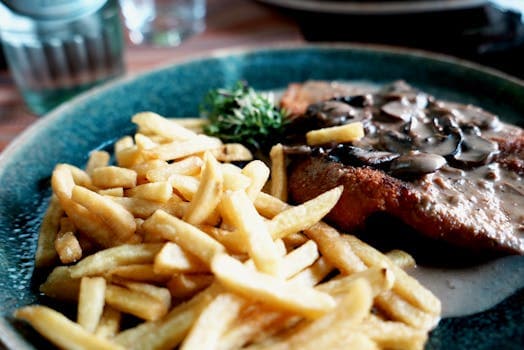
Breaded pan-fried pork cutlets topped with a rich mushroom cream gravy, a comforting German 'hunter's style' schnitzel.
Thinly sliced cucumbers dressed in a tangy vinegar and sour cream sauce with fresh dill, a classic cooling German side salad.
Pork shoulder slow-roasted with a scored, salted skin that crisps into crackling, served with a rich pan gravy, a classic German Sunday roast.
Crispy fried grated potato pancakes, seasoned simply with onion and egg, a beloved German snack served with applesauce.
A classic German breakfast spread of crusty rolls, sliced cheese, cold cuts, soft-boiled eggs and jam, eaten leisurely on weekends.
Layers of chocolate cake soaked in cherry liqueur, filled with whipped cream and cherries, Germany's most famous cake.
Thin beef slices rolled around bacon, onion and pickle, braised until tender in a rich gravy, a classic German Sunday dinner.
Marinated grilled chicken rolled in flatbread with cabbage, yogurt sauce and pickled vegetables, Germany's most beloved street food import.
Grilled German bratwurst served over tangy braised sauerkraut with caraway and apple, a hearty, classic combination.
Bell peppers stuffed with a seasoned ground beef and rice filling, simmered in a light tomato sauce, a German family dinner classic.
Warm sliced potatoes tossed in a tangy vinegar and bacon dressing, a classic German-style potato salad served without mayonnaise.
Beef marinated for days in vinegar and spices, then slow-braised until tender in a rich, tangy gingersnap-thickened gravy.
Red cabbage braised slowly with apple, vinegar and a touch of sugar until soft and deeply flavored, a beloved German side dish.
A thin, crispy flatbread topped with creme fraiche, bacon and onion, baked at high heat until the edges char, a beloved German-Alsatian snack.
Ground beef and rice baked together with tomato and paprika until bubbling, a simple, hearty German family casserole.
A German bratwurst sandwich topped with curry ketchup and green chile for a spicy twist on a Berlin classic.
Creamy German potato gratin baked with a light lemon-yogurt cream and a golden cheese crust.
German-style veal and pork meatballs simmered in a rich tomato basil sauce instead of the classic caper cream.
A hearty German white bean stew with smoked sausage, brightened with garlic and a finish of fresh lime.
A large, thin German egg pancake, folded and served with charred lemon for a bright, caramelized finish.
A savory German-style oat porridge simmered with tangy tomato and a touch of tamarind for depth.
Classic German pan-fried trout finished with a nutty brown butter sauce and a touch of crispy chile.
A German savory onion tart reimagined with coconut milk and fresh ginger for a fragrant, custardy filling.
Warm German potato salad dressed in vinegar and bacon fat, finished with a smoky hit of paprika.
Crispy-skinned German roast chicken basted with a garlicky tomato basil glaze in the last stretch of roasting.
German-style roasted root vegetables finished with a bright garlic-lime butter for a fresh, savory side dish.
Fluffy German jam-filled mini doughnuts rolled in a smoky charred lemon sugar for a bright, caramelized finish.
Crisp fried potato pancakes with a nutty toasted sesame finish, a German street-food classic.
Soft egg noodle spätzle tossed in golden herb butter, served as a warm grain bowl.
Pan-fried trout finished in nutty brown butter with lemon, served over rice, a German Sunday classic.
A hearty farmhouse bowl of stewed lentils and egg noodles, finished with toasted sesame.
Bell peppers stuffed with ground beef, rice and paprika, finished with a pat of herb butter.
Creamy layered potato gratin baked until golden, finished with a drizzle of nutty browned butter.
A juicy German-style meat patty burger seasoned with mustard and onion, on a toasted sesame bun.
Fluffy shredded pancake caramelized in browned butter, dusted with sugar, a beloved Austro-German dessert.
Sliced grilled sausage smothered in a curry-spiced tomato sauce, Berlin's favorite street food.
La cocina alemana es conocida por las salchichas (más de 1.500 variedades), los pretzels, el chucrut, el schnitzel y el pan excepcional: más de 3.000 tipos registrados. Los platos exclusivos incluyen Sauerbraten, codillo de cerdo, fideos Spätzle y pastel de la Selva Negra. Es una cocina abundante de clima frío basada en carne de cerdo, patatas, repollo y fermentación, con un fuerte carácter regional y una célebre cultura cervecera.
El Wiener Schnitzel (ternera empanizada y frita) es austriaco y está legalmente protegido en Austria; allí sólo la ternera puede llevar ese nombre. Alemania abarca la familia más amplia del Schnitzel, típicamente carne de cerdo: Schnitzel Wiener Art (estilo Viena, con carne de cerdo), Jägerschnitzel con salsa de crema de champiñones y Zigeunerschnitzel con pimientos. La técnica de empanizar y freír se comparte en toda Europa Central.
Los platos tradicionales de celebración (codillo de cerdo, albóndigas, salsas cremosas) son innegablemente ricos y están preparados para inviernos fríos y trabajo físico. Pero la comida alemana cotidiana incluye Abendbrot, una cena ligera a base de pan, queso y embutidos, además de ensaladas, pescado del norte y espárragos que se deleitan obsesivamente durante el Spargelzeit en primavera. La cocina casera alemana moderna es más ligera de lo que sugiere la imagen de la cervecería.
El cerdo Schnitzel es rápido y enseña la técnica del empanizado. El kartoffelpuffer (tortitas de patata) con puré de manzana necesita cuatro ingredientes. Un simple Eintopf (guiso de lentejas con salchicha) es sencillo y tolerante. El käsespätzle, la respuesta alemana a los macarrones con queso, se puede preparar con un colador si no tienes una prensa para Spätzle. Bratwurst con ensalada de patatas tibia a base de vinagre completa el repertorio de entrantes.
Un desayuno típico alemán se centra en el pan: Brötchen fresco (panecillos crujientes) o pan de centeno rebanado con mantequilla, embutidos, queso rebanado, mermelada y miel, a menudo con un huevo pasado por agua y café. También es común el muesli, inventado en la vecina Suiza. La comida se prepara en lugar de cocinarse; los desayunos calientes son la excepción, reservados para los fines de semana o en hoteles.