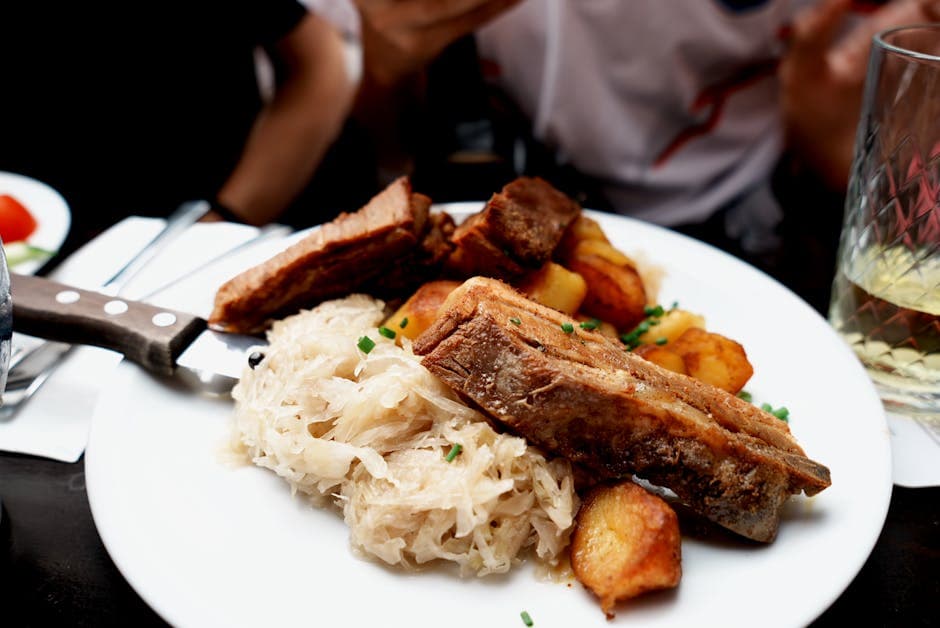
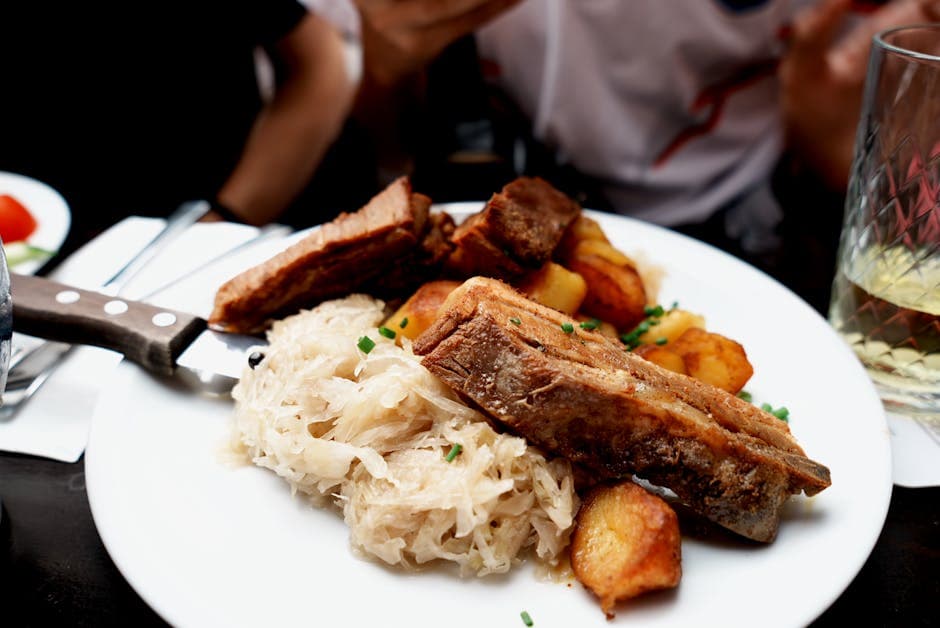
German Beef Sauerbraten
Germany's iconic pot roast — beef marinated 3 days in red wine vinegar, then slow-braised until meltingly tender with a rich, sweet-sour gingersnap gravy.
Sauerbraten, bratwurst, bretzels et les saveurs copieuses de l'Europe centrale.
La cuisine allemande est née d'une logique de conservation des climats froids : la choucroute, les saucisses salées et fumées, les cornichons et les pains de seigle denses étaient des moyens de survivre à l'hiver qui sont devenus des signatures nationales. La tradition de la Wurst compte plus de 1 500 variétés documentées : la Nürnberger Rostbratwurst, la Thüringer, la Weisswurst et la currywurst, l'invention de la cuisine de rue berlinoise d'après-guerre. Le pain est pris tout aussi au sérieux : l'Allemagne enregistre plus de 3 000 types de pain et sa culture du pain est classée au patrimoine immatériel de l'UNESCO.
Les régions cuisinent différemment. La Bavière fournit le stéréotype : bretzels, jarret de porc (Schweinshaxe), Weisswurst à la moutarde douce et culture de brasserie. La Souabe, dans le sud-ouest, fournit des Spätzle, des Maultaschen (poches de pâtes surnommées Herrgottsbescheißerle pour cacher la viande à Dieu pendant le Carême) et des lentilles accompagnées de saucisses. La Rhénanie propose du Sauerbraten, un rôti mariné au vinaigre, parfois sucré avec des raisins secs, tandis que la cuisine côtière du nord propose des plats de poisson comme le Labskaus et le hareng matjes.
La cuisine maison se concentre sur des repas copieux dans une assiette : Schnitzel avec salade de pommes de terre, Rouladen (rouleaux de bœuf enroulés autour de moutarde, de cornichon et de bacon) et ragoûts Eintopf. Les pommes de terre sont arrivées au XVIIIe siècle sous la promotion de Frédéric le Grand et apparaissent désormais sous forme de raviolis, de crêpes (Kartoffelpuffer) et de salades de pommes de terre divergentes selon les régions - à base de mayonnaise au nord, de vinaigre et de bouillon au sud. Le rituel de l'après-midi Kaffee und Kuchen perpétue une tradition pâtissière sérieuse, du gâteau de la Forêt-Noire aux gâteaux streusel.
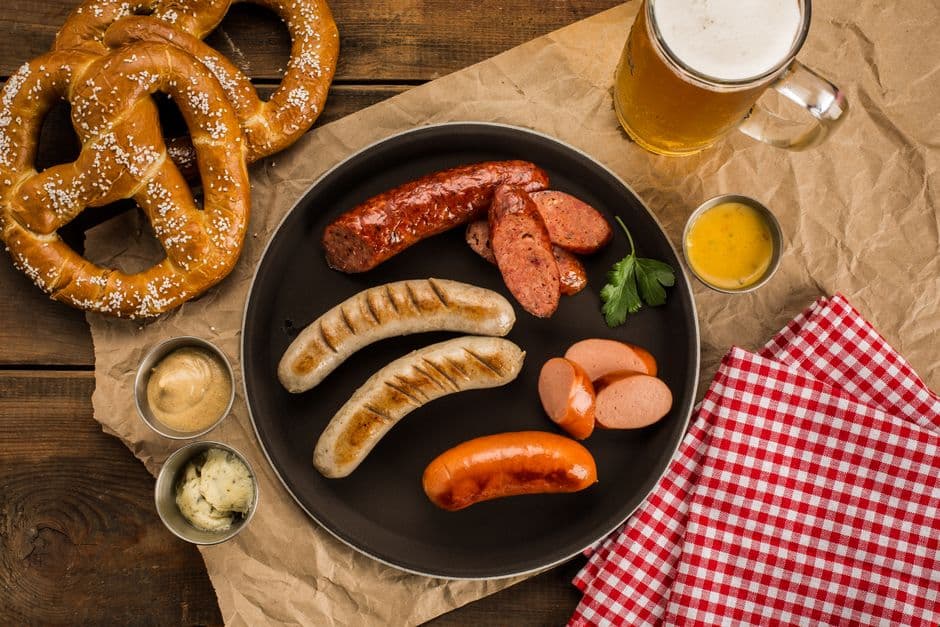
Saucisse
Plus de 1 500 variétés de saucisses, de la Bratwurst à la Weisswurst en passant par la currywurst, définissent la charcuterie allemande, chacune avec des règles régionales en matière de préparation et d'accompagnement.
Pain et Brötchen
Plus de 3 000 types de pain enregistrés, dominés par le levain de seigle et de céréales mélangées, font de la culture du pain allemande un patrimoine classé au patrimoine mondial de l'UNESCO.
Choucroute et marinade
La fermentation lactique du chou, ainsi que des concombres et des betteraves marinés, reflète la tradition de conservation au cœur de la cuisine.
Plats de pommes de terre
Les raviolis (Klösse), les crêpes (Kartoffelpuffer) et les salades de pommes de terre régionales font de la pomme de terre l'aliment de base le plus polyvalent d'Allemagne.
Viandes braisées
Sauerbraten, Rouladen et Schweinshaxe présentent une cuisson lente de coupes marinées ou roulées, généralement servies avec de la sauce et des boulettes.
Café et cuisine
Le rituel café-gâteau de l'après-midi accompagne un canon de pâtisserie allant du gâteau de la Forêt-Noire au Bienenstich en passant par le Stollen de Noël saisonnier.
Cuisinez les mains libres
Profitez de plans de repas IA, d'un mode cuisine pas à pas et de vos recettes enregistrées dans l'appli gratuite Bento.
Planifiez vos repas, suivez votre jeûne et créez votre liste de courses — gratuit
Le tableau de bord MyCookingCalendar fonctionne directement dans votre navigateur, sans téléchargement.
German & Austrian Cuisine: 28 Traditional Recipes
Explore hearty German and Austrian cooking with 28 traditional recipes from breads to schnitzel to strudel.
14 Real Recipes With 5 Ingredients or Less
14 well-rated recipes from around the world that use five ingredients or fewer — proof that a short ingredient list doesn't mean a compromise on flavor.

Germany's iconic pot roast — beef marinated 3 days in red wine vinegar, then slow-braised until meltingly tender with a rich, sweet-sour gingersnap gravy.

Paper-thin veal pounded flat, breaded in fine breadcrumbs and fried in clarified butter until billowing and golden.

Layers of chocolate sponge, whipped cream and morello cherries soaked in Kirschwasser — Germany's most famous cake.

Chewy, glossy, salt-crusted soft pretzels with the distinctive alkaline crust — perfect with mustard and beer.

A traditional German pot roast with a tangy marinade.

A classic German potato salad with a tangy dressing.

A savory German onion pie with a creamy filling.

Alsatian-German flame cake — paper-thin crispy dough with crème fraîche, lardons and onion.

Classic breaded and fried veal cutlet.

Chocolate sponge layered with cherries and cream.

Chewy, golden pretzels with a lye-dipped crust.

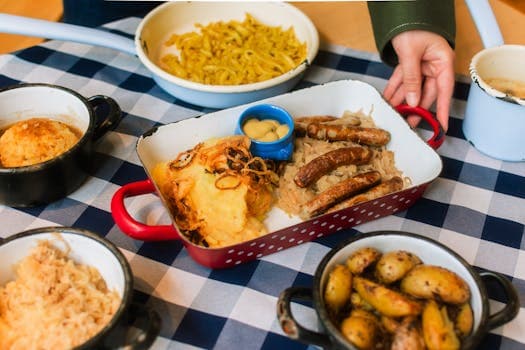
Grilled bratwurst served over tangy sauerkraut.

Tender, irregularly shaped German egg dumplings — the ultimate comfort food side dish from Baden-Württemberg. Serve buttered with caramelised onions, or baked cheesy as Käsespätzle.

Thin, tender veal escalope coated in light breadcrumbs and fried in clarified butter until golden and perfectly crispy — the iconic German-Austrian cutlet at its finest.

Germany's celebrated sweet-and-sour pot roast — beef marinated for days in a spiced wine vinegar pickle, then braised until tender and finished with a rich, tangy gravy.

A traditional German open-faced yeast cake covered in halved Italian plums, baked until the fruit caramelises and the dough becomes soft and fragrant.

Authentic Bavarian soft pretzels with a deep mahogany crust from a lye dip and a coarse salt crust — the definitive German snack.

German potato soup with bacon, leek and marjoram — hearty, comforting and deeply satisfying.

German onion tart on a yeast dough base with bacon, caraway and sour cream — the traditional autumn harvest cake.

Black Forest cherry cake — Germany's most famous cake with chocolate sponge, kirsch, cherries and cream.

Three-day red wine and vinegar marinated beef braise with gingerbread-thickened sauce and red cabbage — Germany's Sunday roast, modernised.

Marinated German pot roast — beef in red-wine vinegar with raisins, gingerbread-thickened gravy.

Germany's national pot roast — beef marinated for 4 days in red wine, vinegar and spices, then braised slowly with a sweet-sour gingerbread gravy.

Munich's morning sausage — pale veal-and-bacon wursts gently poached in water (never boiled), served with sweet Bavarian mustard, a soft pretzel and a tankard of weissbier.

Crispy breaded veal cutlet, pounded thin and fried in butter until golden — the classic Wiener Schnitzel of Germany and Austria.

German egg noodles layered with melted cheese and crispy fried onions, baked until bubbling — the Swabian comfort dish behind German mac-and-cheese.

Bavarian Lemon Herb Grain Bowl turns german pantry flavors into a complete grain bowl with salmon, mustard, caraway, potatoes and vinegar, and a fresh chives finish.

Berlin Smoky Tomato Soup turns german pantry flavors into a complete soup with white fish, mustard, caraway, potatoes and vinegar, and a fresh chives finish.

Swabian Sesame Lime Stew turns german pantry flavors into a complete stew with chicken legs, mustard, caraway, potatoes and vinegar, and a fresh chives finish.

Hamburg Charred Pepper Noodles turns german pantry flavors into a complete noodle dish with wheat noodles, mustard, caraway, potatoes and vinegar, and a fresh chives finish.

Rhine Green Herb Salad turns german pantry flavors into a complete salad with grilled chicken, mustard, caraway, potatoes and vinegar, and a fresh chives finish.

Saxon Lemon Herb Flatbread turns german pantry flavors into a complete flatbread with flatbread dough, mustard, caraway, potatoes and vinegar, and a fresh chives finish.

Black Forest Smoky Tomato Traybake turns german pantry flavors into a complete traybake with sweet potatoes, mustard, caraway, potatoes and vinegar, and a fresh chives finish.

Franconian Sesame Lime Fritters turns german pantry flavors into a complete fritters with salted fish, mustard, caraway, potatoes and vinegar, and a fresh chives finish.

Hessian Charred Pepper Breakfast Plate turns german pantry flavors into a complete breakfast plate with yogurt, mustard, caraway, potatoes and vinegar, and a fresh chives finish.

Bremen Green Herb Dessert turns german pantry flavors into a complete dessert with coconut, mustard, caraway, potatoes and vinegar, and a fresh chives finish.
German Market Lemon Herb Rice Bowl brings german flavor to a practical rice bowl built with chicken thighs, mustard, caraway, potatoes and vinegar, and a fresh chives finish.
German Village Smoky Tomato Soup brings german flavor to a practical soup built with mushrooms, mustard, caraway, potatoes and vinegar, and a fresh chives finish.
German Garden Sesame Lime Skillet brings german flavor to a practical skillet dinner built with cauliflower, mustard, caraway, potatoes and vinegar, and a fresh chives finish.
German Harbor Charred Pepper Noodles brings german flavor to a practical noodle dish built with rice noodles, mustard, caraway, potatoes and vinegar, and a fresh chives finish.
German Mountain Green Herb Salad brings german flavor to a practical salad built with grilled chicken, mustard, caraway, potatoes and vinegar, and a fresh chives finish.
German Festival Lemon Herb Flatbread brings german flavor to a practical flatbread built with flatbread dough, mustard, caraway, potatoes and vinegar, and a fresh chives finish.
German Homestyle Smoky Tomato Traybake brings german flavor to a practical traybake built with sweet potatoes, mustard, caraway, potatoes and vinegar, and a fresh chives finish.
German Street Sesame Lime Fritters brings german flavor to a practical fritters built with salted fish, mustard, caraway, potatoes and vinegar, and a fresh chives finish.
German Golden Charred Pepper Breakfast Plate brings german flavor to a practical breakfast plate built with beans, mustard, caraway, potatoes and vinegar, and a fresh chives finish.
German Weeknight Green Herb Dessert brings german flavor to a practical dessert built with coconut, mustard, caraway, potatoes and vinegar, and a fresh chives finish.
Sliced bratwurst tossed in a curry-spiced tomato sauce over rice, a rice-bowl take on Berlin's iconic currywurst.
A hearty, creamy German potato soup with leeks, carrots and sliced sausage, comfort food from the heart of German home cooking.
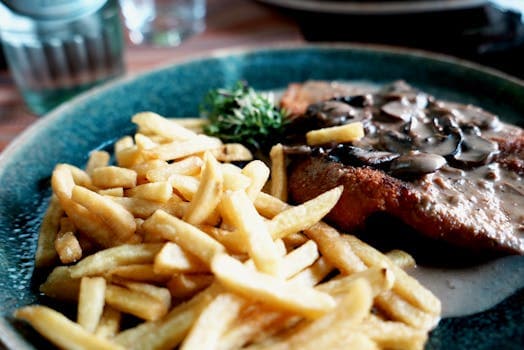
Breaded pan-fried pork cutlets topped with a rich mushroom cream gravy, a comforting German 'hunter's style' schnitzel.
Thinly sliced cucumbers dressed in a tangy vinegar and sour cream sauce with fresh dill, a classic cooling German side salad.
Pork shoulder slow-roasted with a scored, salted skin that crisps into crackling, served with a rich pan gravy, a classic German Sunday roast.
Crispy fried grated potato pancakes, seasoned simply with onion and egg, a beloved German snack served with applesauce.
A classic German breakfast spread of crusty rolls, sliced cheese, cold cuts, soft-boiled eggs and jam, eaten leisurely on weekends.
Layers of chocolate cake soaked in cherry liqueur, filled with whipped cream and cherries, Germany's most famous cake.
Thin beef slices rolled around bacon, onion and pickle, braised until tender in a rich gravy, a classic German Sunday dinner.
Marinated grilled chicken rolled in flatbread with cabbage, yogurt sauce and pickled vegetables, Germany's most beloved street food import.
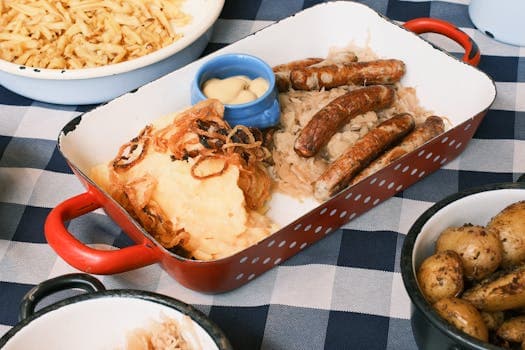
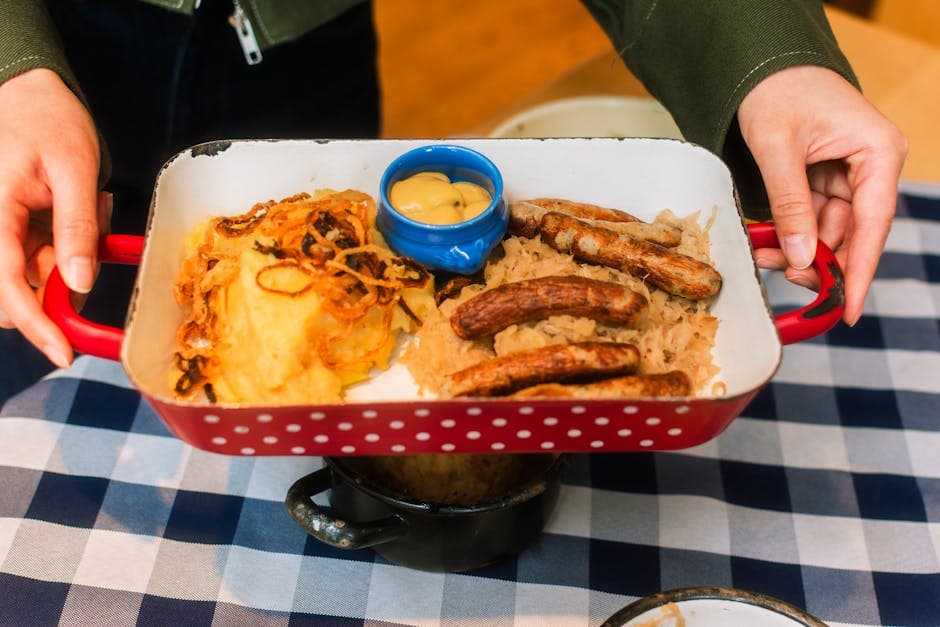
Grilled German bratwurst served over tangy braised sauerkraut with caraway and apple, a hearty, classic combination.
Bell peppers stuffed with a seasoned ground beef and rice filling, simmered in a light tomato sauce, a German family dinner classic.
Warm sliced potatoes tossed in a tangy vinegar and bacon dressing, a classic German-style potato salad served without mayonnaise.
Beef marinated for days in vinegar and spices, then slow-braised until tender in a rich, tangy gingersnap-thickened gravy.
Red cabbage braised slowly with apple, vinegar and a touch of sugar until soft and deeply flavored, a beloved German side dish.
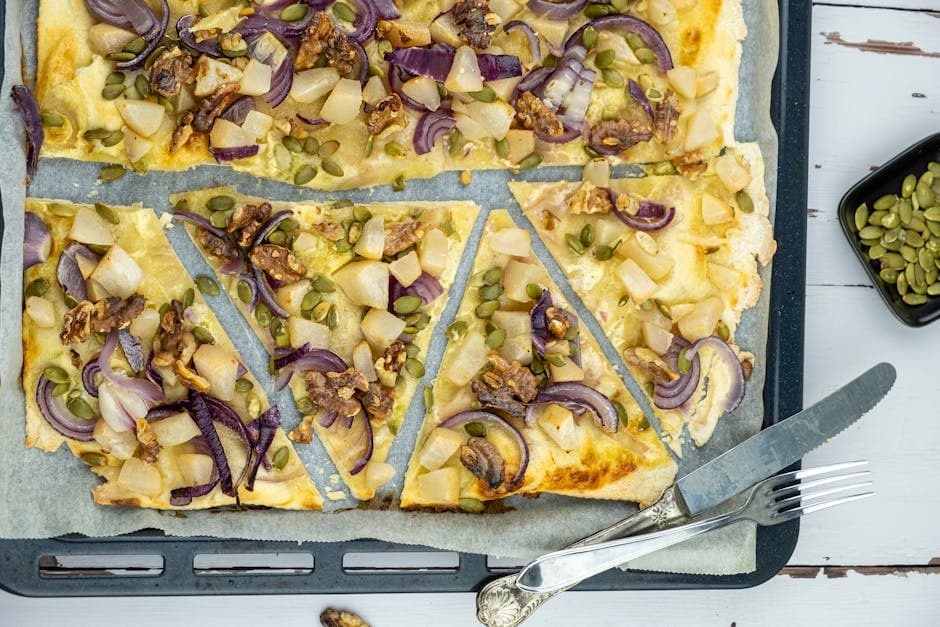
A thin, crispy flatbread topped with creme fraiche, bacon and onion, baked at high heat until the edges char, a beloved German-Alsatian snack.
Ground beef and rice baked together with tomato and paprika until bubbling, a simple, hearty German family casserole.
A German bratwurst sandwich topped with curry ketchup and green chile for a spicy twist on a Berlin classic.
Creamy German potato gratin baked with a light lemon-yogurt cream and a golden cheese crust.
German-style veal and pork meatballs simmered in a rich tomato basil sauce instead of the classic caper cream.
A hearty German white bean stew with smoked sausage, brightened with garlic and a finish of fresh lime.
A large, thin German egg pancake, folded and served with charred lemon for a bright, caramelized finish.
A savory German-style oat porridge simmered with tangy tomato and a touch of tamarind for depth.
Classic German pan-fried trout finished with a nutty brown butter sauce and a touch of crispy chile.
A German savory onion tart reimagined with coconut milk and fresh ginger for a fragrant, custardy filling.
Warm German potato salad dressed in vinegar and bacon fat, finished with a smoky hit of paprika.
Crispy-skinned German roast chicken basted with a garlicky tomato basil glaze in the last stretch of roasting.
German-style roasted root vegetables finished with a bright garlic-lime butter for a fresh, savory side dish.
Fluffy German jam-filled mini doughnuts rolled in a smoky charred lemon sugar for a bright, caramelized finish.
Crisp fried potato pancakes with a nutty toasted sesame finish, a German street-food classic.
Soft egg noodle spätzle tossed in golden herb butter, served as a warm grain bowl.
Pan-fried trout finished in nutty brown butter with lemon, served over rice, a German Sunday classic.
A hearty farmhouse bowl of stewed lentils and egg noodles, finished with toasted sesame.
Bell peppers stuffed with ground beef, rice and paprika, finished with a pat of herb butter.
Creamy layered potato gratin baked until golden, finished with a drizzle of nutty browned butter.
A juicy German-style meat patty burger seasoned with mustard and onion, on a toasted sesame bun.
Fluffy shredded pancake caramelized in browned butter, dusted with sugar, a beloved Austro-German dessert.
Sliced grilled sausage smothered in a curry-spiced tomato sauce, Berlin's favorite street food.
La cuisine allemande est connue pour ses saucisses (plus de 1 500 variétés), ses bretzels, sa choucroute, ses escalopes et son pain exceptionnel – plus de 3 000 types enregistrés. Les plats phares comprennent le Sauerbraten, le jarret de porc, les nouilles Spätzle et le gâteau Forêt-Noire. Il s'agit d'une cuisine copieuse de climat froid, basée sur le porc, les pommes de terre, le chou et la fermentation, avec un fort caractère régional et une culture de la bière célèbre.
Wiener Schnitzel – veau pané et poêlé – est autrichien et légalement protégé en Autriche ; seul le veau peut y porter ce nom. L'Allemagne englobe la famille plus large des Schnitzel, typiquement du porc : Schnitzel Wiener Art (à la viennoise, avec du porc), Jägerschnitzel avec sauce à la crème de champignons et Zigeunerschnitzel aux poivrons. La technique de panure et de friture elle-même est répandue dans toute l’Europe centrale.
Les plats de fête traditionnels – jarret de porc, raviolis, sauces à la crème – sont indéniablement riches, conçus pour les hivers froids et le travail physique. Mais la cuisine allemande quotidienne comprend l'Abendbrot, un repas léger du soir composé de pain, de fromage et de charcuterie, ainsi que des salades, du poisson dans le nord et des asperges dont on se régale de manière obsessionnelle pendant le Spargelzeit au printemps. La cuisine familiale allemande moderne est plus légère que ne le suggère l’image de la brasserie.
Pork Schnitzel est rapide et enseigne la technique de panure. Les Kartoffelpuffer (galettes de pommes de terre) avec compote de pommes nécessitent quatre ingrédients. Un simple Eintopf – un ragoût de lentilles avec des saucisses – est tout-en-un et indulgent. Le Käsespätzle, la réponse allemande au macaroni au fromage, peut être préparé avec une passoire si vous n'avez pas de presse à Spätzle. Une saucisse bratwurst accompagnée d'une salade de pommes de terre tiède à base de vinaigre complète le répertoire des entrées.
Un petit-déjeuner typiquement allemand est centré sur le pain : des Brötchen frais (petits pains croustillants) ou des tranches de pain de seigle avec du beurre, de la charcuterie, du fromage en tranches, de la confiture et du miel, souvent accompagnés d'un œuf à la coque et de café. Le muesli, inventé en Suisse voisine, est également courant. La tartinade est assemblée plutôt que cuite – les petits déjeuners chauds sont l'exception, réservés aux week-ends ou aux hôtels.