Sinigang na Baboy (Filipino Sour Pork Soup)
The Philippines' beloved sour tamarind soup — pork ribs with vegetables in a bright, tangy tamarind broth. Refreshing, comforting and deeply Filipino.
Adobo, sinigang, lechon – une cuisine insulaire audacieuse, aigre et profondément savoureuse.
La cuisine philippine reflète la position des Philippines en tant que carrefour : des bases malaises à base de riz, de noix de coco et de poisson ; des siècles de commerce avec la Chine qui ont apporté des nouilles (pancit), de la sauce soja et des rouleaux de printemps au lumpia ; 333 ans de domination espagnole qui ont laissé le nom de braisage au vinaigre d'adobo, des ragoûts à base de tomates comme l'afritada et le menudo, et des centres de table de fête comme le cochon rôti de lechon ; et influence américaine visible dans les spaghettis sucrés et le ketchup à la banane. La signature de la cuisine est un contraste audacieux : aigre, salé, sucré et funky dans une collision délibérée plutôt que dans un équilibre harmonieux.
L'acidité (asim) est le goût déterminant. Le Sinigang, la soupe de porc ou de crevettes aux légumes aigre-douce au tamarin, est un concurrent sérieux pour le plat national aux côtés de l'adobo – viande braisée dans du vinaigre, de la sauce soja, de l'ail, du poivre noir et du laurier, un plat avec autant de versions que les ménages. Les agents acidifiants varient selon les régions : citron vert calamansi, mangue verte, fruit batuan dans les Visayas, kamias. Les assaisonnements fermentés – sauce de poisson patis et pâte de crevettes bagoong – apportent du sel et de la profondeur, ces derniers étant associés à de la mangue verte aigre ou mélangés à un ragoût d'arachides à la queue de bœuf kare-kare.
La cuisine maison est basée sur le riz : le riz frit à l'ail (sinangag) constitue le point d'ancrage des assiettes de petit-déjeuner silog garnies d'œufs et de charcuterie comme le tocino ou le longganisa. Les traditions régionales sont profondément ancrées : Bicol cuisine avec du lait de coco et des piments (laing, Bicol express), Pampanga est considérée comme la capitale culinaire et Ilocos privilégie les plats de légumes amers et savoureux comme le pinakbet. Célébration signifie lechon à la peau croustillante, pancit pour une longue vie et halo-halo – glace pilée recouverte de haricots sucrés, de fruits, de flan de leche et de glace ube.
Braisage Adobo et Vinaigre
La viande mijotée dans du vinaigre, de la sauce soja, de l'ail et du poivre est de facto le plat national, avec d'innombrables versions régionales et familiales.
Aigreur (Asim)
Le tamarin, le calamansi, la mangue verte et le kamias acidulent les soupes et les ragoûts – surtout le sinigang – qui définissent le palais philippin.
Patis et Bagoong
La sauce de poisson et la pâte de crevettes fermentées apportent du sel et une profondeur funky, assaisonnant tout, du kare-kare aux collations à la mangue verte.
Culture du riz et du silog
Le riz cuit à la vapeur à chaque repas et le riz frit à l'ail au petit-déjeuner (tapsilog, longsilog) font du riz le noyau structurel de la cuisine.
Nourriture Lechon et Fiesta
Le cochon rôti entier à la peau crépitante fait la une des célébrations, accompagné de nouilles pancit pour une longue conservation et de rouleaux de printemps lumpia.
Bonbons à la noix de coco et à l'ube
Les plats salés au lait de coco de Bicol et un canon de dessert composé de halo-halo, de flan au leche et d'ube violet définissent le registre riche en douceur.
Cuisinez les mains libres
Profitez de plans de repas IA, d'un mode cuisine pas à pas et de vos recettes enregistrées dans l'appli gratuite Bento.
Planifiez vos repas, suivez votre jeûne et créez votre liste de courses — gratuit
Le tableau de bord MyCookingCalendar fonctionne directement dans votre navigateur, sans téléchargement.

The Philippines' beloved sour tamarind soup — pork ribs with vegetables in a bright, tangy tamarind broth. Refreshing, comforting and deeply Filipino.

The Filipino answer to crispy pork — boiled then deep-fried pork belly until the skin shatters like glass, served with liver sauce and rice.

A magnificent Filipino braise of oxtail, tripe, and vegetables in a rich, creamy peanut and annatto sauce, served with the essential fermented shrimp paste (bagoong).

Tender chicken braised in a tangy, garlicky soy-vinegar sauce until the meat falls from the bone and the sauce reduces to a rich, glossy glaze — the unofficial national dish of the Philippines.

Sour tamarind broth loaded with tender pork ribs, crisp vegetables and fresh greens — the quintessential Filipino comfort soup with its signature tart, savoury depth.

Crispy, crackling pork belly stuffed with lemongrass, garlic and bay leaves, slow-roasted until the skin shatters — a home-kitchen version of the Philippines' most festive dish.

Crispy, chewy pork face and belly served sizzling on a cast-iron plate with onions, chilli, calamansi and egg — Pampanga's most famous creation and one of the world's great bar foods.

Filipino stir-fried wheat noodles with pork, shrimp, vegetables and a savoury soy-oyster sauce — the birthday dish synonymous with long life.

The Philippines' most beloved frozen dessert: shaved ice over sweet beans, jellies, fruits and jackfruit, topped with ube ice cream, leche flan and evaporated milk.

Thin-sliced beef simmered in soy sauce, calamansi juice and caramelised onion rings — the Filipino answer to beef steak, tangy, savoury and deeply comforting.

A Filipino adobo with coconut milk — chicken braised in vinegar, soy sauce, and garlic, then enriched at the end with creamy coconut milk for a richer, milder version.

A classic Filipino sour tamarind soup with milkfish — the national fish of the Philippines — simmered in a bright, tart broth with tomatoes, green chili, and leafy vegetables.

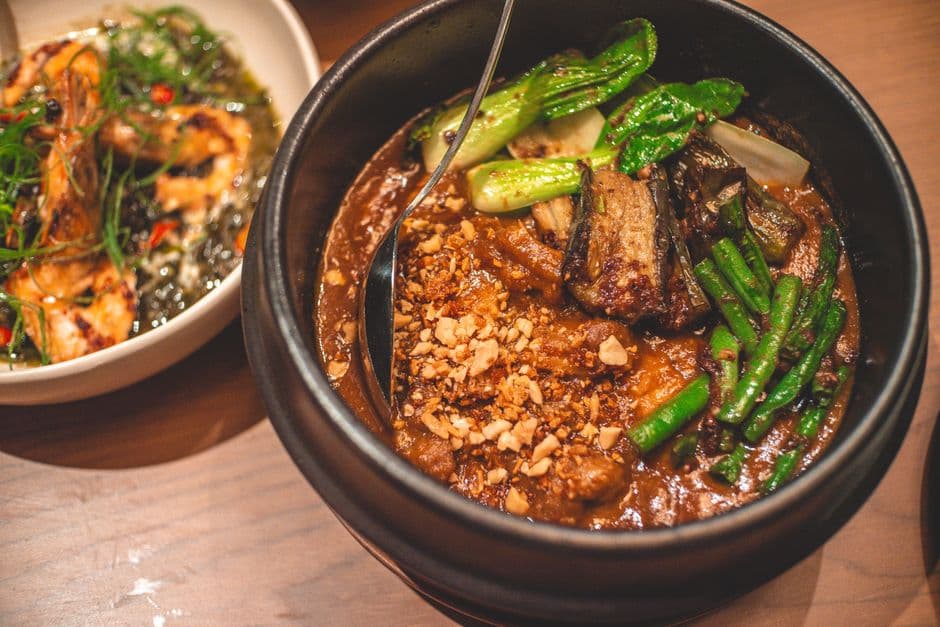
A rich Filipino oxtail and peanut sauce stew — slow-braised until meltingly tender in a thick, golden peanut and annatto sauce, served with bagoong shrimp paste on the side.

A fiery Filipino pork and coconut milk stew from the Bicol region — tender pork cooked with chilies, shrimp paste, and coconut milk until the sauce is rich and intensely spicy.

A celebratory Filipino stew of oxtail and vegetables in a rich, golden peanut sauce, always served with shrimp paste (bagoong) on the side.

A Bicolano dish of dried taro leaves simmered in rich coconut milk with pork, shrimps, and fiery bird's eye chillies — intensely flavourful.

Iloilo's iconic pork noodle soup — rich pork broth with fresh egg noodles, liver, crushed chicharon (pork crackling), garlic, and spring onions.

Filipino beef steak — thin slices of beef sirloin braised in a bold soy-calamansi marinade, topped with crispy caramelised onion rings.

A festive Filipino noodle dish — thin rice noodles topped with a golden shrimp-and-pork sauce, crushed chicharon, shrimps, eggs, and spring onions.

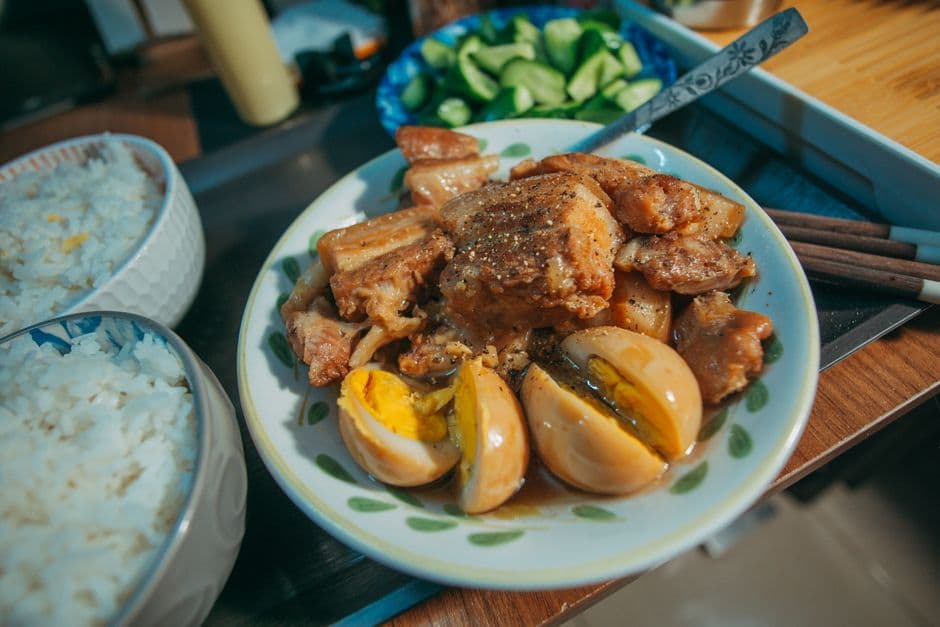
Pork belly braised in vinegar, soy, garlic and bay leaves until lacquered and meltingly tender — the Philippines' national dish, refined.

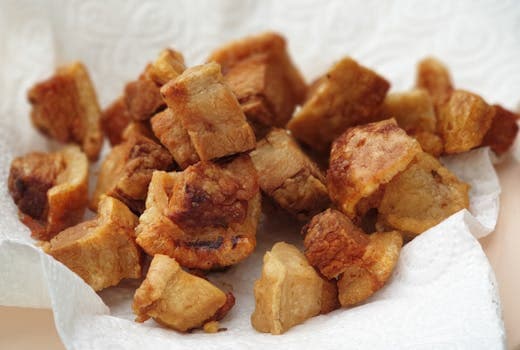
Filipino twice-cooked pork belly — simmered until tender, then deep-fried for blistered crackling skin.

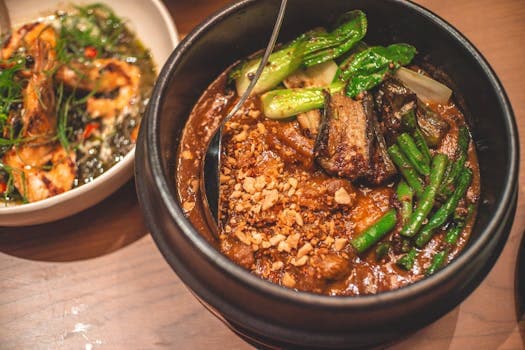
The Philippines' grand fiesta stew — slow-braised oxtail and tripe in a thick golden peanut and toasted-rice sauce, served with bok choy, eggplant, long beans and a side of pungent shrimp paste.

The Philippines' national comfort soup — pork ribs and vegetables in a clear sour tamarind broth that wakes you up in three bites.

Slow-simmered pork belly in coconut milk, shrimp paste and an arsenal of long green chiles — the Bicol region's fierce, creamy national dish.

The Philippines' beloved hot-weather dessert — shaved ice layered over sweetened beans, jellies, fruit, leche flan, ube ice cream, and a final crown of pinipig.

A creamy, comforting Filipino noodle soup with egg, vegetables, and cornstarch thickening — street food and home comfort in one bowl.

Golden, crispy stir-fried egg noodles with vegetables and meat — a Filipino party favorite.

Filipino crispy ground pork spring rolls, thin and golden — the addictive party appetizer everyone requests, best served with sweet chili sauce.

Filipino leche flan made with egg yolks, condensed and evaporated milk, and amber caramel — denser and silkier than a classic crème caramel.

Filipino stir-fried rice noodles with chicken, shrimp, and vegetables — birthday party essential.

Manila Lemon Herb Grain Bowl turns filipino pantry flavors into a complete grain bowl with salmon, soy sauce, vinegar, calamansi and garlic, and a fresh scallions finish.

Cebu Smoky Tomato Soup turns filipino pantry flavors into a complete soup with white fish, soy sauce, vinegar, calamansi and garlic, and a fresh scallions finish.

Bicol Sesame Lime Stew turns filipino pantry flavors into a complete stew with chicken legs, soy sauce, vinegar, calamansi and garlic, and a fresh scallions finish.

Ilocos Charred Pepper Noodles turns filipino pantry flavors into a complete noodle dish with wheat noodles, soy sauce, vinegar, calamansi and garlic, and a fresh scallions finish.

Visayan Green Herb Salad turns filipino pantry flavors into a complete salad with grilled chicken, soy sauce, vinegar, calamansi and garlic, and a fresh scallions finish.

Davao Lemon Herb Flatbread turns filipino pantry flavors into a complete flatbread with flatbread dough, soy sauce, vinegar, calamansi and garlic, and a fresh scallions finish.

Pampanga Smoky Tomato Traybake turns filipino pantry flavors into a complete traybake with sweet potatoes, soy sauce, vinegar, calamansi and garlic, and a fresh scallions finish.

Tagalog Sesame Lime Fritters turns filipino pantry flavors into a complete fritters with salted fish, soy sauce, vinegar, calamansi and garlic, and a fresh scallions finish.

Iloilo Charred Pepper Breakfast Plate turns filipino pantry flavors into a complete breakfast plate with yogurt, soy sauce, vinegar, calamansi and garlic, and a fresh scallions finish.

Luzon Green Herb Dessert turns filipino pantry flavors into a complete dessert with coconut, soy sauce, vinegar, calamansi and garlic, and a fresh scallions finish.
Filipino Market Lemon Herb Rice Bowl brings filipino flavor to a practical rice bowl built with chicken thighs, soy sauce, vinegar, calamansi and garlic, and a fresh scallions finish.
Filipino Village Smoky Tomato Soup brings filipino flavor to a practical soup built with mushrooms, soy sauce, vinegar, calamansi and garlic, and a fresh scallions finish.
Filipino Garden Sesame Lime Skillet brings filipino flavor to a practical skillet dinner built with cauliflower, soy sauce, vinegar, calamansi and garlic, and a fresh scallions finish.
Filipino Harbor Charred Pepper Noodles brings filipino flavor to a practical noodle dish built with rice noodles, soy sauce, vinegar, calamansi and garlic, and a fresh scallions finish.
Filipino Mountain Green Herb Salad brings filipino flavor to a practical salad built with grilled chicken, soy sauce, vinegar, calamansi and garlic, and a fresh scallions finish.
Filipino Festival Lemon Herb Flatbread brings filipino flavor to a practical flatbread built with flatbread dough, soy sauce, vinegar, calamansi and garlic, and a fresh scallions finish.
Filipino Homestyle Smoky Tomato Traybake brings filipino flavor to a practical traybake built with sweet potatoes, soy sauce, vinegar, calamansi and garlic, and a fresh scallions finish.
Filipino Street Sesame Lime Fritters brings filipino flavor to a practical fritters built with salted fish, soy sauce, vinegar, calamansi and garlic, and a fresh scallions finish.
Filipino Golden Charred Pepper Breakfast Plate brings filipino flavor to a practical breakfast plate built with beans, soy sauce, vinegar, calamansi and garlic, and a fresh scallions finish.
Filipino Weeknight Green Herb Dessert brings filipino flavor to a practical dessert built with coconut, soy sauce, vinegar, calamansi and garlic, and a fresh scallions finish.
Chicken braised in vinegar, soy sauce, garlic and bay leaf until deeply savory and tangy, the Philippines' most iconic dish.
Pork simmered in coconut milk with shrimp paste and plenty of fresh chile, a fiery dish from the Bicol region of the Philippines.
Crispy fried fritters of shredded vegetables and whole small shrimp, a popular Filipino snack served with a vinegar dipping sauce.
Cured, pan-fried beef strips served with garlic fried rice and a sunny-side-up egg, a beloved Filipino breakfast combination.
Saba bananas and jackfruit wrapped in spring roll wrappers, fried in caramelized sugar until crisp, a beloved Filipino street dessert.
Pork simmered in a tangy tamarind broth with vegetables, one of the Philippines' most beloved comfort dishes, sour and deeply savory.
Crispy Filipino pork spring rolls wrapped in lettuce with fresh herbs and a sweet-tangy dipping sauce, a quick lunch reinterpretation.
Pork skewers marinated in a sweet-savory soy and banana ketchup marinade, grilled until charred and sticky, a Filipino street food staple.
Grilled eggplant flattened and stuffed with ground meat, dipped in egg and pan-fried, a comforting Filipino home-style dinner.
Charred eggplant tossed with tomato, onion and a tangy vinegar dressing, a refreshing Filipino side salad often paired with grilled fish.
Oxtail and vegetables braised in a rich, thick peanut sauce, a distinctive Filipino stew traditionally served with fermented shrimp paste.
Bitter melon sauteed with tomato, onion and scrambled egg, a distinctive Filipino vegetable dish that balances bitterness with savory richness.
Steamed dumplings of ground pork, shrimp and water chestnut, a Filipino-Chinese favorite served with calamansi and soy sauce.
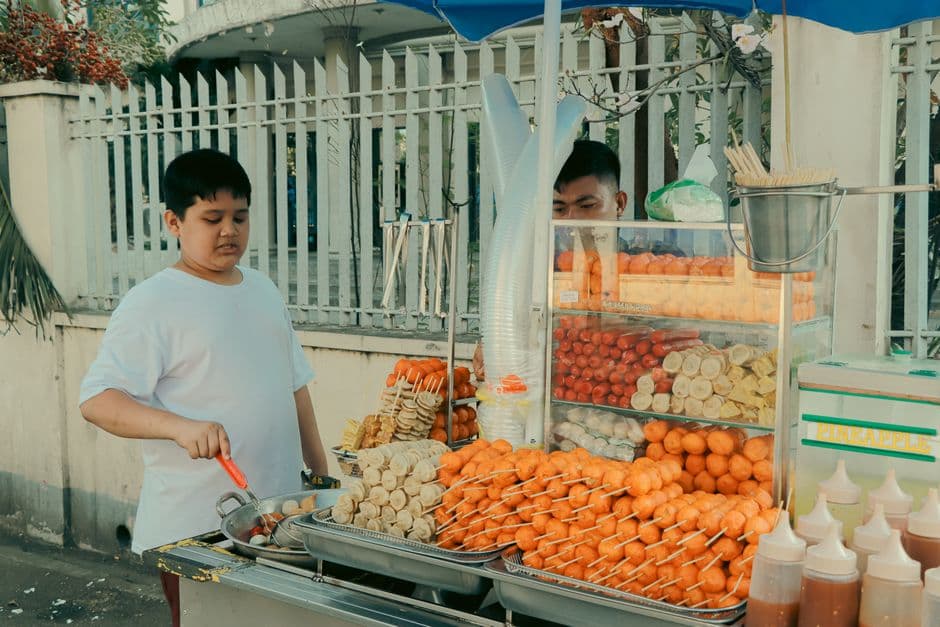
Deep-fried orange-battered quail eggs and fish balls served on skewers with sweet and spicy vinegar sauce, a beloved Filipino street snack.
A comforting Filipino rice porridge simmered with chicken and abundant ginger, topped with fried garlic and calamansi, perfect for cold days or when unwell.
Soft Filipino pandesal rolls stuffed with sweet ham, melted cheese, and caramelized onions.
Tender Filipino pork meatballs simmered in a peppery, garlicky broth with noodles and vegetables.
A hearty Filipino mung bean stew simmered with pork, greens, and a touch of chili heat.
Grilled, mashed Filipino eggplant dipped in egg and pan-fried into a smoky, tender omelet finished with herb butter.
Warming Filipino rice porridge simmered with ginger, chicken, and saffron-yellow annatto, topped with crispy garlic.
Whole fish rubbed with garlic and pan-fried until crackling-crisp, finished with a pool of browned garlic oil.
Golden, flaky Filipino empanadas filled with lemon-pepper spiced chicken and vegetables.
Smoky grilled Filipino eggplant salad tossed with tomato, onion, and fresh herbs in a bright vinegar dressing.
Soft, steamed Filipino rice cakes topped with sweet caramelized onions and a touch of cheese.
Ilonggo-style Filipino dumpling soup with a savory pork filling in a toasted garlic and chicken broth.
Filipino chicken marinated in calamansi, garlic, and black pepper, then roasted until charred and juicy.
Filipino mixed vegetables baked with shrimp paste, tomato, and a touch of chili heat and sweetness.
Crispy fried Filipino banana spring rolls drizzled with a browned herb butter caramel sauce.
Crisp garlic fried rice studded with day-old rice and seared pork, finished with calamansi and scallions.
Golden banana fritters drizzled with honey, a crisp lunchbox and merienda favorite.
Spicy pork simmered in coconut milk and chile, Bicol Express-style, served over rice.
Shrimp simmered in coconut milk with garlic and chile, served over steamed rice.
Hearty mung bean stew simmered with pork and garlic, a Filipino comfort-food staple.
Bell peppers stuffed with garlicky ground pork, rice and chile, baked until tender.
A baked chicken casserole seasoned with garlic, soy sauce, vinegar and chile in the spirit of adobo.
A juicy pork burger seasoned with garlic and honey, inspired by Filipino longganisa sausage flavors.
Warm coconut rice pudding with glutinous rice balls, sweet potato and jackfruit.
A sour, comforting tamarind-based pork soup loaded with vegetables, a Filipino everyday favorite.
La cuisine philippine est connue pour l'adobo (viande braisée au vinaigre et au soja), la soupe au tamarin aigre sinigang, le cochon rôti lechon, les rouleaux de printemps lumpia, les nouilles pancit et le dessert à la glace pilée au halo-halo. Sa signature gustative est un contraste audacieux – aigre, salé, sucré et salé superposés – construit sur du vinaigre, du citron vert calamansi, de la sauce de poisson et de la pâte de crevettes sur une base de riz.
Ils ne partagent que le nom espagnol, signifiant marinade ou assaisonnement. L'adobo philippin est une méthode de braisage : de la viande (généralement du poulet ou du porc) mijotée dans du vinaigre, de la sauce soja, de l'ail, du poivre noir et des feuilles de laurier jusqu'à ce qu'elle soit tendre et piquante. L'adobo mexicain est une pâte ou une sauce à base de chili composée de poivrons séchés, de vinaigre et d'épices. Le plat philippin est antérieur au contact espagnol ; les colonisateurs ont simplement nommé la technique de cuisson au vinaigre existante.
Généralement non, ce qui est inhabituel pour l’Asie du Sud-Est. Les goûts dominants sont acides, salés et sucrés plutôt que piquants, et les piments apparaissent avec parcimonie en dehors de la région de Bicol, qui prépare des plats comme le Bicol express et le laing avec du lait de coco et beaucoup de piquant. Le vinaigre épicé est un condiment de table courant, c'est pourquoi les convives ajoutent du piquant et une légère chaleur au goût.
Le poulet adobo est le début idéal : une casserole, des ingrédients du garde-manger, presque impossible à gâcher, et meilleur le lendemain. Le Sinigang à partir de paquets de pâte de tamarin est un raccourci standard même dans les foyers philippins. Le riz frit à l'ail avec œuf et longganisa constitue un petit-déjeuner silog. Les nouilles sautées Pancit bihon et le lumpia suivent une fois que les bases sont confortables.
Le vinaigre de canne ou de noix de coco, la sauce soja, la sauce de poisson patis et la pâte de crevettes bagoong constituent le noyau de l'assaisonnement. Ajoutez l'ail en quantité, les feuilles de laurier, les grains de poivre noir entiers, le calamansi (ou un substitut de citron vert), la pâte de tamarin et le riz au jasmin. Le lait de coco recouvre les plats Bicolano ; Le ketchup à la banane, l'extrait d'ube et les nouilles de riz (bihon) complètent les extras typiquement philippins.